

Fedora
Images

Handwoven Fedora Hat


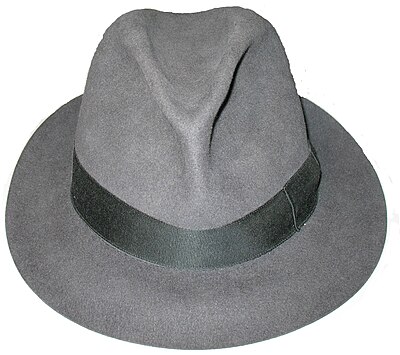




Anatomy of a Fedora
The fedora is characterized by its soft brim and a distinctively shaped crown, typically measuring around 4.5 inches (11 cm) in height. The crown is almost always creased lengthwise and often features side pinches near the front, though variations like teardrop, diamond, or center-dents are common, allowing for significant aesthetic customization. The brim, usually approximately 2.5 inches (6.4 cm) wide, offers further design flexibility.
It can be left raw-edged, finished with a sewn overwelt or underwelt for a cleaner line, or bound with a ribbon. The highly regarded Cavanagh edge represents an expensive, artisanal finish involving invisible stitching to secure a welt, demanding exceptional craftsmanship. It is crucial to distinguish the fedora from the trilby, a similar hat distinguished by its shorter brim and sharper crease.
The variety in crown shapes and brim finishes contributes to the fedora's broad appeal and adaptability across different styles and eras.
The Fedora's Trajectory
The term 'fedora' entered common usage by 1891, and the hat rapidly gained immense popularity, eventually eclipsing similar styles like the homburg. For much of the early to mid-20th century, the fedora was a ubiquitous accessory in men's fashion, strongly associated with formal attire, professionalism, and a certain cinematic mystique. Its prevalence declined significantly alongside other formal hats during the 1960s, a period marked by a shift towards more casual dress codes.
However, the 21st century has witnessed a notable resurgence, with the fedora being re-embraced by both men and women. While its contemporary use is generally less formal than in its heyday, often integrated into smart-casual or fashion-forward ensembles, this revival underscores the hat's enduring design appeal and its capacity to transcend generational fashion cycles. This adaptability has allowed it to remain relevant in a constantly evolving style landscape.
Materiality and Modifiability
The construction of a fedora offers a wide spectrum of material choices, influencing its texture, durability, and suitability for different climates. Traditional and high-quality fedoras are frequently crafted from felt derived from animal fibers, including wool, cashmere, rabbit, or beaver. These felts can be blended with finer materials like mink or chinchilla to enhance softness and luxury.
For warmer weather or a more rugged aesthetic, fedoras are also made from natural plant fibers such as straw, cotton, hemp, and linen, or from synthetic materials like waxed or oiled cotton and leather. Beyond the primary materials, specialized variations cater to practicality and comfort. 'Crushable' or 'rollable' designs, often featuring an 'open crown' that allows the wearer to shape it, prioritize portability. Ventilated crowns, incorporating grommets or mesh inserts, enhance breathability for hot conditions.
Internally, a sweatband, typically made of leather or cloth, ensures comfort and hygiene. Decorative elements like feathers or specialized edge finishes further contribute to the fedora's diverse character.
Cultural Resonance and Enduring Appeal
The fedora's enduring appeal transcends mere fashion trends; it is deeply rooted in its cultural resonance and inherent versatility. Historically, it became a symbol of sophistication, authority, and even mystery, frequently depicted in film noir and associated with iconic figures. This historical weight lends the fedora a timeless quality that continues to captivate.
Its adaptability is key to its longevity. Whether crafted from dense wool felt for a formal occasion or lightweight straw for a summer outing, the fedora can be styled in myriad ways. It bridges the gap between formal and casual wear, making it a valuable accessory for diverse personal styles.
The ability for wearers to customize its shape – through the brim's angle or the crown's manipulation – allows for a unique expression of individuality. This combination of historical gravitas, material diversity, and personalizable design ensures the fedora remains a relevant and sought-after piece in contemporary fashion.
See also
Frequently Asked Questions
What is a fedora hat?+
How can a fedora be made?+
Why is a fedora different from a trilby?+
When did fedoras become popular?+
How are fedoras used today?+
Based on content from Wikipedia · Licensed under CC BY-SA 4.0