

Falco
Images

Barbary Falcon (Falco pelegrinoides)


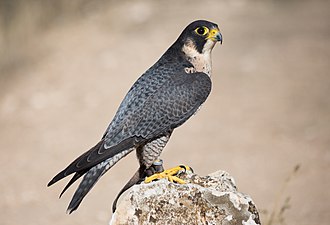
The Biological Significance of the Genus Falco
The genus Falco represents a distinct lineage within the avian world, comprising approximately 37 species of raptors known for their exceptional aerial agility and predatory efficiency. These birds are characterized by their pointed wings, adapted for high-speed flight and rapid maneuvering, a stark contrast to the broader, more rounded wings of hawks and eagles. The most celebrated member, Falco peregrinus (peregrine falcon), holds the record for the fastest animal on Earth during its hunting stoop, reaching speeds that can surpass 320 kilometers per hour (200 mph).
This remarkable adaptation allows them to strike prey, typically other birds, with incredible force and precision. Their visual acuity is also highly developed, enabling them to detect prey from significant altitudes. Ecologically, falcons play a vital role as apex predators, regulating populations of smaller birds and mammals, and their presence often serves as an indicator of ecosystem health.
Conservation efforts for various Falco species are crucial, as many have faced threats from habitat loss, pesticide poisoning (historically, DDT), and direct persecution.
Falco the Musician
Johann Hölzel, performing under the mononym Falco, emerged as a singular figure in 1980s music, achieving international acclaim with a sound that defied easy categorization. Hailing from Vienna, Austria, Falco masterfully blended elements of rock, pop, new wave, and rap, creating a distinctive European take on urban music. His breakthrough hit, 'Rock Me Amadeus' (1985), remains a landmark achievement, not only for its innovative fusion of classical biographical narrative with rap and rock but also for its commercial success.
It became the first German-language song to top the Billboard Hot 100 in the United States, shattering linguistic barriers in popular music. Falco's artistic persona was equally compelling, characterized by his sharp fashion sense, enigmatic stage presence, and a lyrical style that often explored themes of societal critique, historical figures, and existentialism. His work challenged conventions and demonstrated the global potential of non-English language music.
Intersections and Symbolism
The dual identity of 'Falco'-as a genus of swift raptors and a celebrated musician-creates an intriguing cultural resonance. The name itself, derived from the Latin word for 'falcon,' inherently carries connotations of speed, power, and keen perception. These attributes are mirrored in Falco the musician's dynamic performance style and his ability to capture the zeitgeist of his era.
His music often possessed a certain urgency and sharp edge, much like the hunting flight of a falcon. Furthermore, Falco's success with 'Rock Me Amadeus' highlights the power of artistic interpretation and the ability to synthesize disparate elements-in this case, 18th-century classical genius and late 20th-century urban music-into a cohesive and impactful whole. This act of blending, of finding common ground between seemingly unrelated domains, is a hallmark of both biological adaptation and artistic innovation.
Legacy and Enduring Influence
The legacy of Falco extends beyond mere biological classification and a string of hit songs. For the avian genus, ongoing research and conservation efforts are vital to ensure the survival of these magnificent predators in increasingly challenging environments. Their ecological role underscores the interconnectedness of natural systems.
For the musician Falco, his influence persists in contemporary music's embrace of genre fluidity and the continued appreciation for artists who push creative boundaries. He remains an icon of Austrian pop culture and a testament to the possibility of achieving global recognition through a unique artistic vision, irrespective of language. His work continues to be sampled and referenced, indicating a lasting impact on musical landscapes and a continued fascination with his distinctive artistic output.
Go deeper
Based on content from Wikipedia · Licensed under CC BY-SA 4.0