

Entomophily: When Bugs Help Flowers Bloom!
Images
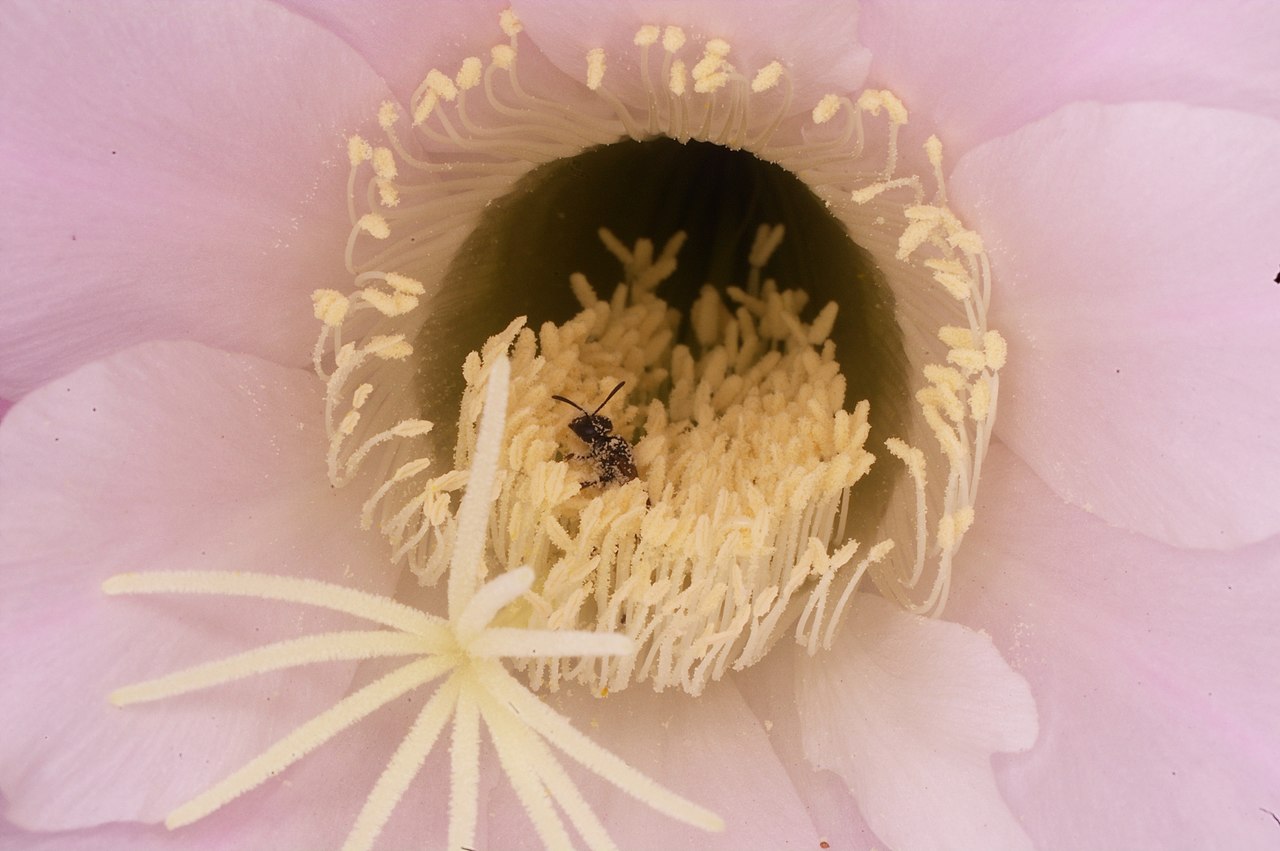
File:Echinopsis oxygona pollination.jpg


The Mechanics and Allure of Insect Pollination
Entomophily, the pollination of flowering plants by insects, represents a cornerstone of terrestrial biodiversity and ecosystem function. This process is driven by a complex interplay of floral advertisements and insect sensory perception. Flowers employ a diverse array of visual cues, including vibrant pigmentation and ultraviolet patterns (honey guides), to attract pollinators from a distance.
Olfactory signals, ranging from pleasant floral fragrances to deceptive mimicry of insect pheromones or carrion, further enhance attraction. These signals are not arbitrary; they are finely tuned evolutionary responses to the specific visual, olfactory, and gustatory capabilities of their target insect pollinators. The rewards offered, primarily nectar and pollen, are energetically rich resources that fuel insect activity and reproduction, creating a powerful incentive for visitation.
Insect Adaptations
Insect pollinators exhibit remarkable morphological and behavioral adaptations that optimize pollen transfer. Bees, perhaps the most well-known entomophilous pollinators, possess specialized mouthparts for nectar extraction and dense body hairs that efficiently trap pollen grains. Many species have evolved corbiculae (pollen baskets) on their hind legs for efficient pollen transport. Lepidoptera (butterflies and moths) utilize a long proboscis to access nectar from deep floral tubes, inadvertently contacting anthers and stigmas.
Diptera (flies) and Coleoptera (beetles) also play significant roles, with varying degrees of specialization in their feeding habits and pollen-carrying mechanisms. These adaptations are not static but are continuously shaped by the selective pressures exerted by the plants they pollinate, leading to highly specific plant-pollinator relationships in some cases.
Coevolutionary Trajectories
The phenomenon of entomophily is deeply rooted in coevolution, a process where interacting species reciprocally influence each other's evolutionary trajectory. The development of insect pollination mechanisms in plants, such as specialized floral structures and nectar guides, has driven the evolution of corresponding adaptations in insects, like specialized mouthparts and sensory systems. Conversely, the evolution of insect foraging behaviors and sensory preferences has influenced floral morphology and scent production.
This ongoing 'arms race' has led to an astonishing diversity of floral forms and pollinator strategies. The success of angiosperms (flowering plants) as a dominant plant group is inextricably linked to the evolution of entomophily and the diversification of insect pollinators.
Ecological and Agricultural Imperatives
The ecological significance of entomophily extends far beyond individual plant reproduction. It forms the foundation for the structure and stability of many terrestrial ecosystems, supporting food webs and maintaining plant genetic diversity. The reproductive success of numerous plant species, which provide essential resources for other organisms, is directly dependent on insect pollination.
Furthermore, entomophily has profound implications for human agriculture. A significant portion of global food crops, including fruits, vegetables, nuts, and seeds, rely on insect pollination for optimal yield and quality. Declines in pollinator populations, driven by habitat loss, pesticide use, and climate change, pose a substantial threat to food security and ecosystem health, highlighting the urgent need for conservation efforts focused on these vital insect partners.
Go deeper
Frequently Asked Questions
What is entomophily?+
How do flowers attract insects?+
Why do insects visit flowers?+
What special tools do bees have for pollination?+
Why is insect pollination important for people?+
Based on content from Wikipedia · Licensed under CC BY-SA 4.0