

Electric arc
Images

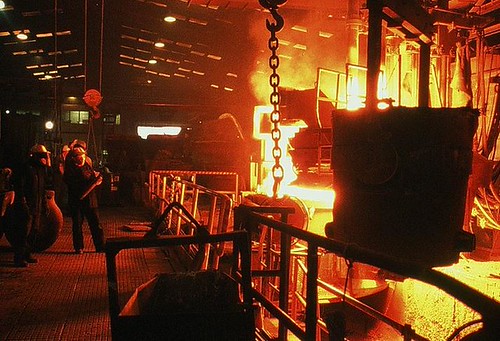
Electrical Arc Furnace Transformer


The Genesis of Sustained Discharge
An electric arc, or arc discharge, represents a significant electrical breakdown of a gas, resulting in a prolonged and self-sustaining electrical current. Unlike a transient spark or a glow discharge, an arc is characterized by a high current density and a relatively low voltage drop across the discharge column. The process begins with an initial ionization of the gas medium, typically air, which can be triggered by thermionic emission from electrodes at high temperatures or by field emission under intense electric fields.
Once initiated, the arc becomes a self-sustaining phenomenon. The intense heat generated by the current vaporizes electrode material and ionizes the surrounding gas, creating a plasma channel. This plasma is a highly conductive medium, allowing for a significant flow of current.
The arc relies heavily on thermionic emission from the electrodes to continuously supply electrons, which are crucial for maintaining the electrical conductivity of the plasma and sustaining the discharge. The voltage required to maintain an arc is generally lower than that needed to initiate it, a characteristic that distinguishes it from other forms of electrical discharge.
Illuminating the Past
The historical significance of the electric arc is deeply intertwined with the dawn of widespread electrical illumination. In the late 19th century, electric arc lighting, often referred to as the 'voltaic arc,' was a primary method for public lighting. Arc lamps, such as the Humphry Davy's early experiments and later commercialized versions, produced an intensely bright light by passing a current between two carbon electrodes.
This light was far brighter than contemporary incandescent lamps and was used to illuminate streets, public squares, and large industrial buildings. While revolutionary for their time, these early arc lights were often characterized by their flickering nature, the need for manual adjustment of the electrodes as they burned away, and the production of ultraviolet radiation. Despite these drawbacks, the voltaic arc was a critical step in the electrification of society, demonstrating the potential of electricity for practical applications and paving the way for subsequent lighting technologies.
The Arc's Enduring Impact
The electric arc is not merely a historical curiosity; it remains an indispensable tool in numerous modern industrial processes and technological applications. In manufacturing, electric arc welding is a cornerstone technique for joining metallic components, offering high strength and versatility across a vast range of materials and thicknesses. This process is fundamental to the construction of everything from automobiles and aircraft to bridges and skyscrapers.
Similarly, plasma cutting, which utilizes the extreme heat of an electric arc to melt and expel material, provides a precise and efficient method for cutting thick metal plates, vital in heavy industry, shipbuilding, and metal fabrication. Furthermore, electric arc furnaces are critical for the recycling of ferrous metals, melting down scrap steel to produce new materials, thereby contributing significantly to resource conservation and sustainability. The ability of electric arcs to generate intense, localized heat and light underpins these essential applications.
The Physics of Plasma
The formation and maintenance of an electric arc involve complex plasma physics. The electrical breakdown of the gas occurs when the electric field strength exceeds the dielectric strength of the medium, leading to the acceleration of free electrons. These electrons collide with neutral gas molecules, causing ionization and creating more free electrons and positive ions.
This avalanche effect results in a rapid increase in conductivity and the formation of a plasma channel. The arc discharge is characterized by a relatively constant voltage drop across the plasma column, which is dependent on the gas composition, pressure, electrode material, and current. The temperature within the arc column can reach several thousand degrees Celsius, leading to significant thermal radiation and convection.
Techniques for arc suppression, such as using insulating materials, magnetic fields, or rapid current interruption, are employed in electrical systems to prevent unwanted arcing, which can damage equipment and pose safety hazards. Understanding these plasma dynamics is key to both harnessing and controlling electric arcs.
Diverse Manifestations
The versatility of electric arcs is evident in their wide array of applications. In lighting, low-pressure electric arcs are fundamental to fluorescent tubes, mercury-vapor lamps, sodium-vapor lamps, and metal-halide lamps, providing efficient and specialized illumination for various environments. Historically, high-intensity xenon arc lamps were crucial for cinema projectors, delivering the bright, consistent light needed for film projection.
Beyond illumination, electric arcs are employed in scientific research, such as in mass spectrometry and particle accelerators, where plasma generation is essential. In environmental technology, plasma torches are used for waste treatment and hazardous material destruction. The development of compact and efficient arc technologies continues to drive innovation in fields ranging from advanced manufacturing to specialized lighting solutions, underscoring the enduring relevance of this powerful electrical phenomenon.
See also
Frequently Asked Questions
What is an electric arc?+
How does an electric arc start?+
Why were electric arcs used for street lights in the 1800s?+
What are some modern uses of electric arcs?+
What makes an electric arc different from a spark?+
Based on content from Wikipedia · Licensed under CC BY-SA 4.0