

Ebola Virus: The Tiny Germ That Makes Big Trouble
Images
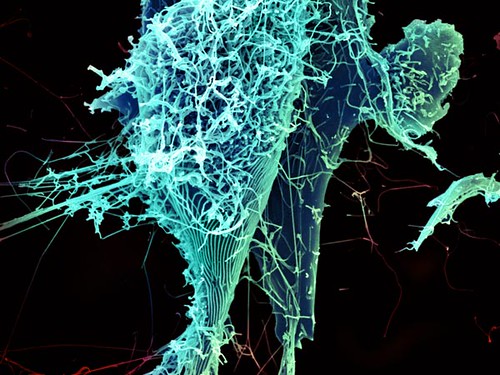
String-like Ebola virus peeling off an infected cell


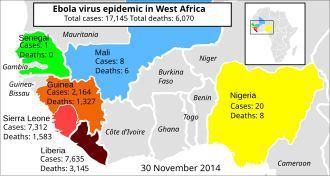


The Nature of Ebolavirus
Ebolavirus belongs to the family Filoviridae, characterized by its filamentous, pleomorphic virions. These viruses possess a single-stranded RNA genome that encodes for seven structural proteins essential for viral assembly and function. The genome is negative-sense, meaning it must be transcribed into messenger RNA before protein synthesis can occur.
Upon entry into a host cell, the viral ribonucleoprotein complex is released, and the RNA-dependent RNA polymerase initiates transcription and replication. The virus buds from the host cell membrane, acquiring its envelope and continuing its infectious cycle. Understanding this intricate replication mechanism is key to developing antiviral therapies.
There are five distinct species of Ebolavirus: Zaire, Sudan, Reston, Taï Forest, and Bundibugyo, each with varying degrees of pathogenicity in humans.
Ecological Niches and Spillover Events
The natural reservoir for Ebolavirus is widely believed to be fruit bats, particularly from the genus Hypsignathus, Epomops, and Myonycteris. These bats appear to harbor the virus asymptomatically, shedding it in their feces and urine. Spillover events into intermediate hosts, such as primates (gorillas, chimpanzees) and duikers, often occur through consumption of infected animals or contact with their bodily fluids.
Human infection typically follows contact with these infected intermediate hosts, either through hunting, butchering, or consumption of bushmeat. The geographic distribution of outbreaks is strongly linked to the presence of these bat populations and human encroachment into their habitats, primarily in sub-Saharan Africa. Sporadic outbreaks, like the initial ones in 1976 in the Democratic Republic of Congo (near the Ebola River) and Sudan, highlight the unpredictable nature of zoonotic transmission.
Transmission Dynamics and Public Health Challenges
Ebolavirus transmission is primarily through direct contact with the blood, secretions, excretions, or other bodily fluids of infected individuals, living or deceased. The virus can also be transmitted through contact with surfaces and materials (e.g., bedding, clothing) contaminated with these fluids. Sexual transmission has also been documented, with the virus persisting in semen for extended periods.
Unlike respiratory viruses, Ebola does not spread easily through casual contact. However, the high case fatality rate (ranging from 25% to 90% depending on the species and outbreak) and the potential for rapid, widespread dissemination during epidemics pose immense public health challenges. Effective control relies on robust surveillance systems, rapid case identification, isolation, contact tracing, and community engagement to ensure safe burial practices and adherence to infection prevention and control measures.
Impact and Future Directions
Ebola outbreaks have had devastating social and economic consequences, overwhelming healthcare systems and causing widespread fear and disruption. The 2014-2016 West Africa epidemic, primarily caused by Zaire ebolavirus, was the largest and most complex in history, infecting over 28,000 people and causing more than 11,000 deaths. This event underscored the urgent need for improved preparedness and response capabilities globally.
Significant advancements have been made in developing effective vaccines, such as the rVSV-ZEBOV vaccine, which has proven highly effective in preventing disease. Antiviral treatments are also showing promise. Continued research into the virus's pathogenesis, long-term health effects in survivors, and the ecology of its reservoir hosts remains critical for mitigating future risks and ensuring global health security.
Go deeper
Frequently Asked Questions
What is the Ebola virus?+
Where does Ebola come from?+
How can a person get Ebola?+
Does Ebola spread like a cold?+
Why is Ebola so dangerous?+
Based on content from Wikipedia · Licensed under CC BY-SA 4.0