

Earth's Crust: Our Planet's Rocky Skin!
Images

Paleontology in Central Oregon


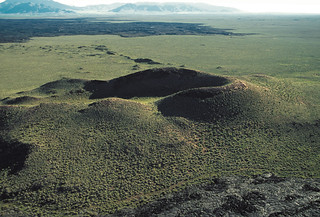

The Earth's Crust
Earth's crust represents the outermost solid shell of our planet, a relatively thin layer that forms the surface upon which we live and upon which all geological processes manifest. It constitutes less than one percent of the Earth's total radius and volume, yet its significance is immense. The crust is the uppermost component of the lithosphere, a more rigid layer that also includes the uppermost part of the mantle.
This lithosphere is not a continuous shell but is fragmented into numerous tectonic plates. The motion and interaction of these plates are fundamental to Earth's geological evolution, facilitating the escape of internal heat into space and driving phenomena such as plate tectonics, volcanism, and orogenesis. Understanding the crust's composition, thickness variations, and thermal regime is crucial for comprehending these large-scale planetary processes.
Stratigraphy and Density
The stability of Earth's layered structure is largely due to density differences. The crust rests upon the mantle, a configuration that is geologically stable because the upper mantle is composed primarily of peridotite. Peridotite is a dense ultramafic rock, significantly denser than the silicate rocks that typically form the crust, such as basalt and granite.
This density contrast is a primary reason why the crust 'floats' on the more viscous mantle. The boundary between the crust and the mantle is conventionally defined by the Mohorovičić discontinuity (Moho). This boundary is not a physical break but rather a zone where there is a distinct change in seismic velocity, indicating a transition in rock composition and density.
Seismic surveys are the primary method for mapping the Moho's depth, which varies considerably across the globe.
The Geothermal Gradient
The temperature within the Earth's crust increases with depth, a phenomenon described by the geothermal gradient. This gradient is not uniform and can vary significantly depending on local geological conditions, such as proximity to magma chambers or the rate of radioactive decay in the crustal rocks. Typically, the temperature at the Moho boundary ranges from about 100 to 600 degrees Celsius.
In the upper crust, the rate of temperature increase can be as high as 30 degrees Celsius per kilometer locally. This internal heat is a critical factor in driving geological processes, including the convection currents within the mantle that power plate tectonics and the formation of hydrothermal systems. Understanding the geothermal gradient is vital for geothermal energy exploration and for modeling Earth's thermal evolution.
Tectonic Plates and Crustal Dynamics
The lithosphere, comprising the crust and the uppermost mantle, is broken into large, rigid tectonic plates. These plates are in constant motion, driven by convection currents within the deeper mantle. The interactions at plate boundaries-divergent (spreading apart), convergent (colliding), and transform (sliding past)-are responsible for shaping the Earth's surface.
At divergent boundaries, new crust is generated as magma rises from the mantle. At convergent boundaries, crust can be subducted back into the mantle, recycled, or thickened to form mountain ranges. Transform boundaries accommodate the lateral movement between plates.
The continuous recycling and creation of crustal material are fundamental aspects of plate tectonics, a theory that revolutionized our understanding of Earth science.
Compositional Variations
Earth's crust is not uniform; it is broadly divided into two main types: oceanic crust and continental crust. Oceanic crust is thinner (typically 5-10 km) and denser, primarily composed of basaltic rocks. It is geologically younger, constantly being created at mid-ocean ridges and destroyed at subduction zones.
Continental crust, on the other hand, is thicker (averaging 30-50 km, but can exceed 70 km under mountain ranges) and less dense, with a composition more akin to granite. It is much older and more varied in age and composition, forming the stable cores of continents. These differences in thickness, density, and composition play a crucial role in the behavior of tectonic plates and the formation of major geological features.
See also
Based on content from Wikipedia · Licensed under CC BY-SA 4.0