

Dwarf Birch: The Tiny Tree That's a Big Deal!
Images
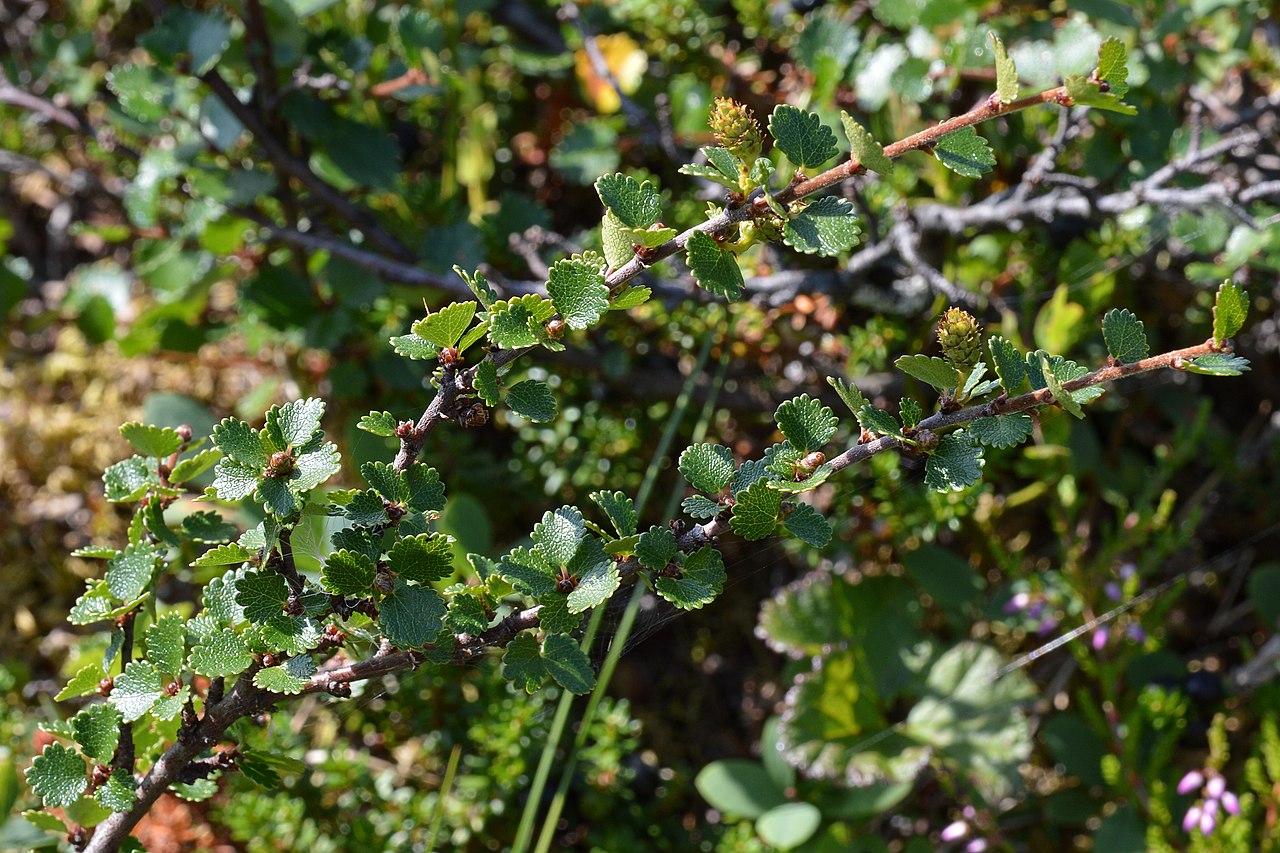
Dwarf Birch (Betula nana) - Eidfjord, Norway 2021-07-25


![Dwarf birch. Betula nana. Found mainly in the tundra of the Arctic region. Svensk botanik [J.W. Palmstruch et al], vol. 6 (1809)](https://live.staticflickr.com/3895/14723861932_7110187316_n.jpg)


Paleoecological Footprints
The dwarf birch, Betula nana, is far more than just a diminutive shrub; it is a living testament to Earth's climatic history. Its paleoecological record reveals a species that has navigated dramatic environmental shifts, including multiple glacial and interglacial periods. Pollen analysis from sediments dating back to the Pleistocene epoch frequently identifies Betula nana, indicating its presence alongside iconic Ice Age megafauna such as woolly mammoths and woolly rhinoceroses.
This ancient lineage underscores its profound adaptive capabilities. The species' ability to persist through extreme cold, fluctuating sea levels, and changing vegetation zones highlights a genetic resilience that has allowed it to survive where many other plant forms have faltered. Studying its distribution and abundance in ancient pollen records provides crucial insights into past climate conditions and the dynamics of Pleistocene ecosystems, making it a valuable bioindicator for paleoclimatologists.
Habitat Colonization
Betula nana exhibits a remarkable capacity for colonizing challenging, often nutrient-poor environments. Its primary habitats include the Arctic tundra, high-altitude alpine meadows, and waterlogged bogs and fens. These ecosystems are characterized by short growing seasons, low temperatures, high winds, and often acidic or waterlogged soils. The dwarf birch's morphology is exquisitely adapted to these conditions. Its low, spreading growth habit minimizes exposure to harsh winds and allows it to benefit from snow cover for insulation. Its small, leathery leaves are efficient at reducing transpirational water loss, a critical adaptation in cold, dry air. Furthermore, Betula nana can tolerate waterlogged conditions due to adaptations in its root system, allowing it to thrive in areas where oxygen availability is limited. This ecological niche allows it to establish itself in landscapes that are inhospitable to taller, more demanding plant species.
Keystone Contributions
Despite its modest stature, Betula nana functions as a keystone species in many Arctic and alpine ecosystems, exerting a disproportionately large influence on its environment. It serves as a fundamental food source for a variety of wildlife. Its leaves and catkins are consumed by herbivores, including reindeer, ptarmigan, and various small mammals like lemmings and voles, particularly during the critical winter months when other food sources are scarce.
The dense foliage provides essential shelter and nesting sites for numerous bird species, offering protection from predators and extreme weather. Beyond direct consumption and shelter, the dwarf birch plays a vital role in soil stabilization. Its root network helps bind the soil, mitigating erosion caused by wind and water, which is particularly important in fragile permafrost landscapes.
The presence and health of Betula nana populations are thus strong indicators of the overall health and stability of these cold-climate ecosystems.
Reproductive Strategies and Genetic Diversity
The enduring success of Betula nana is underpinned by its effective reproductive strategies and inherent genetic adaptability. This species exhibits both sexual reproduction via wind-pollinated catkins, producing small, winged seeds, and asexual reproduction through vegetative means, such as root suckering. This dual approach allows for rapid colonization of suitable habitats and ensures genetic diversity through seed dispersal while also enabling the plant to efficiently spread and maintain established populations.
Its ability to reproduce both sexually and asexually provides a significant advantage in environments where conditions can fluctuate unpredictably. Genetic studies have revealed variations within Betula nana populations across its extensive range, suggesting a capacity for local adaptation to specific microclimates and soil conditions. This genetic plasticity is crucial for its long-term survival in the face of ongoing environmental change, including climate warming, which poses both challenges and potential opportunities for this ancient shrub.
Modern Relevance
In the context of contemporary climate change, Betula nana is of increasing scientific interest. As global temperatures rise, the Arctic and alpine regions are experiencing warming at an accelerated rate. This warming trend has complex implications for dwarf birch populations.
On one hand, it may lead to range expansion into previously colder areas and increased growth rates in some regions. On the other hand, changes in precipitation patterns, increased frequency of extreme weather events, and competition from encroaching shrub and tree species could negatively impact existing populations. Scientists are closely monitoring Betula nana as an indicator species to understand the broader ecological responses to climate change in these sensitive environments.
Its resilience and historical adaptability offer a case study for understanding plant survival strategies in a rapidly evolving world, informing conservation efforts and ecological modeling.
See also
Frequently Asked Questions
What is a dwarf birch?+
Why is the dwarf birch called a "keystone species"?+
How does the dwarf birch stay warm in the cold?+
Where can you find dwarf birch?+
How does the dwarf birch reproduce?+
Based on content from Wikipedia · Licensed under CC BY-SA 4.0