

Dualism: Two Sides of Everything!
Images

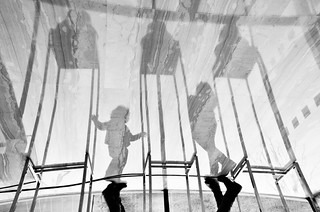
1830 dualism near Hackesher Markt 1830_1




The Dichotomy of Existence
Dualism, in its broadest philosophical sense, is the ontological stance that reality is composed of two fundamental, irreducible substances or principles. This stands in stark contrast to monism, which asserts a single underlying reality. Dualistic frameworks often posit these two elements as distinct, sometimes incommensurable, and frequently in opposition.
Cosmological dualism, for instance, views the universe as a battleground between two primal forces, such as good and evil, light and darkness, or spirit and matter. This fundamental division shapes how adherents perceive causality, morality, and the ultimate nature of existence. The enduring appeal of dualism lies in its ability to provide clear-cut explanations for complex phenomena, offering a structured way to categorize and understand the world's inherent complexities and apparent contradictions.
Echoes Through Time
The concept of dualism has a rich and varied history, appearing in numerous ancient traditions. In Zoroastrianism, a dualistic cosmology posits a cosmic struggle between Ahura Mazda (good) and Angra Mainyu (evil). Indian philosophy, particularly schools like Samkhya, presents a dualism between Purusha (consciousness) and Prakriti (matter), suggesting that the universe arises from their interaction.
In the Western tradition, Plato's theory of Forms introduced a dualism between the imperfect, sensible world and the perfect, intelligible realm of Forms. However, it was René Descartes in the 17th century who most famously articulated mind-body dualism, or substance dualism. He argued for two distinct substances: res cogitans (thinking substance, the mind) and res extensa (extended substance, matter).
This Cartesian dualism profoundly influenced subsequent philosophical and scientific thought, sparking centuries of debate about the nature of consciousness and its relationship to the physical brain.
The Enduring Significance
The significance of dualism extends far beyond abstract philosophical discourse; it deeply influences our ethical frameworks, religious beliefs, and personal understanding of self. Mind-body dualism, for example, underpins many religious views of an immortal soul separate from the mortal body, impacting concepts of afterlife and personal identity. It raises profound questions about free will: if our actions are solely determined by physical processes, where does genuine choice reside?
Ethical dualism, which often attributes inherent good to one group and evil to another, can unfortunately fuel prejudice and conflict. Conversely, property dualism, a more nuanced view, suggests that while the substance of reality may be physical, mental properties are distinct and irreducible, offering a potential bridge between subjective experience and objective science without positing separate substances. This ongoing exploration of dualistic ideas highlights humanity's persistent quest to understand consciousness, morality, and the fundamental constituents of reality.
Manifestations of the Two
Dualism manifests in diverse philosophical domains. Mind-body dualism, as articulated by Descartes, posits that mental states are non-physical and distinct from bodily states, leading to the 'mind-body problem' of how these interact. Property dualism, a modern variant, accepts a single physical substance but argues for two distinct types of properties: physical and mental.
Epistemological dualism questions whether our perception of reality is direct or a mediated, internal representation generated by our brains. In ethics, dualism can manifest as ethical dualism, assigning absolute good to one party and absolute evil to another, a simplification that can be problematic. Even in international law, a dualistic approach suggests that international and domestic legal systems are separate, with domestic law taking precedence.
These varied applications demonstrate dualism's pervasive influence on how we structure our understanding of the world, ourselves, and our societies.
Go deeper
Frequently Asked Questions
What is dualism?+
How does dualism explain the mind and body?+
Why do some religions use dualism?+
What is property dualism?+
Can dualism cause problems?+
Based on content from Wikipedia · Licensed under CC BY-SA 4.0