

Drilling Rig
Images
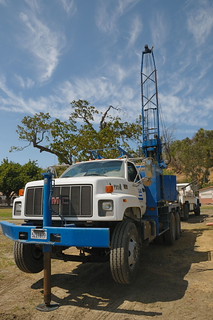
CME-55 Drill Rig


The Anatomy and Functionality of a Drilling Rig
A drilling rig is an integrated system engineered for the precise penetration of the Earth's subsurface. Its primary purpose is to create boreholes, commonly known as wells, for a multitude of applications including the extraction of hydrocarbons (oil and natural gas), accessing groundwater, and facilitating various construction projects like piling and tunneling. The complexity of a rig varies immensely, from portable augers operated by a single individual to colossal offshore platforms housing extensive machinery and crew accommodations for hundreds.
These structures are designed to withstand immense pressures and environmental challenges, enabling access to geological formations thousands of meters below the surface. The term 'rig' encompasses the entire complex of equipment dedicated to penetrating the Earth's crust, a testament to human ingenuity in resource acquisition and infrastructure development.
Evolution of Drilling Technology
The practice of drilling dates back to ancient times, with early methods involving manual labor and rudimentary tools like pointed sticks and simple augers for shallow excavations. The impetus for more advanced drilling technology significantly accelerated with the industrial revolution and the burgeoning demand for energy. The discovery and commercialization of oil in the 19th century catalyzed rapid advancements, moving from steam-powered rigs to more efficient mechanical systems.
The 20th and 21st centuries have seen the integration of sophisticated electronics, automation, and advanced materials, enabling deeper, more precise, and safer drilling operations. Mobile rigs mounted on trucks, tracks, or trailers have increased accessibility, while permanent land-based and marine structures represent monumental feats of engineering for sustained operations in challenging environments.
The Indispensable Role of Drilling Rigs in Modern Society
Drilling rigs are linchpins of the global economy and essential for maintaining modern living standards. Their most prominent function is the extraction of fossil fuels, which remain a primary energy source for transportation, industry, and electricity generation worldwide. Furthermore, they are critical for securing potable water supplies, especially in arid regions, and for agricultural irrigation.
In civil engineering, drilling rigs are indispensable for installing foundations for skyscrapers, bridges, and tunnels, as well as for laying underground utility networks. They also serve vital scientific purposes, enabling geologists and environmental scientists to collect core samples for analyzing subsurface composition, studying seismic activity, and monitoring groundwater quality, thereby contributing to our understanding of Earth's processes and potential hazards.
Mechanics and Fluid Dynamics of Subsurface Penetration
The operation of a drilling rig is a sophisticated process governed by principles of mechanics and fluid dynamics. At its core, a rotating drill bit, often equipped with specialized cutting structures, grinds through rock and soil. This bit is attached to a drill string, a series of connected pipes.
As the borehole deepens, additional pipe sections are added. A crucial element is the circulation of drilling fluid, commonly referred to as 'drilling mud.' This fluid is pumped down through the drill string and returns to the surface via the annulus (the space between the drill string and the borehole wall). The mud serves multiple critical functions: it cools and lubricates the drill bit, stabilizes the borehole walls, and carries rock fragments, or 'cuttings,' to the surface for analysis.
Powerful mud pumps and hoisting systems, often integrated into a derrick, manage the immense forces involved in lifting and lowering hundreds of tons of pipe.
Diverse Applications and Future Trajectories
The versatility of drilling rigs is evident in their wide array of applications. Small, portable rigs are instrumental in mineral exploration, geological surveys, and environmental impact assessments, allowing for targeted sampling of subsurface materials. Larger, specialized rigs are deployed for deep water drilling, geothermal energy exploration, and the installation of underground infrastructure such as pipelines and data conduits.
Marine drilling rigs, including semi-submersibles and drillships, are engineering marvels capable of operating in extreme oceanic conditions, often thousands of miles from shore, necessitating complex logistics for crew rotation and supply. Future developments are likely to focus on enhanced automation, remote operation capabilities, and the use of more environmentally sustainable drilling fluids and techniques to minimize ecological impact.
See also
Frequently Asked Questions
What is a drilling rig?+
Why do we use drilling rigs for building big things?+
How do drilling rigs make a hole so deep?+
Where can drilling rigs be found?+
When did people start drilling for oil?+
Based on content from Wikipedia · Licensed under CC BY-SA 4.0