

Downing Street
Images

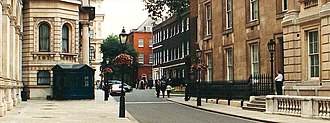
Letterbox at Number10 Downing Street




The Genesis of a Political Powerhouse
Downing Street, a discreet yet profoundly influential gated street in Westminster, London, stands as the physical and symbolic heart of the United Kingdom's executive power. Constructed in the 1680s by Sir George Downing, a former spy and diplomat, the street was initially conceived as a prestigious residential area. However, its destiny shifted dramatically when it became the official residence of the First Lord of the Treasury, an office that evolved to become the Prime Minister.
This strategic location, a short walk from the Houses of Parliament, cemented its role as the nerve center of British governance. The street's unique cul-de-sac design, approximately 200 meters long, contributes to its security and distinct identity, separating it from the bustling thoroughfare of Whitehall while remaining intimately connected to it.
A Three-Century Legacy of Leadership
For over three centuries, Downing Street has been the crucible where British political history has been forged. Number 10 Downing Street is not merely a home; it is the official residence and principal workplace of the Prime Minister, serving as the venue for critical policy discussions, international diplomacy, and national addresses. Adjacent to it, Number 11 houses the Chancellor of the Exchequer, the minister responsible for the nation's economy, underscoring the street's dual role in political and financial leadership. Even Number 12, the residence of the Government Chief Whip, highlights the intricate machinery of parliamentary management that operates from this concentrated area.
The evolution of the street, with many of its original townhouses repurposed for government offices, reflects its enduring centrality to the administrative functions of the state.
The Metonymic Power of 'Downing Street'
Beyond its physical presence, 'Downing Street' has transcended its geographical boundaries to become a potent metonym for the British Prime Minister and the government as a whole. When news reports refer to 'Downing Street' announcing a new policy or responding to a crisis, they are invoking the authority and decision-making power vested in the nation's highest office. This linguistic shorthand encapsulates the concentration of power and influence within this specific location.
The term signifies not just the individuals who reside and work there, but the entire apparatus of the executive branch, its policies, and its public pronouncements. This symbolic weight means that events unfolding on Downing Street resonate far beyond its gates, shaping national discourse and international perception.
The Evolving Landscape of Governance
The physical structure of Downing Street has adapted to the changing needs of government. While Number 10 and 11 remain iconic residences, the surrounding buildings have been extensively modified and integrated into the governmental infrastructure. The demolition of houses on the south side in the 19th century to accommodate offices for the Foreign, Commonwealth and Development Office, and the construction of the Cabinet Office facing Whitehall, illustrate this continuous adaptation.
This physical transformation mirrors the evolving nature of modern governance, which requires extensive administrative support and inter-departmental coordination. Downing Street, therefore, represents not a static monument, but a dynamic hub that has consistently reconfigured itself to serve the evolving demands of leading a nation in a complex world.
Security, Symbolism, and the Public Gaze
The iconic black door of Number 10 Downing Street is instantly recognizable, a symbol of British political authority. The street's gated access and stringent security measures are a testament to its critical role and the need to protect its high-profile occupants and sensitive operations. This security, however, also creates a deliberate separation between the seat of power and the public.
Yet, the symbolic power of Downing Street ensures it remains a focal point for public attention, particularly during times of political change or national significance. Protests, celebrations, and media attention often converge on its vicinity, highlighting the enduring public fascination with the individuals and decisions emanating from this historic address. It is a place where the weight of history meets the urgency of contemporary politics.
Go deeper
Frequently Asked Questions
What is Downing Street?+
Why is Number 10 Downing Street famous?+
Who lives at Number 11 Downing Street?+
How did Downing Street become the center of UK government?+
What does the name "Downing Street" mean when people talk about the government?+
Based on content from Wikipedia · Licensed under CC BY-SA 4.0