

The Dow Jones Industrial Average: A Super-Sized Scoreboard!
Images
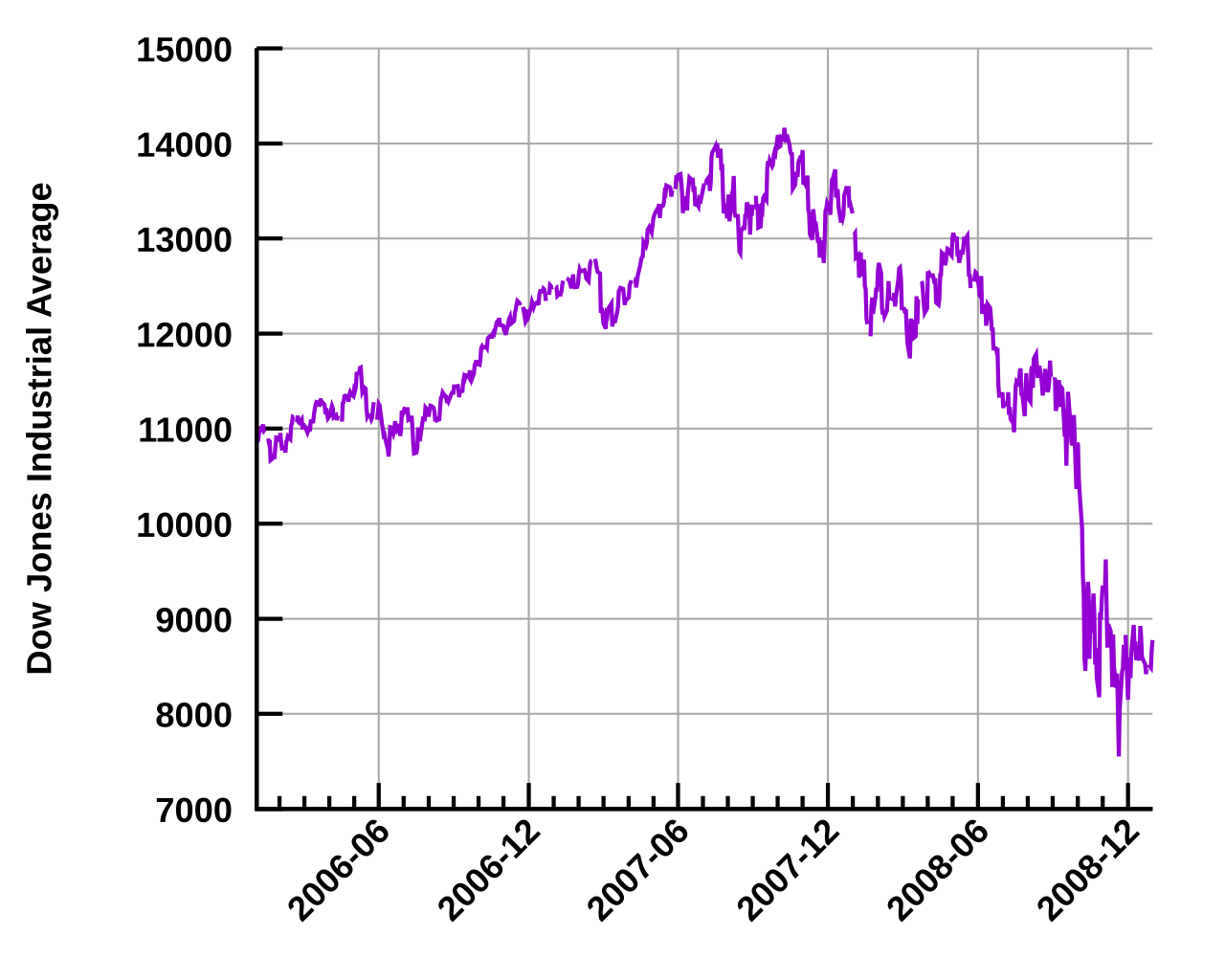
Dowjones crash 2008


The Genesis of a Benchmark
The Dow Jones Industrial Average (DJIA), often simply called 'the Dow,' was born out of a need for a quantifiable measure of the burgeoning American industrial landscape. Co-founded by Charles Dow, a journalist and statistician, and his associate Edward Jones, the index first appeared on May 26, 1896. Its initial purpose was to provide a snapshot of the performance of key industrial companies, offering investors and the public a digestible way to track economic sentiment.
Unlike modern indexes that often rely on market capitalization, the DJIA's price-weighted methodology means that a stock with a higher per-share price exerts a greater influence on the index's movement, regardless of the company's overall size or market value. This unique characteristic, while sometimes criticized for its potential to distort representation, has been a defining feature of the Dow for over a century, making it a distinct analytical tool.
Evolution and Adaptation
Since its inception, the Dow Jones Industrial Average has undergone significant evolution, reflecting the dramatic shifts in the American economy. Initially composed of 12 companies, it expanded to 20 and eventually settled on its current 30 components. The selection process is managed by a committee from S&P Dow Jones Indices and The Wall Street Journal, ensuring that the companies included remain representative of major U.S. industries.
This committee actively reviews and replaces companies to maintain relevance, moving from a focus on heavy industry to include technology, healthcare, and finance. The index's longevity, second only to the Dow Jones Transportation Average, provides a rich historical dataset for analyzing long-term economic trends and market behavior, offering insights into periods of growth, recession, and technological advancement.
The Price-Weighted Mechanism
The core mechanism of the DJIA is its price-weighting. This means that a stock trading at $200 has a greater impact on the index's value than a stock trading at $20. This can lead to situations where a company with a massive market capitalization, like Apple, might have less influence on the Dow than a company with a smaller market cap but a higher stock price.
For instance, a $1 increase in a $200 stock moves the Dow more than a $1 increase in a $20 stock. This contrasts sharply with market-cap-weighted indexes like the S&P 500 or Nasdaq Composite, where a company's total market value dictates its influence. While this price-weighting can make the Dow appear more volatile on a per-dollar basis, proponents argue it offers a unique perspective on the performance of high-priced stocks and can be less susceptible to the dramatic swings of smaller, less established companies.
The Dow's Enduring Influence and Modern Relevance
Despite the rise of more comprehensive indexes, the Dow Jones Industrial Average retains significant influence in financial markets and public perception. Its historical depth and widespread recognition make it a primary benchmark for many investors and a frequent subject of media coverage. The 'Dogs of the Dow,' a strategy focusing on the 10 components with the highest dividend yields, is a testament to its continued relevance in investment strategies.
Furthermore, the Dow's performance is closely watched as a proxy for the health of large-cap U.S. corporations and, by extension, the broader economy. Its simplicity, though a point of academic debate, contributes to its accessibility and continued prominence in financial discourse.
Navigating the Divisor
A crucial element of the Dow Jones Industrial Average's calculation is its divisor. This number is not static; it is adjusted whenever a stock split occurs or when a company is replaced within the index. The purpose of this adjustment is to ensure that these corporate actions do not artificially inflate or deflate the index's value.
For example, if a company undergoes a 2-for-1 stock split, its share price is halved. Without adjusting the divisor, this would incorrectly make the stock appear to have less impact on the Dow. The divisor, currently a small fraction (approximately 0.163 as of late 2024), effectively scales the sum of the stock prices to produce the index's final value, maintaining continuity and comparability over time.
Go deeper
Frequently Asked Questions
What is the Dow Jones Industrial Average?+
How does the Dow decide which companies to include?+
Why does the Dow use price-weighting instead of market value?+
How many companies are in the Dow now?+
What is the "Dogs of the Dow" strategy?+
Based on content from Wikipedia · Licensed under CC BY-SA 4.0