

Differential Geometry: Shapes and Bends!
Images
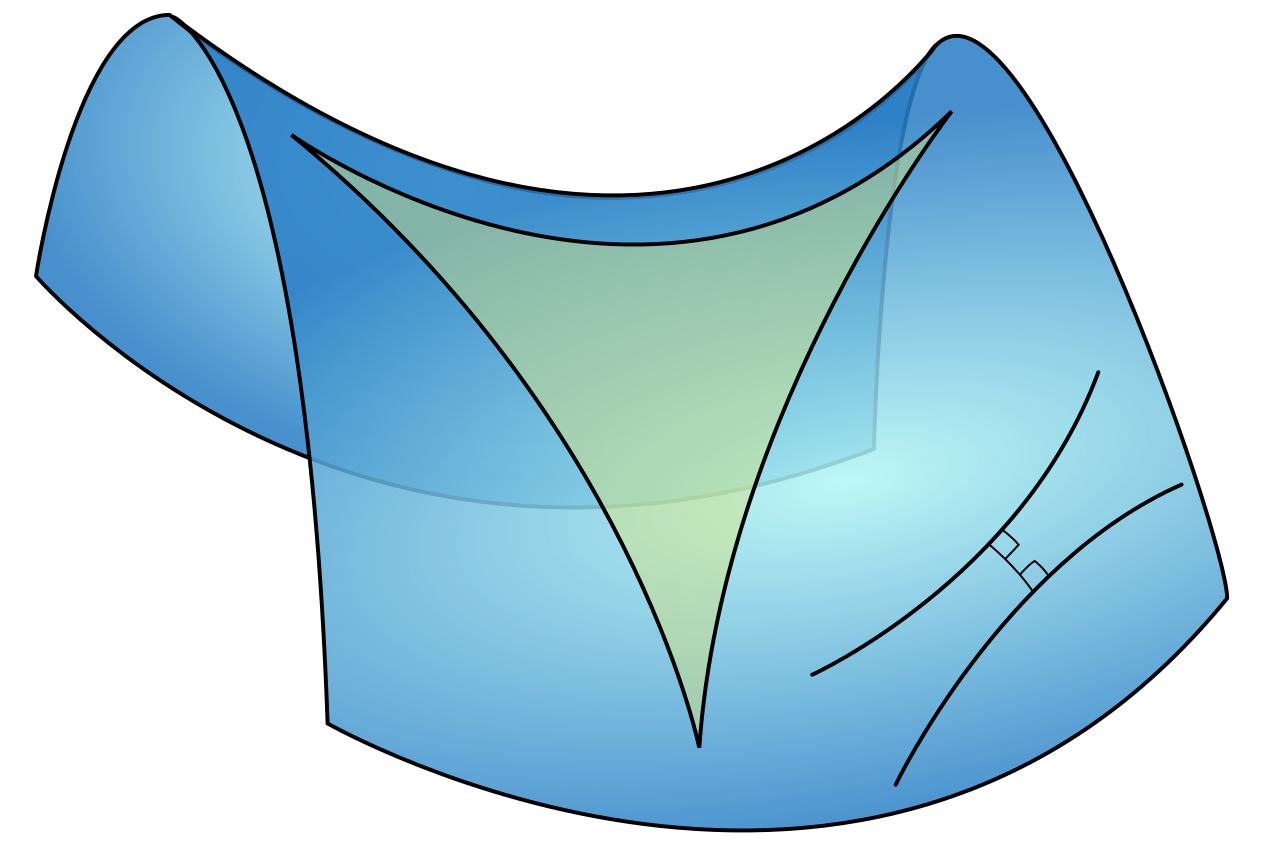
Differential geometry
The Language of Curved Spaces
Differential geometry is a sophisticated field of mathematics that extends the concepts of Euclidean geometry to curved spaces, often referred to as manifolds. It employs the tools of calculus, particularly differential calculus, to analyze the local properties of these spaces. Instead of dealing with rigid shapes, it focuses on smooth, continuous surfaces and higher-dimensional spaces where curvature is a fundamental characteristic.
The core idea is to approximate these complex shapes with simpler, flat Euclidean spaces over very small regions, allowing us to apply calculus techniques. This approach enables the precise measurement of quantities like length, area, volume, and, crucially, curvature itself, providing a powerful analytical framework for understanding geometric structures.
A Historical Trajectory of Geometric Insight
The roots of differential geometry can be traced back to the 17th-century development of calculus by Newton and Leibniz, which provided the essential machinery for studying change and motion. Early work by mathematicians like Jakob Bernoulli explored the properties of curves. However, the field truly blossomed in the 19th century with the groundbreaking contributions of Carl Friedrich Gauss, who introduced the concept of intrinsic curvature with his Theorema Egregium, demonstrating that curvature could be measured without reference to an embedding space. Bernhard Riemann further expanded the field by developing Riemannian geometry, introducing the concept of Riemannian manifolds and the Riemann curvature tensor, which became indispensable for modern physics, particularly general relativity.
The 20th century saw further abstraction and generalization with concepts like differential forms and fiber bundles.
The Indispensable Role in Modern Science and Technology
Differential geometry is not merely an abstract mathematical pursuit; it is a cornerstone of modern theoretical physics and advanced technology. Albert Einstein's theory of general relativity, which describes gravity as the curvature of spacetime, is formulated almost entirely within the language of differential geometry. The Einstein field equations, which govern the behavior of spacetime, are tensor equations defined on a Lorentzian manifold. Beyond physics, differential geometry is critical in computer graphics for modeling complex surfaces and animations, in robotics for path planning and control, and in data analysis for understanding high-dimensional datasets that may have underlying curved structures.
Its ability to describe and analyze complex, non-Euclidean geometries makes it an essential tool across numerous scientific and engineering disciplines.
Mechanisms of Measurement
The power of differential geometry lies in its precise measurement tools. A central concept is curvature, which quantifies how a manifold deviates from being flat. For surfaces in 3D space, concepts like Gaussian curvature and mean curvature are used.
In higher dimensions, the Riemann curvature tensor provides a complete description of the local curvature of a Riemannian manifold. This tensor, a complex mathematical object, captures how vectors change when parallel transported around infinitesimal loops. Other key tools include tangent spaces, which are vector spaces approximating the manifold at each point, and differential forms, which are functions that can be integrated over curves, surfaces, and volumes, providing a powerful way to express geometric and physical laws in a coordinate-independent manner.
From Cosmology to Computation
The applications of differential geometry are vast and impactful. In cosmology, it's used to model the large-scale structure and evolution of the universe, understanding concepts like the expansion of spacetime and the geometry of black holes. In computer vision and machine learning, techniques like manifold learning aim to find low-dimensional, curved structures within high-dimensional data, enabling better pattern recognition and dimensionality reduction.
The design of efficient algorithms for computer graphics, such as surface meshing and subdivision surfaces, relies heavily on differential geometric principles. Furthermore, it plays a role in fields like fluid dynamics and elasticity, where the geometry of the medium influences the physical phenomena.
Go deeper
Frequently Asked Questions
What is differential geometry?+
Why do mathematicians use flat spaces to study curved shapes?+
Who helped start differential geometry and why?+
How does differential geometry help with gravity?+
Where else is differential geometry used besides physics?+
Based on content from Wikipedia · Licensed under CC BY-SA 4.0