

Desalination: Making Ocean Water Drinkable!
Images
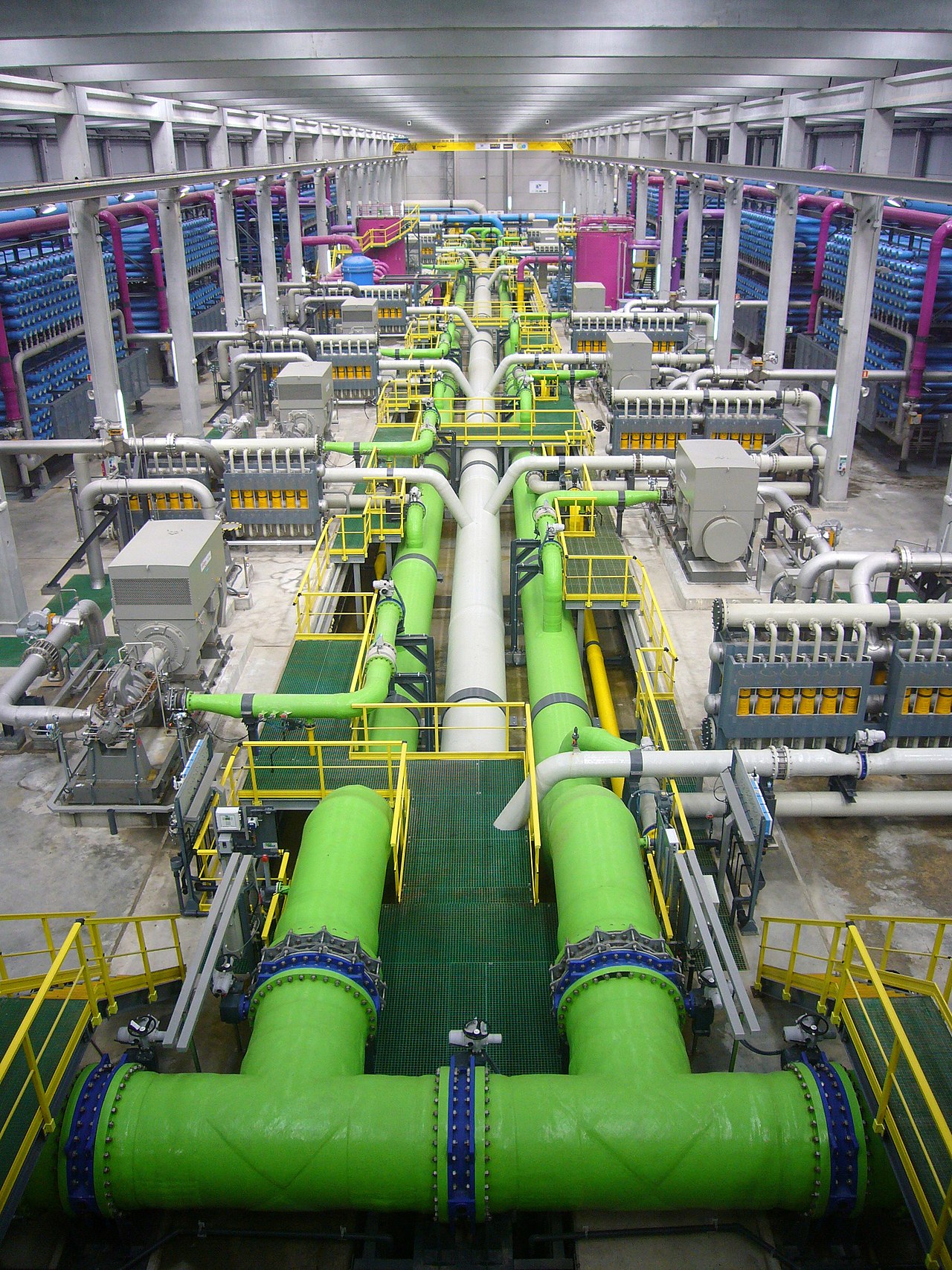
Desalination


The Imperative of Desalination in a Water-Stressed World
With over 97% of Earth's water locked in oceans, and freshwater resources increasingly strained by population growth, industrial demand, and climate change-induced droughts, desalination has transitioned from a niche technology to a critical component of global water security strategies. For nations in arid and semi-arid regions, particularly in the Middle East and North Africa, desalination plants represent the primary, and often sole, source of potable water. The technology's ability to provide a consistent, climate-independent supply is invaluable, underpinning economic development, public health, and geopolitical stability.
As conventional freshwater sources become depleted or unreliable, the reliance on desalination is projected to grow exponentially, necessitating continuous advancements in its efficiency and sustainability.
Technological Paradigms
The two dominant paradigms in desalination are thermal processes and membrane processes. Thermal methods, such as Multi-Stage Flash (MSF) distillation and Multi-Effect Distillation (MED), involve heating seawater to produce vapor, which is then condensed into freshwater. These methods are robust and can handle highly saline feedwater but are generally more energy-intensive and capital-costly.
Membrane processes, most notably Reverse Osmosis (RO), have become increasingly prevalent due to significant improvements in membrane technology and energy recovery systems. RO utilizes semi-permeable membranes to separate water from dissolved salts under high pressure. Its modularity, scalability, and lower energy consumption (especially with advanced energy recovery devices) have made it the technology of choice for many new large-scale plants, though it requires careful pre-treatment to prevent membrane fouling.
Environmental Footprints and Sustainability Innovations
The environmental impact of desalination is a significant area of research and development. Historically, the high energy demand of desalination plants, often met by fossil fuels, contributed to greenhouse gas emissions. However, a paradigm shift is underway, with increasing integration of renewable energy sources like solar and wind power to drive desalination processes, significantly reducing their carbon footprint.
Another critical environmental challenge is the management of brine, the highly concentrated saltwater byproduct. Improper discharge can harm marine ecosystems due to increased salinity and temperature. Innovations include advanced brine management techniques, such as zero liquid discharge (ZLD) systems, and exploring potential uses for brine concentrate, such as mineral extraction, to create a more circular economy approach.
Economic Viability and Future Outlook
The cost of desalinated water has steadily decreased over the past few decades, largely driven by technological advancements, economies of scale, and improved energy efficiency. While still generally more expensive than conventional freshwater sources, the cost is becoming increasingly competitive, especially in regions where alternative water supplies are scarce or prohibitively expensive to develop. Future advancements are expected to further reduce costs through more efficient membranes, novel energy recovery systems, and the integration of artificial intelligence for plant optimization.
As water scarcity intensifies globally, desalination is poised to play an even more pivotal role in ensuring water security, necessitating continued investment in research, infrastructure, and sustainable practices to mitigate its environmental and economic challenges.
Go deeper
Based on content from Wikipedia · Licensed under CC BY-SA 4.0