

Debasement: When Money Gets Tricky!
Images
Debasement
The Subtle Art of Monetary Deception
Debasement, in the context of coinage, refers to the deliberate reduction of the intrinsic value of a coin. This is typically achieved by decreasing the proportion of precious metal (such as gold or silver) within the coin and increasing the proportion of less valuable base metals (like copper or nickel). Crucially, the debased coin continues to circulate at its original face value, meaning its stamped denomination remains unchanged.
This practice was a common tool for rulers and governments throughout history, particularly when faced with financial pressures such as funding wars, paying off debts, or financing large infrastructure projects. By debasing their currency, they could effectively create more money from a finite supply of precious metals, thereby increasing the money supply without necessarily increasing the actual wealth of the state. The effectiveness of debasement often depended on the degree of reduction and the public's awareness of the change.
A Chronicle of Coinage Manipulation
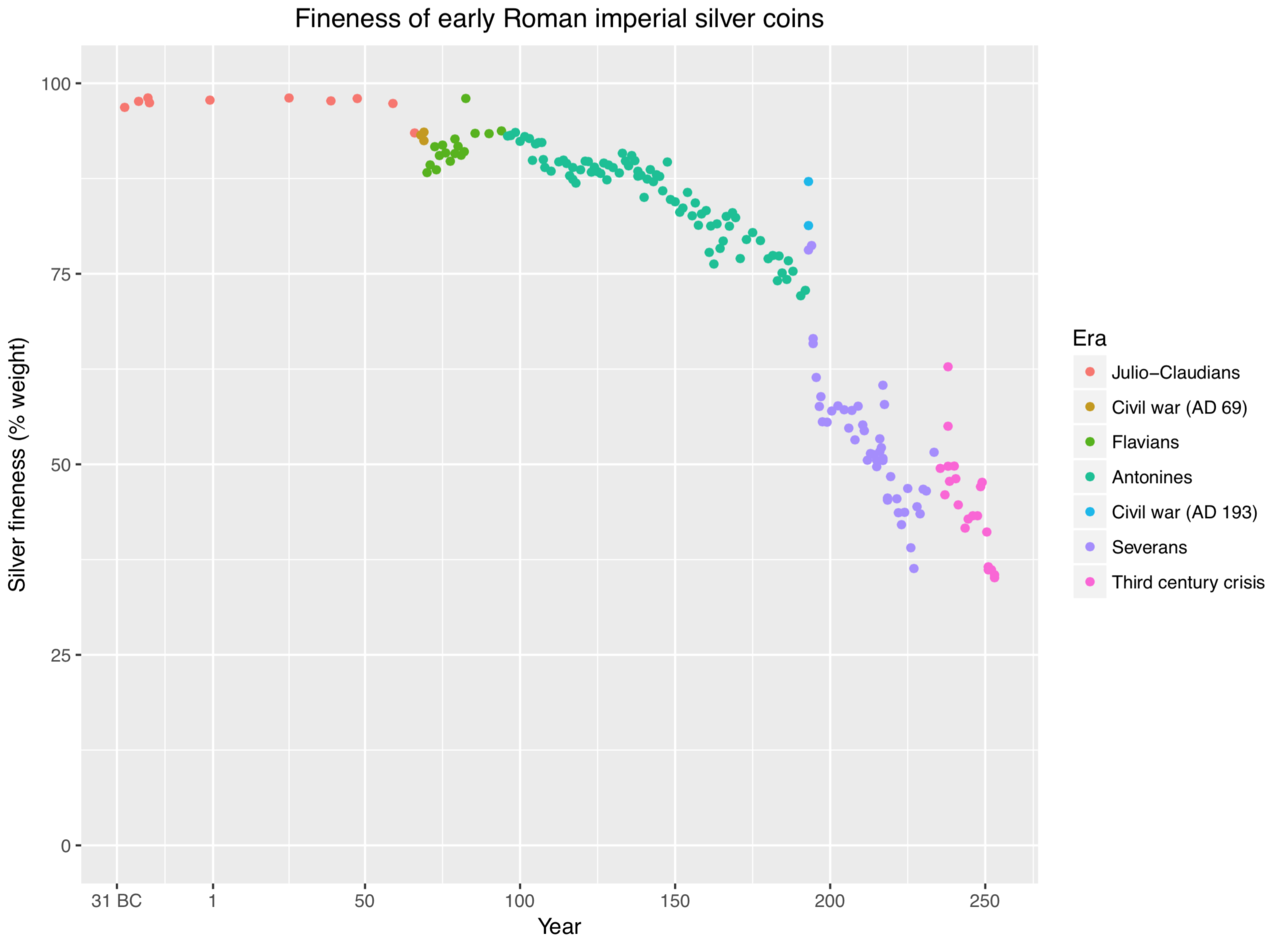
The history of debasement stretches back to antiquity. Ancient civilizations, including the Greeks and Romans, frequently resorted to this practice. For instance, Roman emperors often reduced the silver content of the denarius, replacing it with base metals.
This allowed them to mint more coins to meet the demands of their vast empire, but it also sowed the seeds of inflation and economic instability. During the medieval period, monarchs continued this tradition, often leading to periods of monetary confusion and distrust. In more modern times, while the advent of fiat currency (money not backed by a physical commodity) has changed the landscape, the underlying principle of altering the perceived value of money remains a relevant concept in economic history.
The long-term consequences of consistent debasement have often been a decline in the currency's purchasing power and a loss of public confidence.
The Far-Reaching Economic Ramifications
The significance of debasement lies in its profound impact on economic stability and public trust. When the intrinsic value of money decreases while its face value remains constant, it leads to inflation. This is because more units of currency are chasing the same amount of goods and services, driving up prices.
Consequently, the purchasing power of each individual unit of currency diminishes. For example, if a loaf of bread cost one silver coin, and that coin is debased, it might eventually cost two debased coins. This erosion of value can lead to a Gresham's Law scenario, where 'bad money drives out good' – people hoard the older, more valuable coins and spend the newer, debased ones.
Ultimately, persistent debasement can undermine the confidence in a nation's currency, leading to economic uncertainty, capital flight, and a potential collapse of the monetary system.
Mechanisms and Motivations Behind Debasement
The process of debasement involves precise metallurgical and minting techniques. Governments would typically alloy precious metals with cheaper ones, such as copper, tin, or nickel. The ratio of precious to base metal would be altered, often gradually to avoid immediate detection.
The coins would then be struck with the same dies as their predecessors, maintaining their familiar appearance and denomination. The primary motivation was almost always economic expediency. Rulers sought to increase their seigniorage (the profit made by a government from issuing currency) or to finance expenditures that exceeded their revenue.
In essence, debasement allowed governments to 'print' money by devaluing existing currency, a shortcut that often came with severe long-term economic costs. The success or failure of debasement strategies often depended on the scale of the practice, the transparency (or lack thereof), and the overall economic health of the issuing state.
Debasement in Modern Economic Discourse
While physical coinage debasement is less prevalent today due to the dominance of fiat currency and digital transactions, the concept remains highly relevant in modern economic discussions. The principles of debasement are echoed in debates about quantitative easing, monetary policy, and the potential for governments to 'inflate away' debt. When central banks inject large amounts of money into the economy, it can have similar inflationary effects to historical debasement, albeit through different mechanisms.
Understanding debasement provides crucial historical context for appreciating the challenges of maintaining currency stability and the delicate balance between government financial needs and the integrity of its monetary system. It serves as a stark reminder of the potential consequences when the value of money is manipulated.
Go deeper
Based on content from Wikipedia · Licensed under CC BY-SA 4.0