

De Facto: What's Real Even If It's Not Written Down!
Images

Flag-map of India (de-facto)






The Unwritten Constitution
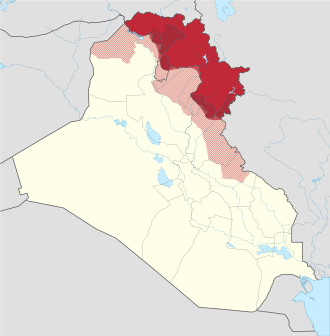
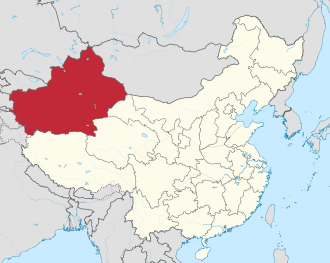
'De facto' is a critical concept for understanding the nuanced interplay between formal legal structures and the actual exercise of power. It signifies a state of affairs that exists in reality, irrespective of its legal standing. This is particularly relevant in governance, where a de facto government might control territory and population without any international recognition or constitutional legitimacy.
Such governments often arise during or after coups, civil wars, or periods of state collapse. Their authority is derived not from legal decree, but from their ability to command loyalty, enforce order, and provide essential services. The persistence of de facto regimes challenges the primacy of de jure authority, forcing international bodies and legal scholars to grapple with how to engage with entities that hold effective control but lack formal recognition.
This can lead to complex diplomatic and ethical dilemmas, as acknowledging de facto power might legitimize an illegitimate regime, while ignoring it can mean failing to address the needs of populations under its control.
From Roman Law to Modern Discourse
The distinction between 'de facto' and 'de jure' has deep roots in Roman law, where jurists recognized that the practical application of rules and customs often diverged from their codified forms. This conceptual framework was inherited and refined through centuries of legal and political thought. In the modern era, the term 'de facto' has become indispensable for analyzing various phenomena beyond just governments.
It applies to de facto standards in technology, where a particular product or protocol becomes dominant through widespread adoption rather than official mandate (e.g., early dominance of VHS over Betamax). It also describes de facto segregation, where racial separation exists due to social and economic factors, even if de jure segregation is illegal. The evolution of its usage highlights a continuous societal effort to reconcile the ideal with the actual, the prescribed with the practiced.
The Significance of the Unofficial
The importance of 'de facto' lies in its ability to illuminate the often-unseen mechanisms that govern our lives. While de jure rules provide a framework, de facto realities dictate how that framework is navigated, circumvented, or enforced. In international relations, recognizing de facto borders or de facto authorities can be a pragmatic necessity, even if it contradicts established legal claims.
In social contexts, de facto norms shape behavior, influence public opinion, and can even lead to the de facto marginalization of certain groups. Understanding de facto situations allows for a more accurate assessment of power dynamics, social cohesion, and the effectiveness of policies. It encourages a critical examination of whether legal pronouncements are translating into tangible outcomes and prompts questions about the sources of legitimacy and authority in any given system.
Mechanisms of De Facto Existence
De facto status is not typically established through a formal declaration but emerges organically through sustained practice and acceptance. For a de facto government, this might involve controlling key infrastructure, collecting taxes, and maintaining a semblance of order, leading populations and potentially external actors to interact with it as the effective authority. In the case of de facto standards, widespread market adoption, network effects, and user convenience often drive their prevalence.
Similarly, de facto social norms arise from repeated interactions, cultural transmission, and peer pressure. The key mechanism is the establishment of a functional reality that is widely recognized and acted upon, often because it is more practical, efficient, or simply the path of least resistance compared to adhering strictly to de jure provisions.
De Facto in the Digital Age and Beyond
The concept of 'de facto' is perhaps more relevant than ever in our increasingly complex world. In the digital realm, de facto standards for data formats, communication protocols, and platform interoperability emerge constantly, shaping the technological landscape. Social media algorithms, for instance, can create de facto public squares, influencing discourse and access to information in ways not dictated by any formal law.
Furthermore, the rise of non-state actors and transnational corporations can create de facto governance structures in certain spheres, operating with significant influence independent of national legal frameworks. Analyzing these de facto arrangements is crucial for understanding contemporary power, influence, and the evolving nature of authority in the 21st century, pushing us to constantly re-evaluate the relationship between formal structures and lived experience.
Go deeper
Frequently Asked Questions
What does "de facto" mean?+
Why do some governments become de facto?+
How can a technology become a de facto standard?+
What is the difference between de facto and de jure?+
Why is it important to know about de facto situations?+
Based on content from Wikipedia · Licensed under CC BY-SA 4.0