

Danza: The Dancing Music of Puerto Rico!
Images
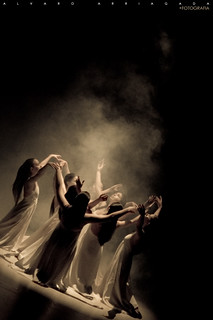
. Academia de danza Juanita Toro


The Genesis of Danza
Danza, a distinguished musical genre and ballroom dance, traces its origins to Ponce, Puerto Rico, flourishing significantly around the turn of the 20th century. It emerged as a sophisticated evolution of earlier forms like the contradanza, adapting and refining its structure for the elegant social setting of the ballroom. Unlike vocal genres such as the habanera, Danza is predominantly instrumental, emphasizing melodic development and rhythmic complexity.
Its essence lies in its nature as a sequence dance, performed to a prescribed pattern, often involving geometric formations like squares, which provided a structured yet expressive canvas for dancers. The gradual 'creolization' of Danza throughout the 19th century is central to its identity. This process involved a conscious and artistic integration of European harmonic structures and melodic sensibilities with the vibrant rhythms and improvisational spirit of African musical traditions.
This fusion was driven by the burgeoning Creole identity, where individuals born in the Caribbean embraced their homeland and sought to express it through their art.
Architects of Sound
The elevation of Danza to a high art form is inextricably linked to the genius of its composers. Manuel Gregorio Tavárez (1840-1902) is widely revered as the 'Father of Puerto Rican Danza,' laying much of the groundwork for the genre's development with his innovative compositions. Following in his footsteps, Juan Morel Campos (1857-1896) is often considered the composer who brought Danza to its zenith.
Campos, in particular, was lauded for his ability to imbue the music with profound emotional depth and sophisticated orchestration, transforming it from a mere dance accompaniment into a concert-worthy art form. Beyond Puerto Rico, composers like Cuba's Ignacio Cervantes and Curaçao's Jan Gerard Palm also contributed significantly to the broader Caribbean Danza tradition, showcasing its regional variations and widespread appeal. These artists were not merely musicians; they were cultural ambassadors, using their compositions to articulate a distinct Caribbean identity.
The Cultural Significance
Danza's importance transcends its musical and choreographic elements; it stands as a powerful testament to Puerto Rican cultural identity and resilience. In an era marked by colonial influences and the imposition of foreign cultural norms, the development of Danza represented a profound act of cultural self-determination. By consciously blending European and African musical vocabularies, composers created a soundscape that was authentically Creole, reflecting the lived experiences and heritage of the island's inhabitants.
This musical synthesis was a declaration of pride, asserting that the Caribbean possessed its own rich cultural traditions worthy of celebration and preservation. The genre provided a sophisticated medium for social commentary and emotional expression, capturing the nuances of Creole life. The enduring legacy of Danza lies in its ability to connect contemporary generations to their historical roots, serving as a living archive of cultural exchange and artistic innovation.
Structural Sophistication
The musical structure of Danza is as intricate as its cultural underpinnings. As a sequence dance, its composition is inherently tied to choreographic patterns, typically involving a series of distinct musical phrases designed to accompany specific dance steps and formations. While variations exist, a common structure might include an introduction, followed by several contrasting sections (often referred to as 'movements' or 'parts'), culminating in a coda.
The instrumental nature of Danza allows for a rich exploration of harmony, melody, and orchestration. Composers skillfully employed techniques such as chromaticism, syncopation, and lyrical melodic lines, drawing from both European classical traditions and Afro-Caribbean rhythmic patterns. The debate regarding whether Danza was a distinct evolution from or merely a simplification of the name 'contradanza' highlights the fluid nature of musical evolution.
Regardless, Danza established itself as a unique genre, characterized by its refined elegance and its deep connection to the social and cultural milieu of its origin.
See also
Frequently Asked Questions
What is Danza?+
Why is Danza called a sequence dance?+
Who was the Father of Puerto Rican Danza?+
How did Danza show Puerto Rico's culture?+
Where did Danza become popular?+
Based on content from Wikipedia · Licensed under CC BY-SA 4.0