

Cycads: Ancient Plant Superstars!
Images

Cycad
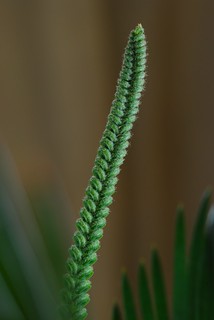


The Enduring Legacy of Gymnosperms
Cycads represent a unique and ancient group of seed-bearing plants, classified within the division Cycadophyta. Their evolutionary origins trace back to the Permian period, predating the diversification of angiosperms (flowering plants) and even many extant conifer lineages. During the Mesozoic Era, cycads were ecologically dominant, forming vast forests and serving as a primary food source for herbivorous dinosaurs.
Their morphology is characterized by a stout, often unbranched trunk, which is primarily composed of parenchyma tissue and stores starch, and a crown of large, pinnately compound leaves. Unlike angiosperms, cycads are gymnosperms, meaning their seeds are not enclosed within an ovary but are borne naked on the surface of cone scales. They are typically dioecious, with separate male and female plants, and their reproduction often relies on specific pollinators, such as beetles, which are attracted to their cones.
This ancient reproductive strategy and unique morphology make them invaluable for studying plant evolution and paleobotany.
Geographic Distribution and Ecological Niches
The extant cycads, comprising about 300-350 species, are distributed primarily in tropical and subtropical regions across the globe, with notable centers of diversity in Southeast Asia, Australia, and Central America. They occupy a wide array of ecological niches, from humid, shaded rainforest understories to arid, exposed rocky slopes and coastal dunes. This broad habitat tolerance is a result of millions of years of adaptation.
For instance, species in drier regions often possess adaptations like deep taproots for water acquisition and thick cuticles to reduce water loss. In their native habitats, cycads play crucial ecological roles. They can contribute to soil stabilization, provide microhabitats for various invertebrates, and serve as a food source for specialized fauna.
Their presence is often indicative of specific soil conditions and climatic regimes, making them important indicators of ecosystem health.
Physiological Adaptations and Symbiotic Partnerships
Cycads exhibit several remarkable physiological adaptations that have contributed to their long-term survival. Their slow growth rate and long lifespans are characteristic of many ancient plant lineages. The trunk serves as a significant storage organ for carbohydrates, enabling them to endure periods of drought or low light.
A particularly fascinating adaptation is their obligate symbiotic relationship with cyanobacteria (blue-green algae), which reside in specialized cavities within the coralloid roots. These cyanobacteria fix atmospheric nitrogen, converting it into ammonia, which is then utilized by the cycad. This partnership is critical for nutrient acquisition, especially in nutrient-poor soils, and highlights a sophisticated co-evolutionary strategy.
Furthermore, their tough, leathery leaves, often armed with sharp spines, provide effective defense against herbivory, a vital trait in environments populated by large herbivores.
Conservation Imperatives and Future Outlook
Despite their evolutionary resilience, cycads are among the most threatened plant groups on Earth. The International Union for Conservation of Nature (IUCN) Red List classifies a significant proportion of cycad species as Endangered (EN) or Critically Endangered (CR). The primary drivers of this decline are habitat loss and fragmentation due to deforestation for agriculture, logging, and urban expansion.
Additionally, the illegal collection of cycads for the ornamental plant trade poses a severe threat, as their unique aesthetic appeal makes them highly desirable in horticulture. Conservation efforts are multifaceted, involving habitat protection, captive breeding programs, and public education to reduce demand for wild-collected specimens. Ex situ conservation in botanical gardens and seed banks is crucial for preserving genetic diversity and providing potential material for reintroduction programs.
Understanding the intricate ecological roles and evolutionary history of cycads underscores the urgency of their protection for future generations and for maintaining global biodiversity.
See also
Frequently Asked Questions
What are cycads?+
Why were cycads so important when dinosaurs roamed the Earth?+
How do cycads get the nitrogen they need?+
Where can I find cycads today?+
Why are many cycads endangered?+
Based on content from Wikipedia · Licensed under CC BY-SA 4.0