

Curling
Images
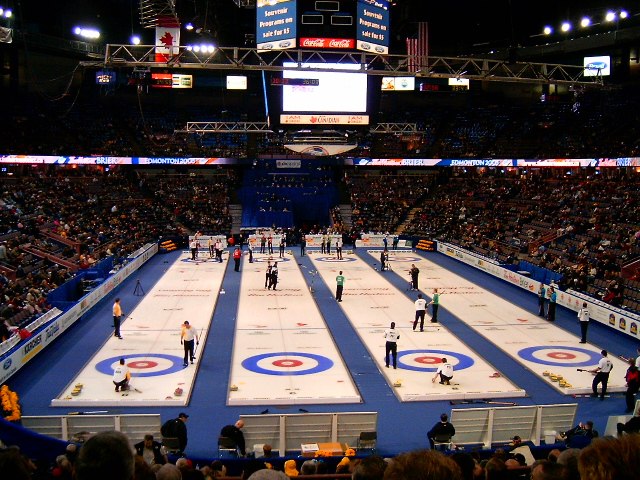
Curling


The Physics and Technique of the Stone Delivery
Curling is a sport where the delivery of the stone is paramount, involving a complex interplay of balance, force, and precision. Each of the four players on a team delivers two stones per end. The delivery begins with the player in a 'hack' – a foot-hold set into the ice – pushing off with one foot while gliding on the other.
The stone is released with a specific rotation, imparting the 'curl' that gives the sport its name. This rotation, combined with the friction from the 'pebble' (tiny water droplets frozen onto the ice), causes the stone to curve. The amount of curl is influenced by the release angle, the speed of the stone, and the pebble's texture.
Mastering this technique requires years of practice to achieve consistent accuracy and control, making each shot a calculated risk and a display of athletic finesse.
A Global Evolution
The origins of curling are deeply embedded in the Scottish landscape, dating back to the early 16th century. Initially, the game was played with naturally occurring stones, often irregular in shape, on frozen bodies of water. This rudimentary form lacked the precision and control seen today.
As the sport matured, particularly through the 18th and 19th centuries, standardized equipment emerged. The iconic curling stone, crafted from dense granite, became a symbol of the sport's evolution. The development of formal clubs and rules facilitated its spread beyond Scotland.
Curling's inclusion in the Olympic Games, first as a demonstration sport and then as a full medal event, solidified its status as a global athletic competition, attracting athletes and fans worldwide and showcasing its unique blend of physical and mental challenge.
Strategic Depth
The moniker 'chess on ice' aptly describes curling's profound strategic dimensions. Beyond the physical act of sliding a stone, teams engage in intricate tactical planning, orchestrated by the 'skip'. The skip, positioned at the scoring end, calls shots, directs sweeping, and makes crucial decisions about stone placement.
Each shot serves multiple purposes: scoring points, setting up guards to protect existing stones, removing opponent stones ('take-outs'), or drawing stones into scoring positions. The game is dynamic; a single well-placed stone can shift the momentum of an entire end. Understanding ice conditions, anticipating opponent strategies, and executing shots under pressure are vital.
This constant decision-making and adaptation make curling a mentally demanding sport that rewards foresight and tactical acumen as much as physical skill.
The Science of the Sweep and Ice Preparation
The seemingly simple act of sweeping in curling is rooted in scientific principles. When players sweep vigorously with their brooms, they slightly melt the pebble on the ice surface. This melting creates a thin film of water, reducing friction.
A reduced friction allows the stone to travel farther and straighter, and critically, it can also influence the stone's curl. The intensity and duration of sweeping are carefully controlled by the sweepers, guided by the skip's calls. The ice itself is a crucial element, prepared with a 'pebble' technique.
This involves spraying water droplets onto the ice surface, which freeze into small, raised bumps. These pebbles are essential for the stone to curl and for the sweeping action to be effective. The precise preparation of the ice is a specialized skill, vital for fair play and optimal performance.
Curling's Equipment
The equipment in curling is designed for performance and safety. The 'curling stone' is the most significant piece of equipment, weighing approximately 42-44 pounds (19-20 kg) and made from a specific type of granite, typically from Ailsa Craig in Scotland. It features a handle for grip and a polished base. 'Curling shoes' are specialized footwear; one shoe has a slippery sole (often Teflon or a similar material) to allow for the gliding motion during delivery, while the other has a rubber sole for grip and stability. 'Brooms' or 'sweepers' are used for manipulating the ice surface.
Modern brooms often use synthetic materials for optimal friction and durability. Protective gear, such as helmets, is increasingly common, especially in competitive play, reflecting the sport's dynamic nature and the potential for falls on the slick ice surface.
See also
Frequently Asked Questions
What is curling?+
How do players slide the stone?+
Why does the stone curve?+
What is sweeping and why is it important?+
How did curling become an Olympic sport?+
Based on content from Wikipedia · Licensed under CC BY-SA 4.0