

Cro-Magnon: Our Amazing Ancient Cousins!
Images

Cro-Magnon


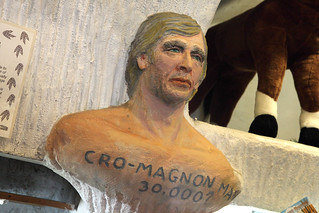


Arrival and Adaptation in Ice Age Europe
The emergence of Cro-Magnons, identified as anatomically modern humans (Homo sapiens), in Europe around 40,000 years ago represents a pivotal moment in human prehistory. Their arrival coincided with the Upper Paleolithic period, a time of significant climatic fluctuations and the presence of large megafauna. Physically, they were characterized by taller stature, lighter build, and cranial features distinct from contemporary hominins like Neanderthals, possessing a prominent chin and a high, rounded skull.
These early Europeans demonstrated remarkable adaptability, colonizing diverse environments across the continent, from the Mediterranean coast to the northern plains. Their success was underpinned by technological innovation and a capacity for complex social organization, allowing them to thrive in challenging glacial conditions and outcompete other hominin groups, ultimately leading to the replacement of Neanderthals.
Technological Sophistication and Subsistence Strategies
Cro-Magnon subsistence strategies were highly effective, relying on sophisticated hunting techniques and a broad-spectrum diet. They were adept hunters of large game, including mammoths, woolly rhinoceros, reindeer, and horses, utilizing projectile weapons like spear-throwers (atlatls) and finely crafted stone points. Their toolkits were diverse and specialized, featuring microliths, blades, scrapers, awls, and burins, indicating a high degree of technological planning and execution.
Beyond hunting, they exploited marine resources, gathered a variety of plant foods, and likely engaged in seasonal migrations following animal herds. This ecological flexibility allowed them to exploit a wide range of resources and adapt to different regional environments, contributing to their successful expansion across Eurasia.
The Explosion of Art and Symbolic Expression
Perhaps the most striking legacy of the Cro-Magnons is their prolific artistic output, which signifies a profound leap in symbolic thought and cultural expression. The Paleolithic cave art found in sites such as Lascaux, Chauvet, and Altamira showcases an astonishing level of skill and realism in depicting animals, human figures, and abstract signs. These artworks, often created in deep, inaccessible parts of caves, suggest ritualistic or shamanistic purposes, indicating a complex belief system and a rich inner life.
Beyond cave paintings, they produced portable art, including carved figurines (like the Venus figurines), bone and ivory carvings, and personal ornaments such as beads and pendants. This widespread artistic production highlights a shared cultural identity and sophisticated cognitive abilities among these early modern humans.
Legacy and Significance in Human Evolution
The Cro-Magnons represent a critical chapter in the story of human evolution, embodying the successful establishment of Homo sapiens as the dominant hominin species in Europe. Their technological advancements, complex social structures, and unparalleled artistic achievements provided a foundation for subsequent human cultural development. Studying their material culture, skeletal remains, and genetic heritage offers invaluable insights into the cognitive revolution, the development of language, and the expansion of human populations across the globe.
They are not merely ancient figures but our direct ancestors whose innovations and adaptability paved the way for the diverse and complex human societies that exist today, underscoring the deep roots of human creativity and resilience.
See also
Based on content from Wikipedia · Licensed under CC BY-SA 4.0