

Creutzfeldt–Jakob disease
Images

Organoid during development




The Molecular Cascade
Creutzfeldt-Jakob disease (CJD) represents a class of fatal neurodegenerative disorders known as transmissible spongiform encephalopathies (TSEs). The etiological agent is a prion, an abnormally folded isoform of a normal cellular protein (PrP^C). This misfolded prion protein (PrP^Sc) possesses a unique ability to induce conformational changes in its normal counterpart, leading to a chain reaction of misfolding.
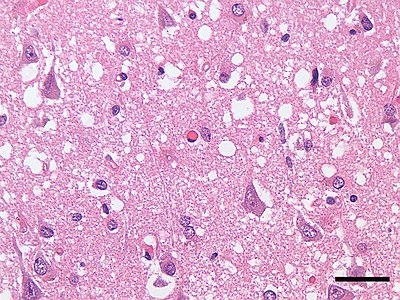
This autocatalytic process results in the accumulation of insoluble PrP^Sc aggregates, primarily in the brain and spinal cord. These aggregates are thought to disrupt neuronal function and ultimately lead to neuronal death, creating characteristic 'spongiform' vacuolation in brain tissue. The precise molecular mechanisms by which prion accumulation triggers neurotoxicity are still under intense investigation, but theories include endoplasmic reticulum stress, mitochondrial dysfunction, oxidative stress, and the activation of inflammatory pathways within the central nervous system.
The progressive loss of neurons results in the severe cognitive and motor deficits observed in CJD patients.
A Historical Trajectory
The clinical entity of Creutzfeldt-Jakob disease was first meticulously described in the early 20th century through the independent observations of German neurologists Hans Gerhard Creutzfeldt (1920) and Alfons Maria Jakob (1921). Their detailed case reports laid the foundation for understanding this rare and devastating neurological condition. The term 'Creutzfeldt-Jakob disease' was later formally introduced by Walther Spielmeyer in 1922.
For many years, the exact causative agent remained elusive, with speculation ranging from slow viruses to other infectious agents. A paradigm shift occurred in the 1980s with the work of Stanley Prusiner, who proposed the 'prion hypothesis.' This groundbreaking theory posited that an infectious agent composed solely of protein, devoid of nucleic acid, could cause disease. Prusiner's research, for which he was awarded the Nobel Prize in Physiology or Medicine in 1997, revolutionized the understanding of infectious diseases and provided the definitive explanation for CJD and other TSEs.
This historical progression highlights the evolution of scientific thought from clinical phenomenology to molecular pathogenesis.
The Clinical Manifestations
The clinical presentation of CJD is characterized by a rapid and relentless decline in neurological function. Initial symptoms are often subtle and can include progressive memory impairment, behavioral changes such as anxiety or depression, and difficulties with coordination (ataxia). As the disease advances, more severe symptoms emerge, including profound dementia, leading to a significant loss of cognitive abilities. Myoclonus, or involuntary muscle jerks, is a hallmark symptom in many cases.
Visual disturbances, such as blurred vision or double vision, and auditory impairments can also occur. In the later stages, patients typically experience progressive weakness, leading to immobility, and may develop blindness and deafness. The disease invariably progresses to a state of coma, and the vast majority of individuals succumb to the illness within a year of diagnosis, underscoring its aggressive and invariably fatal nature.
The rapid progression distinguishes CJD from many other neurodegenerative disorders.
Diagnostic Pathways
Diagnosing CJD presents a significant challenge due to its rarity and the non-specific nature of early symptoms, which can overlap with other neurological conditions. Definitive diagnosis traditionally requires post-mortem neuropathological examination of brain tissue. However, significant advancements have been made in ante-mortem diagnostic techniques.
Electroencephalography (EEG) can reveal characteristic periodic sharp wave complexes, although these are not always present, especially in early stages. Magnetic resonance imaging (MRI) of the brain can show characteristic abnormalities, such as T2 hyperintensities in the basal ganglia and cortex, and diffusion-weighted imaging (DWI) is particularly sensitive. Cerebrospinal fluid (CSF) analysis can detect specific biomarkers, such as 14-3-3 proteins and tau protein, which are elevated in CJD.
The development of the real-time quaking-induced conversion (RT-QuIC) assay has been a major breakthrough, offering high sensitivity and specificity for detecting PrP^Sc in CSF and other biological samples, even in the early stages of the disease. This assay has significantly improved the ability to diagnose CJD during a patient's lifetime.
Epidemiology and Etiology
Creutzfeldt-Jakob disease affects approximately one person per million worldwide each year. The vast majority of cases, around 85%, are sporadic (sCJD), meaning they occur randomly for unknown reasons. Approximately 7.5% of cases are inherited, known as familial CJD (fCJD), and are caused by mutations in the PRNP gene, which encodes the prion protein.
These mutations are inherited in an autosomal dominant pattern. A smaller proportion of cases arise from iatrogenic transmission (iCJD), typically through contaminated medical procedures such as neurosurgery with inadequately sterilized instruments, or the use of contaminated dura mater grafts or human growth hormone derived from pituitary glands. Variant CJD (vCJD), distinct from sporadic CJD, is linked to the consumption of beef contaminated with the prion agent responsible for bovine spongiform encephalopathy (BSE), commonly known as 'mad cow disease.' While sporadic CJD is not known to spread through casual contact or blood transfusions, vCJD has shown potential for transmission via blood products.
Understanding these different etiologies is crucial for public health surveillance and prevention strategies.
See also
Frequently Asked Questions
What is Creutzfeldt–Jakob disease?+
How does the wrong protein cause problems in the brain?+
Can Creutzfeldt–Jakob disease spread from one person to another?+
What are the first signs of Creutzfeldt–Jakob disease?+
How long does someone usually live after being diagnosed?+
Based on content from Wikipedia · Licensed under CC BY-SA 4.0