

Crease (cricket)
Images

Crease (cricket)




The Geometry of the Game
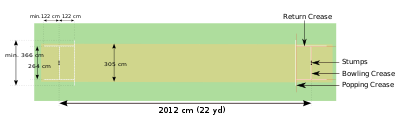
The cricket crease is far more than a mere visual marker on the field; it is the fundamental geometric construct that delineates the operational zones for players and dictates the legality of actions. Governed by Law 7 of the Laws of Cricket, these white lines, whether painted or chalked, are not arbitrary but precisely measured. The pitch itself is defined by the 22-yard (20.12-meter) length between the two bowling creases.
This specific distance is a cornerstone of cricket's unique rhythm and pacing. The 'bowling crease' is the line directly in front of the stumps, representing the boundary the bowler aims to breach. The 'popping crease', parallel to the bowling crease and 4 feet (1.22 meters) in front of the stumps, serves as the batter's sanctuary and a critical reference point for the bowler's front foot.
The 'return creases', perpendicular to the other two, define the width of the bowler's lane, ensuring deliveries are made from a consistent angle. Together, these lines form a micro-environment where the duel between bowler and batter unfolds.
The Crease as Arbiter
The creases function as the silent adjudicators of the game, providing umpires with objective criteria for making crucial decisions. The rule regarding the wicket-keeper moving in front of the stumps before the ball is delivered is a prime example; the crease line helps determine if an infraction has occurred. Historically, the bowler's back foot landing behind the bowling crease was a condition for a legal delivery.
While this specific rule has been superseded, the principle of the bowler's footwork relative to the crease remains paramount. The modern rule, requiring the bowler's front foot to land with some part behind the popping crease during the delivery stride, is a direct descendant of these older regulations. This ensures that the bowler imparts momentum from behind the crease, preventing them from 'overstepping' and gaining an unfair advantage.
The creases, therefore, are integral to the spirit and letter of cricket's laws.
Strategic Implications
The strategic depth of cricket is intrinsically linked to the dimensions and rules surrounding the creases. The 22-yard pitch length influences the speed and bounce of the ball, affecting the bowler's choice of delivery and the batter's shot selection. Bowlers strategize their run-ups and bowling actions to maximize effectiveness within the confines of the return creases and to target the batter's position relative to the popping crease.
For batters, the popping crease defines their 'safe zone' and influences their forward defensive techniques and attacking shots. They must judge the length of the ball and decide whether to advance down the pitch or play from within their crease. The interplay between the bowler's attempt to hit the stumps and the batter's effort to defend them, all within the boundaries set by the creases, creates the tactical chess match that is so captivating about cricket.
Evolution and Modern Relevance
The concept of the crease has evolved alongside cricket itself, adapting to changes in playing styles and equipment. While the fundamental purpose of defining playing areas remains, the specific interpretations and rules have been refined over centuries. The introduction of the popping crease and the precise regulations regarding foot placement are testaments to this evolution, aimed at ensuring fairness and enhancing the contest.
In modern cricket, with its faster pace and increased athleticism, the creases continue to be a critical element. They provide the necessary structure for the game's complex rules to be applied consistently, from grassroots level to the highest international competitions. The humble white lines are, in essence, the bedrock upon which the entire edifice of cricket is built, ensuring a level playing field for all participants.
See also
Frequently Asked Questions
What is a cricket crease?+
Where is the popping crease and why is it important?+
How far apart are the two bowling creases on a cricket pitch?+
Why must a bowler's front foot land behind the popping crease?+
What happens if a bowler steps over the crease?+
Based on content from Wikipedia · Licensed under CC BY-SA 4.0