

Círculo de Bellas Artes
Images

Círculo de Bellas Artes


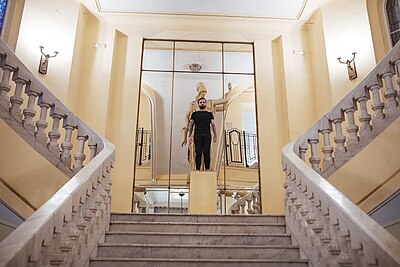
Foundations and Architectural Grandeur
Established in 1880, the Círculo de Bellas Artes (CBA) stands as a testament to enduring cultural patronage and artistic evolution in Spain. This private, non-profit organization was conceived as a hub for artistic and intellectual exchange, fostering a community dedicated to the advancement and appreciation of the fine arts. Its physical embodiment, the magnificent building located in Madrid, is a masterpiece of early 20th-century architecture.
Designed by the acclaimed architect Antonio Palacios and completed in 1926, the structure itself is a significant cultural artifact. Its architectural style reflects the grandeur and ambition of the era, making it a landmark in Madrid's urban landscape. The building's profound historical and artistic value was officially recognized in 1981 when it was declared a 'Bien de Interés Cultural,' a designation that underscores its importance as a protected national heritage site.
This architectural gem provides a fitting and inspiring backdrop for the CBA's extensive cultural programming, housing a diverse array of facilities that cater to a wide spectrum of artistic and intellectual endeavors.
A Dynamic Epicenter of Cultural Programming
The Círculo de Bellas Artes distinguishes itself as one of Madrid's most active and comprehensive cultural centers, embracing a truly multidisciplinary approach. Its programming is a vibrant tapestry woven from threads of visual arts, music, film, theatre, literature, science, philosophy, and poetry. This broad scope ensures that the CBA remains relevant and engaging for a diverse audience, fostering cross-pollination of ideas between different disciplines.
The institution boasts an impressive array of facilities designed to support this extensive range of activities. These include dedicated exhibition rooms showcasing contemporary and historical artworks, a cinema for film screenings, a theatre for live performances, concert halls for musical events, lecture halls for academic and public discourse, and artist workshops that provide creative spaces. Furthermore, its library serves as a valuable resource for research and study, while its cafeteria and shop offer spaces for social interaction and reflection.
The constant stream of daily activities ensures that the CBA is a living, breathing organism, perpetually generating new cultural experiences and intellectual dialogues.
Evolution and Enduring Relevance
The journey of the Círculo de Bellas Artes from its inception in 1880 to its current status reflects a remarkable capacity for adaptation and growth. Initially founded by artists and intellectuals seeking a collective space for artistic development and exhibition, the organization has consistently evolved to meet the changing cultural landscape. The construction of its iconic building in 1926 provided a physical anchor and a grander stage for its expanding ambitions.
Over its long history, the CBA has navigated significant social and artistic transformations in Spain, including periods of political upheaval and artistic innovation. Its ability to maintain its prominence and vitality for over a century is a testament to its core mission of promoting culture and intellectual inquiry. By continuously updating its programming and facilities, the CBA ensures its relevance to contemporary society, attracting new generations of artists, thinkers, and cultural enthusiasts while preserving its rich historical legacy.
This dynamic equilibrium between tradition and innovation is key to its enduring impact.
The Círculo's Cultural and Societal Contribution
The Círculo de Bellas Artes serves a crucial role in the cultural ecosystem of Madrid and beyond, acting as a vital nexus for artistic creation, critical discourse, and public engagement. Its designation as a 'Bien de Interés Cultural' highlights its recognized importance not merely as a venue but as a custodian of Spanish cultural heritage. By providing a platform for a vast array of artistic expressions and intellectual pursuits, the CBA democratizes access to culture, offering opportunities for learning and inspiration to a broad audience.
It fosters a sense of community among artists and patrons, encouraging collaboration and the exchange of ideas that can lead to new artistic movements and societal insights. In an era where cultural institutions are increasingly challenged to justify their value, the CBA's sustained success and active programming demonstrate its indispensable contribution to enriching public life, stimulating creativity, and promoting a deeper understanding of the arts and humanities in contemporary society.
Its influence extends beyond its walls, shaping cultural trends and contributing to Madrid's reputation as a global cultural capital.
Key Figures and Artistic Currents
While the provided source material focuses on the institution and its building, the Círculo de Bellas Artes has historically been associated with numerous prominent Spanish artists and intellectuals. Its founding in 1880 placed it at the heart of a burgeoning artistic scene in Madrid. Over the decades, it has served as a meeting point and exhibition space for artists who were instrumental in shaping various Spanish art movements, from late 19th-century academicism to the avant-garde of the early 20th century and beyond.
Although specific 'Key Artists' are not listed in the provided text, it is understood that such a long-standing and prestigious cultural center would have been a crucible for talent. The architect, Antonio Palacios, is a notable figure directly linked to the physical manifestation of the CBA, whose design embodies the architectural spirit of its time. The organization's multidisciplinary nature suggests that figures from literature, philosophy, and science would also have been integral to its intellectual life, contributing to a rich tapestry of cultural discourse that has defined the Círculo de Bellas Artes for over a century.
See also
Based on content from Wikipedia · Licensed under CC BY-SA 4.0