

Cope
Images
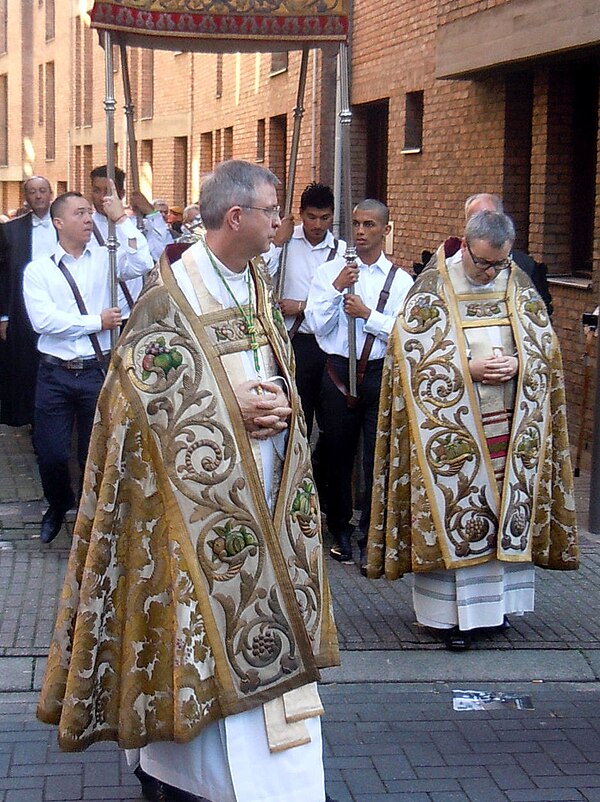
Cope
The Cope
The cope, derived from the Latin 'pluviale' (rain coat) or 'cappa' (cape), is a significant liturgical vestment characterized by its long, flowing mantle, open at the front and secured at the breast by a clasp known as a morse. It is distinct from other vestments like the chasuble, which is worn over the alb and is closed at the front. The cope's versatility allows it to be fashioned in any of the liturgical colors, each chosen to correspond with specific seasons, feasts, or occasions within the church calendar, thereby visually communicating the theological themes of the celebration.
Its use is not confined to the highest echelons of the clergy; it can be worn by any rank within the Catholic and Anglican traditions, including priests and bishops. When worn by a bishop, it is often accompanied by a mitre, a symbol of their episcopal authority. The morse itself is frequently an object of considerable artistry, embellished with precious metals, gemstones, and intricate embroidery, transforming a functional fastener into a statement of devotion and status.
The visual presence of the cope contributes profoundly to the solemnity and aesthetic richness of religious ceremonies, enhancing the spiritual experience for congregants. Its association extends even to artistic representations, where angels are frequently depicted in copes, particularly in Early Netherlandish painting, underscoring its sacred and celestial connotations.
From Ancient Cloak to Ceremonial Vestment
The historical lineage of the cope traces back to the practical, everyday cloaks and capes worn in antiquity for protection against the elements. The Latin terms 'pluviale' and 'cappa' directly reflect this utilitarian origin. Over centuries, as liturgical practices evolved and the church sought to imbue worship with greater symbolism and grandeur, such garments began to be adapted for ceremonial use.
This transition from a functional item of clothing to a sacred vestment is a common theme in the history of religious attire across various cultures. The cope's development exemplifies how secular clothing can be recontextualized and imbued with spiritual meaning. This evolution was not instantaneous but a gradual process, with the cope solidifying its place as a distinct liturgical garment by the High Middle Ages.
Its adoption and continued use highlight a sustained appreciation for tradition and the power of visual symbolism in religious expression. The journey of the cope from a simple 'rain coat' to an ornate vestment underscores the enduring human desire to connect the material world with the divine through ritual and artistry.
The Multifaceted Significance of the Cope in Religious and Cultural Contexts
The significance of the cope extends beyond its aesthetic appeal; it is deeply embedded in the theological and cultural fabric of religious observance. As a liturgical vestment, it serves to visually distinguish the clergy and licensed lay ministers, marking them as participants in a sacred rite and reinforcing their roles within the community. The act of wearing a cope can signify a transition into a state of spiritual readiness and solemnity for the wearer, preparing them for their duties.
The morse, as the primary fastening, often becomes a focal point, its elaborate design reflecting the reverence and value placed upon the vestment and the service it represents. Furthermore, the cope's presence contributes to the overall solemnity and majesty of the liturgy, creating an atmosphere conducive to worship and contemplation. Its depiction in art, particularly in the context of angels, further elevates its status, associating it with heavenly beings and divine worship.
This artistic representation reinforces the cope's role as a symbol of sacred authority and celestial connection, making it a powerful motif in both religious practice and cultural iconography.
Who Wears the Cope? Distribution and Occasion in Clerical Attire
The wearing of the cope is governed by specific protocols within the Catholic and Anglican churches. It is generally permitted for any member of the clergy, including priests and bishops, to wear a cope. Additionally, licensed lay ministers, individuals who have received formal authorization to assist in various church ministries, may also don a cope on certain designated occasions.
This inclusivity, extending beyond bishops, signifies that the cope is a vestment of broader liturgical significance rather than one exclusively reserved for the highest ranks. The occasions for wearing a cope are typically solemn and ceremonial, such as processions, pontifical services (services led by a bishop), solemn blessings, and significant feast days. It is not typically worn during the Mass itself, where other vestments like the chasuble are more appropriate for the principal celebrant, but rather for services that involve processions, benedictions, or other ceremonial elements outside the core Eucharistic liturgy.
This careful consideration of who wears the cope and when underscores its specific role in enhancing the solemnity and visual richness of particular liturgical moments.
The Cope in Art and Symbolism
The cope's visual presence is not limited to the confines of religious services; it has also found a significant place in art, particularly in historical periods that emphasized religious iconography. Early Netherlandish painters, for instance, frequently depicted angels wearing copes. This artistic choice was not arbitrary; it served to imbue the angelic figures with an aura of sacredness, authority, and heavenly worship.
By adorning these celestial beings with a garment associated with solemn religious rites on Earth, artists created a visual bridge between the earthly and the divine. The cope, in this context, becomes a symbol of heavenly liturgy and divine presence. The intricate details often lavished upon the depicted copes, including rich fabrics and ornate morses, further enhance their symbolic power, suggesting the splendor and glory of the heavenly realm.
This artistic tradition highlights how vestments can transcend their practical function to become powerful symbols in cultural and spiritual narratives, reinforcing the cope's enduring significance as an object of both religious devotion and artistic inspiration.
See also
Frequently Asked Questions
What is a cope?+
Why do people wear a cope?+
How is a cope different from a chasuble?+
What is a morse on a cope?+
Where do we see copes in art?+
Based on content from Wikipedia · Licensed under CC BY-SA 4.0