

Cooks' Cottage
Images

Cook's Cottage




From Yorkshire Hearth to Melbourne Gardens
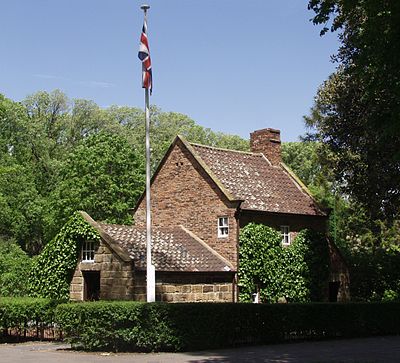
Cooks' Cottage, a structure dating back to 1755, offers a fascinating case study in historical preservation and cultural transplantation. Originally erected in Great Ayton, North Yorkshire, by James and Grace Cook, the parents of the celebrated navigator Captain James Cook, the cottage stands as a testament to 18th-century rural English architecture. While definitive proof of Captain Cook's residency remains elusive, historical consensus suggests he likely visited his family home during his formative years.
The cottage's subsequent journey is a remarkable feat orchestrated by the Australian philanthropist Sir Russell Grimwade. In 1934, Grimwade purchased the cottage with the express purpose of relocating it to Melbourne, Australia. This ambitious undertaking involved the meticulous deconstruction of the original stone building, the careful cataloging and transport of its components across thousands of miles of ocean, and its precise reconstruction in the heart of Fitzroy Gardens.
This act transformed a modest family home into a significant cultural icon, bridging geographical divides and preserving a physical connection to a pivotal era of global exploration and British colonial expansion.
An Immersive Chronicle of 18th-Century Domesticity
The interior of Cooks' Cottage functions as an meticulously curated exhibition of 18th-century domestic life. Furnished with antique pieces representative of the period, the cottage provides visitors with an authentic glimpse into the material culture and living conditions of the era. While the objects themselves may not be original possessions of the Cook family, their careful selection ensures historical verisimilitude, allowing for an understanding of the types of furnishings, tools, and decorative items that would have been common.
This commitment to historical accuracy extends beyond the inanimate objects. Volunteer guides, often attired in period costumes, further enhance the immersive experience. Their attire, reflecting the fashion and social norms of the 1700s, adds a dynamic layer to the historical narrative, enabling visitors to visualize the people who inhabited such spaces.
This approach moves beyond passive observation, encouraging active engagement with the past and fostering a deeper appreciation for the daily realities of 18th-century existence.
The Enduring Significance of a Transplanted Heritage
The importance of Cooks' Cottage extends beyond its architectural or historical value; it embodies a complex narrative of heritage, identity, and cultural exchange. For Australia, the cottage represents a tangible link to its colonial past and the era of European exploration that profoundly shaped the continent. Sir Russell Grimwade's initiative was not merely an act of preservation but a deliberate effort to integrate a significant piece of British heritage into the Australian landscape, fostering a sense of shared history and connection.
Furthermore, the cottage serves as a powerful educational resource, offering insights into 18th-century social history, building techniques, and the domestic sphere of a globally recognized figure. It prompts reflection on themes of exploration, settlement, and the enduring legacy of individuals like Captain James Cook. The cottage's unique status as a relocated historical monument makes it a compelling subject for discussions on cultural ownership, the ethics of preservation, and the ways in which historical sites can contribute to national identity and international understanding.
Preservation, Philanthropy, and the Narrative of Exploration
The relocation of Cooks' Cottage by Sir Russell Grimwade in 1934 was a pioneering act of architectural preservation and philanthropic vision. In an era when the concept of moving entire historical structures across continents was exceptionally rare, Grimwade's project demonstrated a profound commitment to safeguarding historical artifacts. The logistical challenges were immense: the cottage, constructed from local stone, had to be meticulously dismantled, cataloged, and shipped over 14,000 nautical miles.
Its subsequent reassembly in Melbourne's Fitzroy Gardens was a testament to meticulous planning and skilled craftsmanship. This grand gesture served multiple purposes: it provided Melbourne with a unique tourist attraction, offered an unparalleled educational opportunity to study 18th-century life, and solidified a symbolic connection between Britain and Australia. Grimwade's actions highlight the role of private individuals in shaping cultural landscapes and preserving historical narratives that might otherwise have been lost.
The cottage, therefore, is not just a building but a monument to both the age of exploration it represents and the forward-thinking philanthropy that ensured its survival for future generations.
See also
Frequently Asked Questions
What is Cooks' Cottage?+
Why was Cooks' Cottage moved from England to Australia?+
How can visitors learn about 18th‑century life at Cooks' Cottage?+
Who helped bring Cooks' Cottage to Australia?+
What can we learn from Cooks' Cottage?+
Based on content from Wikipedia · Licensed under CC BY-SA 4.0