

Convergent boundary
Images
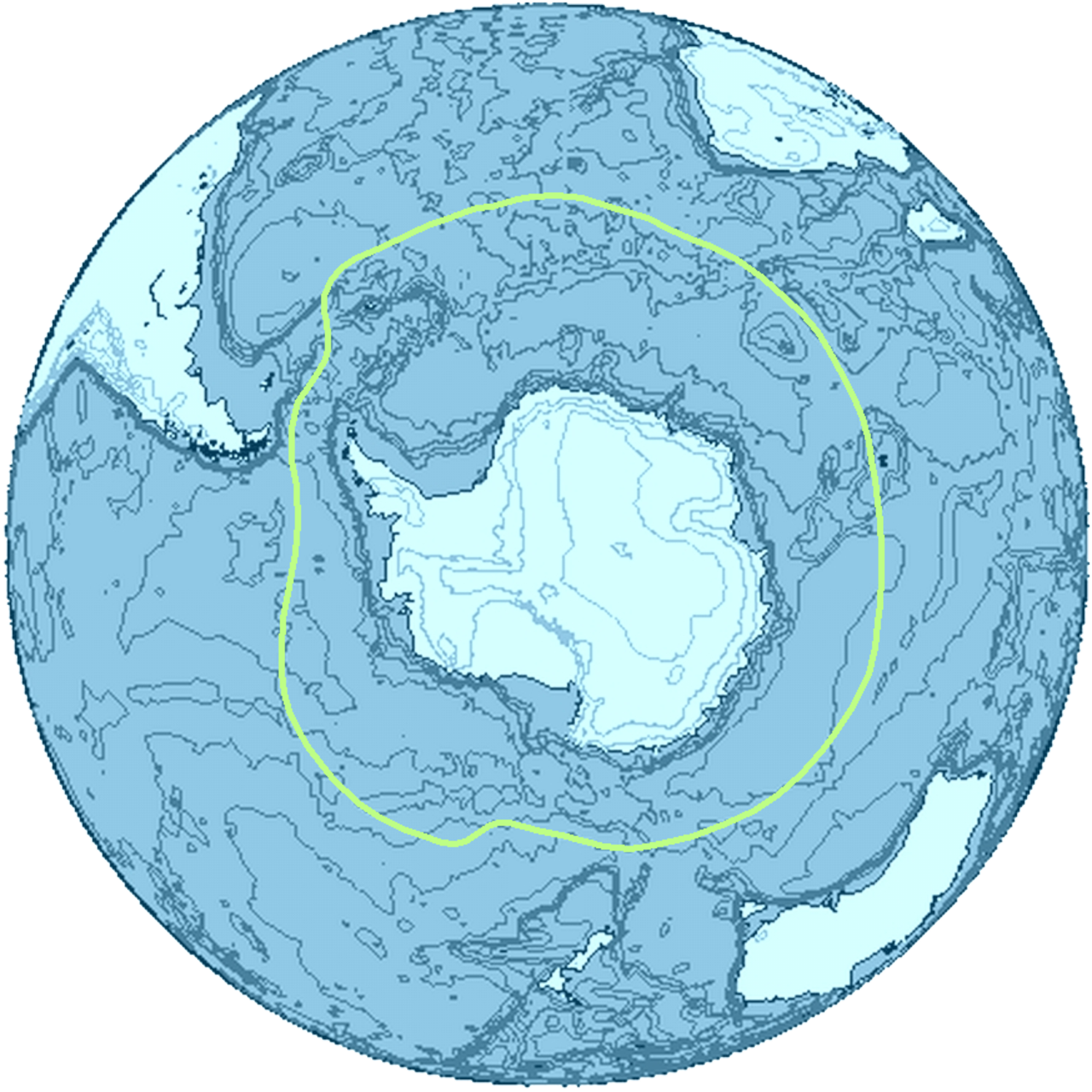
Antarctica-Region


The Dynamics of Plate Convergence
Convergent boundaries represent zones where Earth's lithospheric plates actively collide, leading to some of the planet's most dramatic geological transformations. These interactions are driven by the underlying mantle convection cells, which exert forces on the plates. When plates converge, their relative densities dictate the outcome.
Typically, a denser oceanic plate will subduct beneath a less dense continental or oceanic plate. This process is not instantaneous but occurs over millions to tens of millions of years, involving immense forces that deform the crust. The subduction process is fundamental to plate tectonics, recycling old oceanic lithosphere back into the mantle and driving the creation of new geological features.
The energy accumulated and released during these slow collisions is responsible for shaping Earth's surface on a grand scale, influencing everything from ocean basin configuration to continental topography.
Subduction Mechanics
The process of subduction is a key characteristic of many convergent boundaries. As a dense oceanic lithosphere cools and becomes heavier, gravity plays a significant role in pulling it down into the hotter asthenosphere, a phenomenon known as 'slab pull'. This downward pull is a major driver of plate motion.
As the subducting slab descends, it encounters increasing temperatures and pressures. At depths typically between 65 to 130 kilometers (around 40 to 81 miles), the heat causes hydrous minerals within the descending plate to break down, releasing water. This water then migrates into the overlying mantle wedge, significantly lowering its melting point.
The resulting partial melting of the asthenosphere generates magma, which is less dense than the surrounding rock and rises towards the surface. This process leads to the formation of volcanic arcs, often parallel to the subduction zone, creating chains of volcanoes like those found along the Pacific 'Ring of Fire'.
Varieties of Convergence
The geological consequences of convergence vary significantly depending on the types of lithosphere involved.
Oceanic-Continental Convergence: Here, a denser oceanic plate subducts beneath a lighter continental plate. This results in the formation of deep ocean trenches offshore, volcanic mountain ranges on the continental margin (e.g., the Andes), and significant seismic activity.
Oceanic-Oceanic Convergence: When two oceanic plates collide, the older, colder, and therefore denser plate subducts beneath the younger one. This process generates deep ocean trenches and volcanic island arcs (e.g., Japan, the Aleutian Islands).
Continental-Continental Convergence: Since continental crust is relatively buoyant and resists subduction, when two continental plates collide, they buckle, fold, and thicken, creating extensive and high mountain ranges (e.g., the Himalayas, the Alps). Little to no volcanism typically occurs in these zones, but intense deformation and powerful earthquakes are common.
Seismic Activity and Crustal Deformation
Convergent boundaries are the primary sites for the most powerful earthquakes on Earth. The friction and stress that build up as plates lock and then suddenly release along the subducting slab generate significant seismic energy. The Wadati-Benioff zone, an inclined plane of earthquake foci, clearly delineates the path of the subducting plate deep into the mantle.
Beyond earthquakes, these boundaries are characterized by extensive crustal deformation. In continental collision zones, the crust can thicken dramatically, leading to uplift and the formation of vast mountain belts. Folding and faulting are ubiquitous features, reflecting the immense compressional forces at play.
The destruction of lithosphere also occurs, particularly at the subduction zone where the oceanic plate is consumed.
Broader Implications
The geological processes at convergent boundaries have profound implications for both natural resource distribution and hazard management. The intense heat and pressure associated with subduction zones can facilitate the formation of valuable mineral deposits, including certain types of metal ores. Volcanic activity associated with these boundaries can create fertile soils, supporting agriculture in surrounding regions.
Conversely, these same processes pose significant risks. Earthquakes can cause widespread destruction, and volcanic eruptions can be catastrophic. Understanding the mechanics of convergent boundaries is therefore crucial for seismic hazard assessment, volcanic monitoring, and the development of effective disaster preparedness strategies.
The ongoing evolution of Earth's surface, including the formation and breakup of supercontinents, is intrinsically linked to the long-term behavior of these plate collision zones.
Go deeper
Frequently Asked Questions
What happens when two tectonic plates collide at a convergent boundary?+
Why does a dense oceanic plate go under a lighter plate?+
How do volcanoes form at convergent boundaries?+
What kinds of earthquakes happen at convergent boundaries?+
What is the difference between oceanic‑continental and continental‑continental convergence?+
Based on content from Wikipedia · Licensed under CC BY-SA 4.0