

Convection
Images
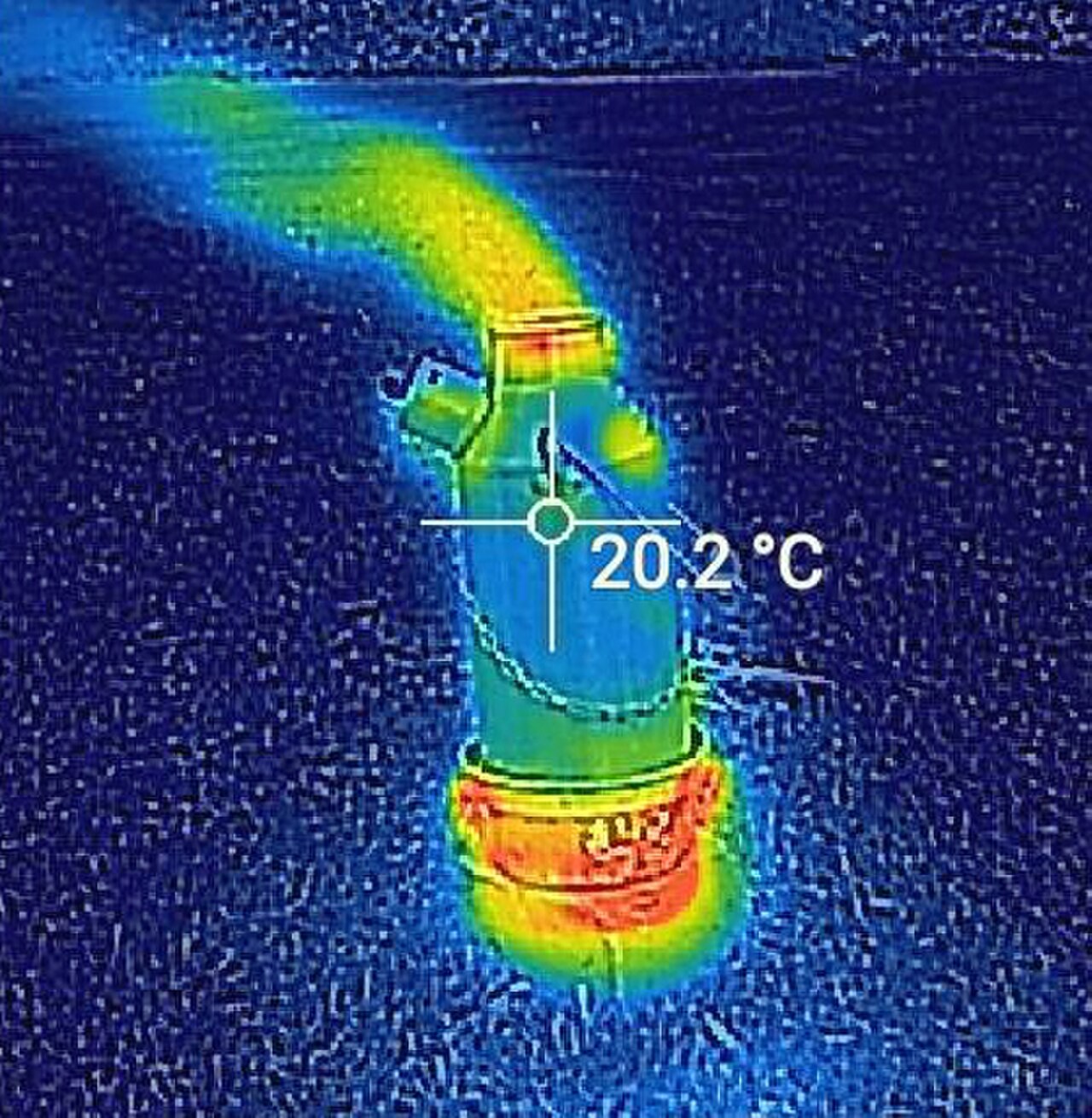
Convection


The Physics of Fluid Movement and Heat Transfer
Convection is a primary mode of heat transfer in fluids, characterized by the macroscopic movement of the fluid itself. It occurs when a fluid is subjected to a temperature gradient, leading to density variations. Warmer, less dense fluid rises, while cooler, denser fluid sinks, establishing a circulation pattern known as a convection current.
This process is governed by principles of fluid dynamics and thermodynamics. Natural convection is driven solely by density differences due to temperature variations (buoyancy forces), while forced convection involves external means like pumps or fans to induce fluid flow. The efficiency of heat transfer via convection is quantified by the Nusselt number, which relates convective to conductive heat transfer.
Understanding these dynamics is crucial for analyzing heat exchangers, atmospheric and oceanic circulation, and geological processes like mantle convection.
Evolution of Understanding
The scientific understanding of convection has evolved significantly over centuries. Early observations, such as the rising of smoke or the movement of water in heated vessels, hinted at its existence. However, rigorous scientific inquiry began in earnest during the Scientific Revolution. Isaac Newton's work on cooling laid foundational concepts, and later, scientists like Joseph Fourier developed Fourier's Law of Heat Conduction, which, while describing conduction, provided a framework for understanding heat transfer phenomena.
The formal study of convection gained momentum with the development of fluid mechanics and thermodynamics in the 19th and 20th centuries. Key advancements include the formulation of dimensionless numbers like the Rayleigh number (for natural convection) and the Reynolds number (for fluid flow regimes), which allow for the scaling and comparison of convective processes across different systems.
Convection's Indispensable Role in Earth Systems and Technology
Convection is a cornerstone of Earth's climate system and has numerous technological applications. In meteorology and oceanography, atmospheric and oceanic convection currents are responsible for redistributing solar energy, driving weather patterns, and influencing global climate. The Hadley, Ferrel, and Polar cells in the atmosphere, as well as thermohaline circulation in the oceans, are massive convective systems.
Geologically, convection in the Earth's mantle drives plate tectonics. Technologically, convection is harnessed in applications like convection ovens, which use fans to circulate hot air for more efficient and uniform cooking, and in cooling systems for electronics and engines. Understanding and modeling convection is vital for climate prediction, renewable energy design (e.g., solar thermal systems), and industrial processes.
Manifestations of Convection
Convection manifests in diverse phenomena across various scales. At the macroscopic level, the boiling of water in a kettle or the circulation of air in a room heated by a radiator are classic examples of natural convection. Forced convection is evident in the operation of cooling fans for computers or the use of pumps in industrial heating systems.
On a grander scale, weather systems, from local thunderstorms to global wind patterns, are driven by convective heat transfer in the atmosphere. In astrophysics, convection plays a role in the internal structure and evolution of stars. Even in biological systems, convection can be observed, such as the movement of blood in the circulatory system or the distribution of heat within organisms.
Each instance highlights the fundamental principle of heat transfer through fluid motion.
Advanced Concepts and Research Frontiers
Modern research in convection delves into complex scenarios, including turbulent convection, multiphase flows, and convection in non-Newtonian fluids. Turbulent convection, characterized by chaotic and unpredictable fluid motion, is prevalent in many natural and industrial settings and is notoriously difficult to model precisely. Research also focuses on enhancing convective heat transfer for applications like advanced cooling technologies and energy generation.
Furthermore, understanding convection in extreme environments, such as within stars or in the Earth's core, pushes the boundaries of physics and geophysics. Computational fluid dynamics (CFD) plays a critical role in simulating and analyzing these complex convective phenomena, enabling engineers and scientists to design more efficient systems and better understand planetary processes.
Go deeper
Frequently Asked Questions
What is convection?+
How does hot air rise and cool air sink?+
What is the difference between natural and forced convection?+
How does convection help cook food in a convection oven?+
How does convection influence Earth's weather and climate?+
Based on content from Wikipedia · Licensed under CC BY-SA 4.0