

Common crane
Images

Common Crane


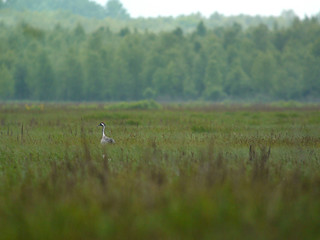


The Majestic Grus grus
The Common Crane (Grus grus) is a large, iconic bird belonging to the family Gruidae, distinguished by its impressive stature and elegant appearance. Standing approximately 1.2 meters (4 feet) tall with a formidable wingspan reaching up to 2.3 meters (7.5 feet), it is one of the most recognizable avian species across its vast range. Its plumage is predominantly grey, with distinctive black and white markings on the head and neck, and a patch of bare red skin on the crown.
The species is native to the Palearctic region, with breeding populations found throughout much of Europe and Asia, extending from Scandinavia and Iberia eastward to Siberia. During the non-breeding season, many populations undertake significant migrations, congregating in large numbers in milder southern climates, particularly in Southern Europe, North Africa, and parts of the Middle East and South Asia. Their preferred breeding habitats are expansive, open wetlands, marshes, bogs, and wet meadows, areas that provide ample foraging opportunities and safe nesting sites away from dense cover.
Dietary Adaptations and Foraging Strategies
As an omnivorous species, the Common Crane exhibits remarkable dietary flexibility, a key factor in its widespread distribution and resilience. Their foraging behavior is opportunistic and seasonally influenced, adapting to the available food resources. The primary components of their diet consist of plant matter, including roots, tubers, seeds, berries, and cereal grains, particularly during the agricultural season.
They are adept at extracting nutritious underground parts of plants using their strong, pointed beaks. Complementing their herbivorous intake, cranes also consume a variety of animal prey. This includes invertebrates such as insects, earthworms, snails, and mollusks, as well as small vertebrates like frogs, lizards, snakes, and even small fish found in shallow waters.
This diverse diet allows them to exploit a range of ecological niches and adapt to varying environmental conditions, from the boreal forests of the north to the steppe regions further south.
Complex Social Dynamics and Reproductive Rituals
The social behavior and reproductive strategies of the Common Crane are among its most fascinating attributes. These birds are highly social, especially outside the breeding season, forming large flocks that can number in the thousands during migration and winter roosting. This gregariousness offers protection from predators through collective vigilance.
The most striking aspect of their social life is the elaborate courtship ritual, a complex dance involving synchronized movements like leaping, bowing, wing-flapping, and bill-raising. This 'unison calling' and dancing is crucial for pair bonding and maintaining pair cohesion throughout the breeding season. Cranes are typically monogamous, forming long-lasting pair bonds.
They nest on the ground, usually in secluded areas within wetlands, laying one to three eggs. Both parents share incubation duties and the responsibility of raising the chicks, which are precocial and can walk and feed themselves shortly after hatching, though they remain dependent on their parents for several months.
Conservation Status and Ecological Significance
Despite its wide distribution and relatively large population size, the Common Crane is not without conservation challenges. While globally classified as 'Least Concern' by the IUCN, certain regional populations have experienced significant declines due to habitat loss, degradation, and fragmentation, particularly impacting breeding and stopover sites. Agricultural intensification, drainage of wetlands, and disturbance from human activities pose ongoing threats.
Reintroduction programs, such as the one in the United Kingdom, demonstrate a commitment to restoring populations in areas where they were historically extirpated. The Common Crane serves as an important indicator species; its presence and population health reflect the condition of its wetland and open-field habitats. Their migratory patterns also highlight the interconnectedness of ecosystems across vast geographical distances, underscoring the need for international cooperation in conservation efforts.
The species' resilience and adaptability offer valuable lessons for understanding avian ecology in a changing world.
Go deeper
Frequently Asked Questions
What does a Common Crane look like?+
Where do Common Cranes live and where do they go in winter?+
What do Common Cranes eat?+
How do Common Cranes show love and find a mate?+
Are Common Cranes social animals?+
Based on content from Wikipedia · Licensed under CC BY-SA 4.0