

Colony of New South Wales
Images
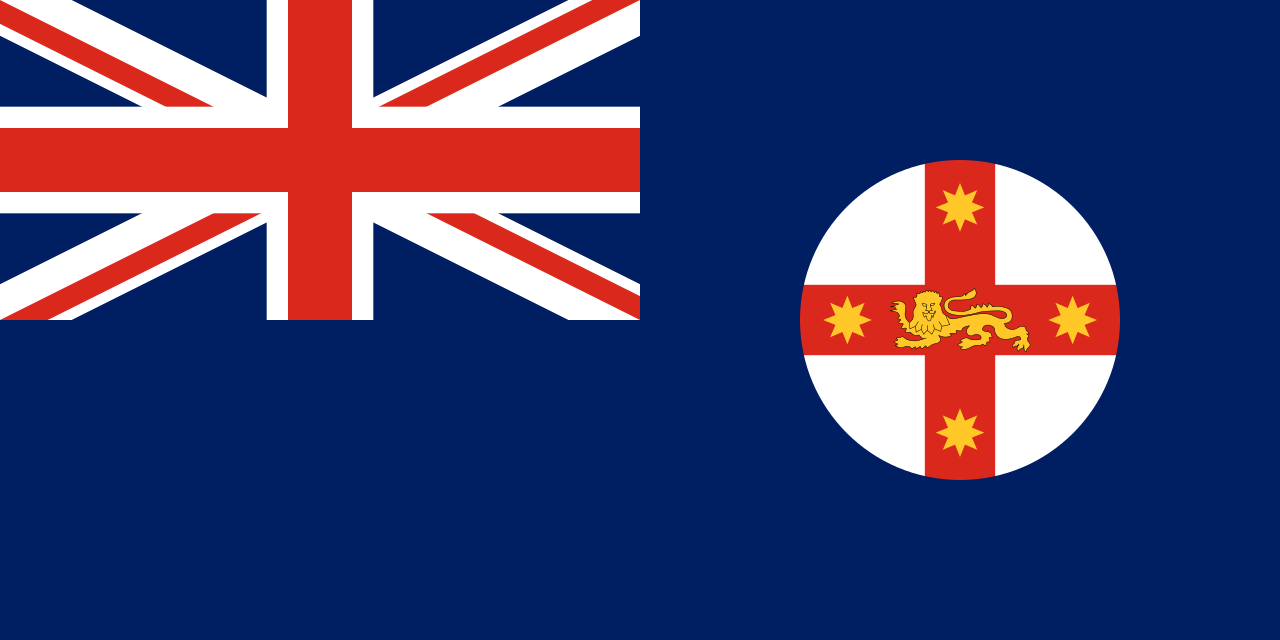
Flag Of New South Wales
![Image taken from page 29 of '[A Handbook to the Colony of New South Wales. [With a map.]]'](https://live.staticflickr.com/7406/10448815726_98e19b76db_n.jpg)

![Image taken from page 496 of '[An Account of the English Colony in New South Wales ... To which are added, some particulars of New Zealand; compiled ... from the MSS. of Lieutenant-Governor King ... Illustrated by engravings.]'](https://live.staticflickr.com/7419/10422341555_3cfcc2e476_n.jpg)
![Image taken from page 48 of 'Adventures in Australia Fifty Years ago. Being a record of an emigrant's wanderings through the colonies of New South Wales, Victoria and Queensland during the years 1839-1844. [With a map.]'](https://live.staticflickr.com/7340/10502941353_de6ce83c15_n.jpg)
![portrait from '[An Account of the English Colony in New South Wales ... To which are added, some particulars of New Zealand; compiled ... from the MSS. of Lieutenant-Governor King ... Illustrated by engravings.]'.](https://farm3.staticflickr.com/2811/10999518716_2fa45e59af_o.jpg)
![portrait from '[An Account of the English Colony in New South Wales ... To which are added, some particulars of New Zealand; compiled ... from the MSS. of Lieutenant-Governor King ... Illustrated by engravings.]'.](https://farm8.staticflickr.com/7402/10999928454_8c6a4aca83_o.jpg)
![portrait from '[An Account of the English Colony in New South Wales ... To which are added, some particulars of New Zealand; compiled ... from the MSS. of Lieutenant-Governor King ... Illustrated by engravings.]'.](https://farm6.staticflickr.com/5521/10999847513_2291652b76_o.jpg)
![portrait from '[An Account of the English Colony in New South Wales ... To which are added, some particulars of New Zealand; compiled ... from the MSS. of Lieutenant-Governor King ... Illustrated by engravings.]'.](https://farm4.staticflickr.com/3828/10999637076_69afc85e8f_o.jpg)
![portrait from '[An Account of the English Colony in New South Wales ... To which are added, some particulars of New Zealand; compiled ... from the MSS. of Lieutenant-Governor King ... Illustrated by engravings.]'.](https://farm4.staticflickr.com/3729/10999875786_939d7d93f8_o.jpg)
![portrait from '[An Account of the English Colony in New South Wales ... To which are added, some particulars of New Zealand; compiled ... from the MSS. of Lieutenant-Governor King ... Illustrated by engravings.]'.](https://farm8.staticflickr.com/7428/10999838255_631e91c932_o.jpg)
![portrait from '[An Account of the English Colony in New South Wales ... To which are added, some particulars of New Zealand; compiled ... from the MSS. of Lieutenant-Governor King ... Illustrated by engravings.]'.](https://farm8.staticflickr.com/7375/10999808626_1d8d4dd6b0_o.jpg)
Geographical Scope and Early Settlement
The Colony of New South Wales, established by the British Empire in 1788, was an immense territorial entity that served as the cornerstone of British presence in Australasia. At its zenith, its administrative boundaries encompassed not only the present-day Australian state of New South Wales but also Queensland, Victoria, Tasmania, South Australia, the Northern Territory, and New Zealand.
This vast expanse was initially conceived as a penal colony, with Sydney Cove serving as the primary settlement and administrative center. The geographical diversity within this colossal colony ranged from temperate coastal regions to arid inland plains and subtropical forests, presenting unique challenges and opportunities for settlement and resource exploitation. The capital, Sydney, was strategically located on a natural harbor, facilitating maritime trade and communication with the metropole.
Indigenous Peoples and Colonial Impact
The establishment of the Colony of New South Wales represented a profound disruption to the millennia-old custodianship of the continent by Aboriginal and Torres Strait Islander peoples. These diverse Indigenous nations possessed intricate social structures, spiritual beliefs, and sustainable land management practices. The arrival of Europeans led to widespread dispossession of land, introduction of diseases to which Indigenous populations had no immunity, and significant cultural upheaval.
While the official language of the colony was English, reflecting British sovereignty, the presence and resilience of Indigenous languages and cultures remained a vital, albeit often suppressed, aspect of the land's heritage throughout the colonial period. The colonial administration's policies, often driven by notions of terra nullius, had devastating and lasting impacts on Indigenous communities.
Evolution of Governance and Self-Determination
The governance of the Colony of New South Wales evolved significantly from its inception. Initially, it operated under direct rule from Britain, with a Governor wielding considerable executive and legislative power. This system, designed for a penal outpost, gradually gave way to demands for greater colonial autonomy as the population diversified beyond convicts to include free settlers and a burgeoning middle class.
A pivotal moment in this transition was the establishment of responsible self-government on June 6, 1856. This marked the appointment of the first Colonial Secretary, Sir Stuart Alexander Donaldson, signifying a shift towards representative institutions and parliamentary democracy within the colony, laying the groundwork for future statehood and national federation.
Economic Foundations and Expansion
The economic trajectory of the Colony of New South Wales was characterized by its transition from a penal outpost reliant on imported goods to a self-sufficient and eventually prosperous entity. Early economic activities centered on subsistence farming and the exploitation of natural resources, such as timber and whaling. The development of the wool industry in the 19th century proved transformative, creating significant wealth and establishing New South Wales as a major exporter within the British Empire. Sydney's role as a major port facilitated trade, with imports of manufactured goods and exports of raw materials.
Over time, other industries, including mining (gold rushes were particularly impactful), agriculture beyond wool, and nascent manufacturing, contributed to the colony's economic diversification and growth.
The Role of Education in Colonial Society
Education played a crucial role in shaping the social fabric and future of the Colony of New South Wales. In the early years, educational opportunities were limited, often provided by religious missions or private tutors for the children of officials and wealthy settlers. As the colony matured and the population expanded, there was a growing recognition of the need for a more structured and accessible education system.
The development of responsible government further underscored the importance of an educated populace capable of participating in civic discourse and governance. By the mid-19th century, efforts were underway to establish public education systems, moving towards a more standardized curriculum and broader access, which would ultimately influence the educational landscape of modern Australia. This focus on education was vital for integrating diverse populations and fostering a sense of colonial identity.
See also
Frequently Asked Questions
What was the Colony of New South Wales?+
Where was the capital of the colony?+
Why did the colony become self-governing?+
How did the colony's economy change over time?+
What happened to Indigenous peoples when the colony was founded?+
Based on content from Wikipedia · Licensed under CC BY-SA 4.0