

Australia's Amazing Weather!
Images

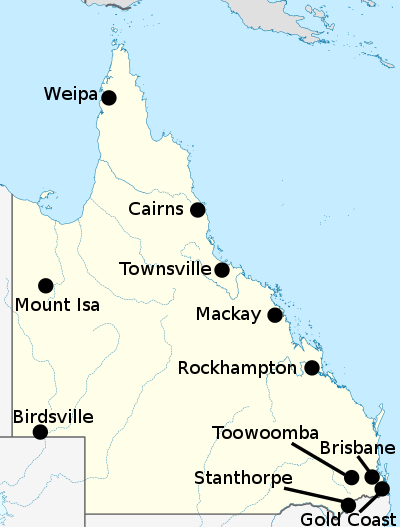
Labelled map of New South Wales for Climate of Australia article





Dominance of Aridity
Australia's climate is fundamentally defined by its aridity, ranking as the second driest continent globally. This characteristic is primarily governed by the persistent subtropical ridge, a zone of descending dry air that suppresses cloud formation and rainfall across vast areas. Approximately 80% of the continent receives less than 600 mm of annual rainfall, with half receiving less than 300 mm.
The average annual rainfall for the continent is a mere 419 mm. The position of the subtropical ridge shifts seasonally: it lies south of Australia during summer, contributing to dry conditions in the southern half, and moves north in winter, leading to dry winters in the northern regions. This pervasive dryness makes Australia highly susceptible to prolonged droughts, a recurring feature of its climatic history and a significant factor in its ecology and human settlement patterns.
Diverse Climatic Zones
Despite its overall dryness, Australia's immense geographical size (over 7.7 million square kilometers) encompasses a remarkable spectrum of climatic zones. The northern tropical regions experience distinct wet and dry seasons, heavily influenced by the southward migration of the Intertropical Convergence Zone (ITCZ) during the Australian summer. This brings the Australian monsoon, characterized by intense rainfall and humidity, and contributes to some of the highest interannual rainfall variability globally.
In stark contrast, the southeastern and southwestern corners of the continent feature temperate climates with more reliable rainfall and fertile soils, supporting the majority of Australia's population and agricultural activities. The vast interior remains predominantly desert or semi-arid, characterized by extreme temperatures and sparse vegetation.
Climate Variability and Extreme Weather
Australia is exceptionally vulnerable to climate variability, largely driven by the El Niño-Southern Oscillation (ENSO). ENSO is a coupled ocean-atmosphere phenomenon that significantly impacts global weather patterns. For Australia, El Niño events typically correlate with widespread drought conditions, while La Niña events can bring above-average rainfall.
This variability leads to frequent and often severe droughts, punctuated by periods of heavy rainfall and flooding. Beyond droughts and floods, Australia experiences a range of extreme weather events linked to ENSO and other climatic factors. These include intense heatwaves, devastating bushfires (particularly during dry periods), tropical cyclones in the north, and occasional dust storms that can engulf large areas.
Frosts can also occur, especially in inland regions during winter.
Temperature Extremes and Oceanic Moderation
Australia's location, separated from polar regions by the Southern Ocean, moderates its winter temperatures. Unlike the harsh, frigid air masses that sweep across Northern Hemisphere continents, Australia experiences relatively mild winters. This oceanic influence reduces the temperature contrast between summer and winter compared to continental landmasses, although inland areas, particularly west of the Great Dividing Range, can still experience more dramatic seasonal transitions.
Despite mild winters, Australia is renowned for its extreme heat. The continent holds records for some of the hottest extended regions year-round and the hottest summer climates. Temperatures have exceeded 50 degrees Celsius (122 degrees Fahrenheit), showcasing the potential for intense heat, while minimum temperatures have also risen significantly due to global warming trends.
Contemporary Climate Change and Future Outlook
Australia's climate is not static; it is undergoing significant changes, mirroring global warming trends. Between 1910 and 2004, the country's average temperature rose by approximately 0.7 degrees Celsius. This warming trend is particularly evident in overnight minimum temperatures, which have increased more rapidly than daytime maximums in recent decades.
These changes are largely attributed to the enhanced greenhouse effect resulting from increased concentrations of greenhouse gases. The implications for Australia are profound, potentially exacerbating existing challenges like drought, bushfire risk, and coastal erosion. Climate change is a highly contentious political issue in Australia, with ongoing debates about mitigation and adaptation strategies to address its impacts on the environment, economy, and society.
See also
Frequently Asked Questions
What makes Australia so dry?+
Why does Australia have hot summers and mild winters?+
How does El Niño affect Australia's weather?+
Where do the biggest rainstorms happen in Australia?+
What extreme weather can happen in Australia?+
Based on content from Wikipedia · Licensed under CC BY-SA 4.0