

Chronic traumatic encephalopathy
Images

College of DuPage 16th Annual Pathophysiology Panorama 2017 82
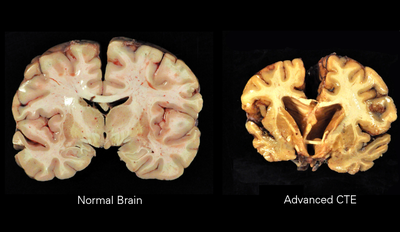


Unraveling CTE
Chronic Traumatic Encephalopathy (CTE) is a devastating neurodegenerative condition characterized by progressive brain degeneration, intricately linked to a history of repeated head trauma. This trauma can range from concussive and subconcussive blows sustained in contact sports to blast injuries in military personnel or even repetitive head banging. The encephalopathy manifests in a spectrum of cognitive, behavioral, and emotional disturbances.
Early symptoms can include memory lapses, impulsivity, and mood swings, often escalating to more severe cognitive impairment, executive dysfunction, depression, aggression, and eventually, dementia. The pathological hallmark of CTE is the abnormal accumulation of hyperphosphorylated tau protein, forming neurofibrillary tangles and glial tau inclusions, particularly in the depths of the cerebral sulci. This tauopathy is distinct from Alzheimer's disease, though both involve tau pathology, with CTE's distribution and specific tau species differing.
The progressive nature of CTE means that symptoms can emerge years or even decades after the last head injury, posing significant diagnostic and management challenges.
Echoes of the Past
The recognition of CTE's existence has a long and evolving history, primarily rooted in observations of athletes. As early as the 1920s, physicians noted a cluster of neurological and psychiatric symptoms in boxers, leading to the coining of terms like 'dementia pugilistica,' 'boxer's madness,' and 'punch drunk syndrome.' These early descriptions captured the essence of cognitive decline and behavioral changes observed in fighters with extensive ring experience. However, for decades, the condition was often dismissed or poorly understood, lacking definitive diagnostic criteria.
It wasn't until the late 20th and early 21st centuries that systematic research, spurred by the advocacy of families and the work of pioneering neuropathologists like Dr. Bennet Omalu, began to solidify CTE as a distinct disease entity. The identification of tau pathology in the brains of deceased athletes from various sports, including American football and hockey, broadened the understanding beyond boxing and established the scientific foundation for modern CTE research and awareness.
The Critical Imperative
The significance of CTE extends far beyond the athletic arena, impacting public health, sports medicine, and our understanding of brain injury. Its prevalence, estimated at approximately 30% among individuals with a history of multiple head injuries, underscores the widespread risk. The progressive and often debilitating nature of CTE necessitates urgent attention to prevention, early detection, and potential therapeutic strategies.
Understanding CTE is crucial for informing policy decisions regarding youth sports, professional athletics, and military safety protocols. It drives innovation in neuroimaging and biomarker research, aiming to achieve definitive in-vivo diagnosis, which is currently lacking. Furthermore, the study of CTE contributes to the broader field of neurodegeneration, offering insights into protein misfolding, neuroinflammation, and the long-term consequences of physical trauma on the brain, potentially benefiting individuals with other neurological conditions.
The Biomechanical Cascade
The pathogenesis of CTE is believed to be initiated by the biomechanical forces generated during head impacts. These forces can cause axonal shearing, neuronal damage, and neuroinflammation. A critical element is the role of tau protein.
Following trauma, tau undergoes abnormal hyperphosphorylation, detaching from microtubules and misfolding into aggregates. These tau aggregates then spread throughout the brain via neuronal pathways, a process that can be amplified by neuroinflammation. The characteristic distribution of tau pathology in CTE, often beginning in the depths of sulci and spreading to perivascular areas, suggests specific biomechanical or inflammatory pathways are involved.
While the exact threshold of trauma required to initiate CTE remains unknown, it is understood that repeated subconcussive impacts, which may not cause immediate symptoms, can contribute significantly to the long-term accumulation of tau pathology. The disease is classified as a tauopathy, highlighting the central role of this protein in its development.
Navigating the Future
Given that definitive diagnosis of CTE is currently only possible post-mortem, the primary focus is on prevention and the development of reliable ante-mortem diagnostic tools. Prevention strategies involve a multi-faceted approach, including modifying sports rules to reduce high-impact collisions, improving helmet technology, and implementing stricter return-to-play protocols after concussions. Education for athletes, parents, coaches, and military personnel about the risks of head trauma is paramount.
Research is actively pursuing biomarkers in blood, cerebrospinal fluid, and via advanced neuroimaging techniques (like PET scans) to detect tau pathology in living individuals. Understanding the genetic predispositions and environmental factors that might influence an individual's susceptibility to CTE is another critical area of investigation. While no specific treatment exists, ongoing research explores potential therapies aimed at clearing tau aggregates, reducing neuroinflammation, and supporting neuronal repair, offering hope for future management of this complex condition.
See also
Based on content from Wikipedia · Licensed under CC BY-SA 4.0