

Christine de Pizan
Images
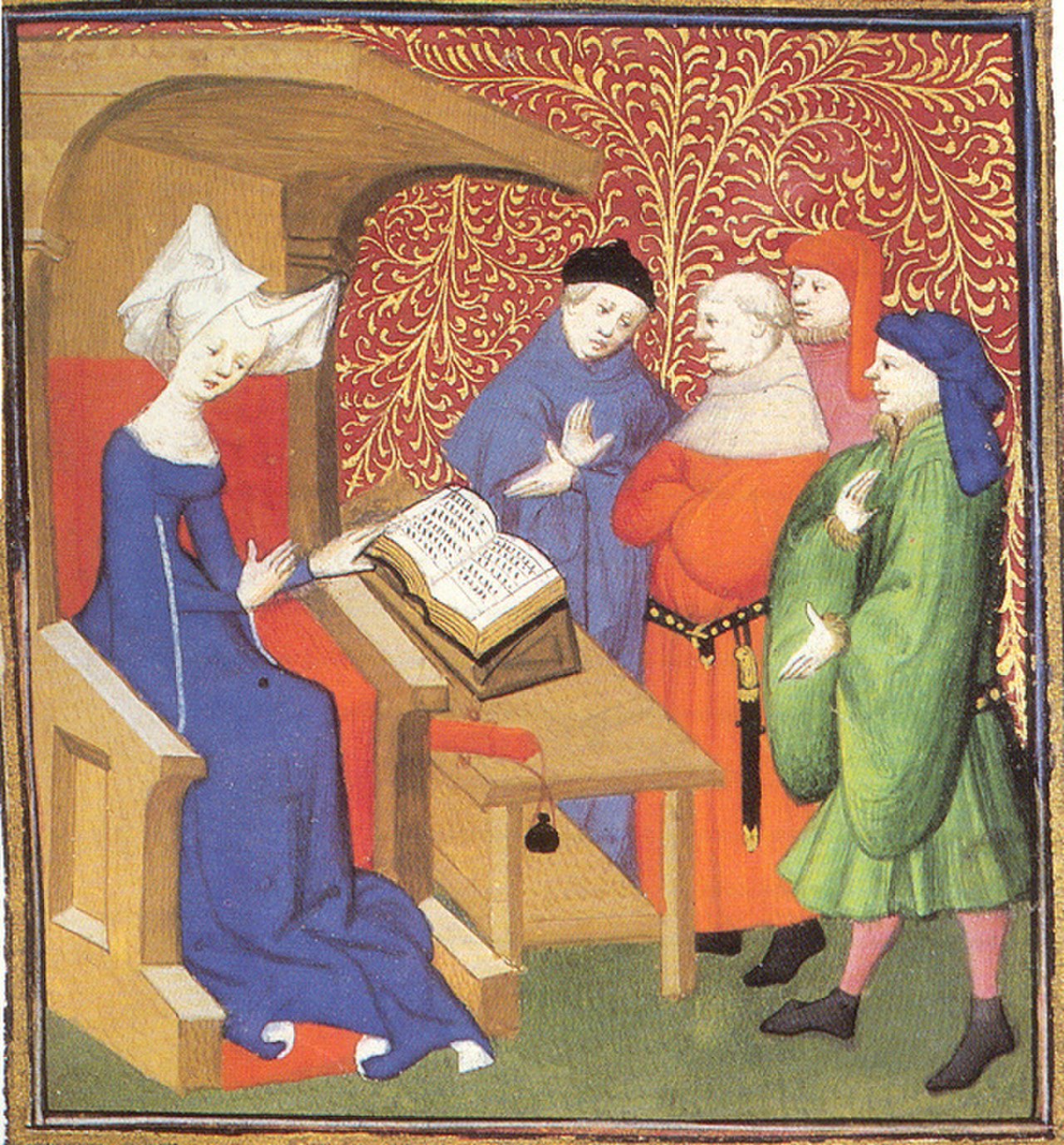
Christine de Pizan
From Venetian Origins to Parisian Literary Acclaim
Christine de Pizan, born Cristina da Pizzano in Venice around September 1364, embarked on a literary career that would defy the conventions of her era. Her father's position as an astronomer and physician to King Charles V of France facilitated the family's move to Paris, immersing Christine in a vibrant intellectual environment. The premature death of her husband in 1390 thrust her into a precarious financial situation, compelling her to leverage her considerable literary talents for economic survival.
This necessity catalyzed her emergence as a professional writer, a role virtually unprecedented for women at the time. She skillfully navigated the complex patronage system of the French court, securing the support of influential figures such as Duke Louis I of Orleans and John the Fearless of Burgundy. Her ability to produce sophisticated works in both verse and prose, addressing diverse genres from courtly love poetry to political treatises, quickly garnered her widespread recognition and established her as a significant literary force.
The City of Ladies and the Defense of Womankind
Christine de Pizan's literary corpus is vast and varied, encompassing novels, didactic poetry, biographies, and critical analyses of political, philosophical, and religious matters. However, her most enduring contributions lie in works that directly addressed the status and capabilities of women. 'The Book of the City of Ladies' (Le Dit de la Rose) and 'The Treasure of the City of Ladies' (Le Trésor de la Cité des Dames), both penned during her association with John the Fearless, stand as monumental achievements. 'The Book of the City of Ladies' is a groundbreaking allegorical work where Christine constructs a metaphorical city populated by virtuous women from history and mythology, directly countering the prevalent misogynistic narratives of the time.
She systematically refutes accusations of female inferiority, presenting a compelling case for women's intellectual and moral capacity. 'The Treasure of the City of Ladies' functions as a practical guide, offering advice on conduct, virtue, and social navigation for women across different social strata, solidifying her role as an early proponent of female empowerment through education and self-awareness.
Challenging the Patriarchy
Christine de Pizan's significance as a proto-feminist thinker cannot be overstated. In a patriarchal society where women were largely excluded from public discourse and intellectual life, she boldly asserted their inherent worth and intellectual parity with men. Her writings represent a conscious effort to challenge and dismantle the deeply ingrained misogyny that permeated medieval European culture, as exemplified by works like Jean de Meun's 'Roman de la Rose.' Christine's direct engagement with and refutation of such texts, particularly in 'The Book of the City of Ladies,' marked a critical turning point in literary history.
She not only defended women but also articulated a vision of female agency and intellectual contribution. Her work provided a foundational text for subsequent feminist discourse, demonstrating the power of literature to question social norms and advocate for marginalized voices. She effectively carved out a space for female intellectual expression and laid essential groundwork for future feminist movements.
Enduring Influence
The legacy of Christine de Pizan extends far beyond her immediate historical context. Her works were not ephemeral; they remained in print and continued to be read and debated well into the 16th century, influencing subsequent generations of writers and thinkers. Her advice literature for princes, princesses, and knights offered sophisticated insights into governance, ethics, and courtly conduct, contributing to the development of political thought.
More profoundly, her persistent advocacy for women's intellectual equality and her pioneering literary techniques cemented her status as a pivotal figure in the transition from the medieval to the Renaissance period. She stands as a testament to the enduring power of individual intellect and courage to challenge societal limitations and to shape cultural understanding. Her contributions continue to be recognized and celebrated for their historical depth, literary merit, and foundational role in the ongoing dialogue about gender, power, and representation.
See also
Frequently Asked Questions
Who was Christine de Pizan?+
Why did Christine start writing for money?+
What is "The Book of the City of Ladies"?+
What is "The Treasure of the City of Ladies"?+
How did Christine help women in her time?+
Based on content from Wikipedia · Licensed under CC BY-SA 4.0