

Chinatown, London
Images
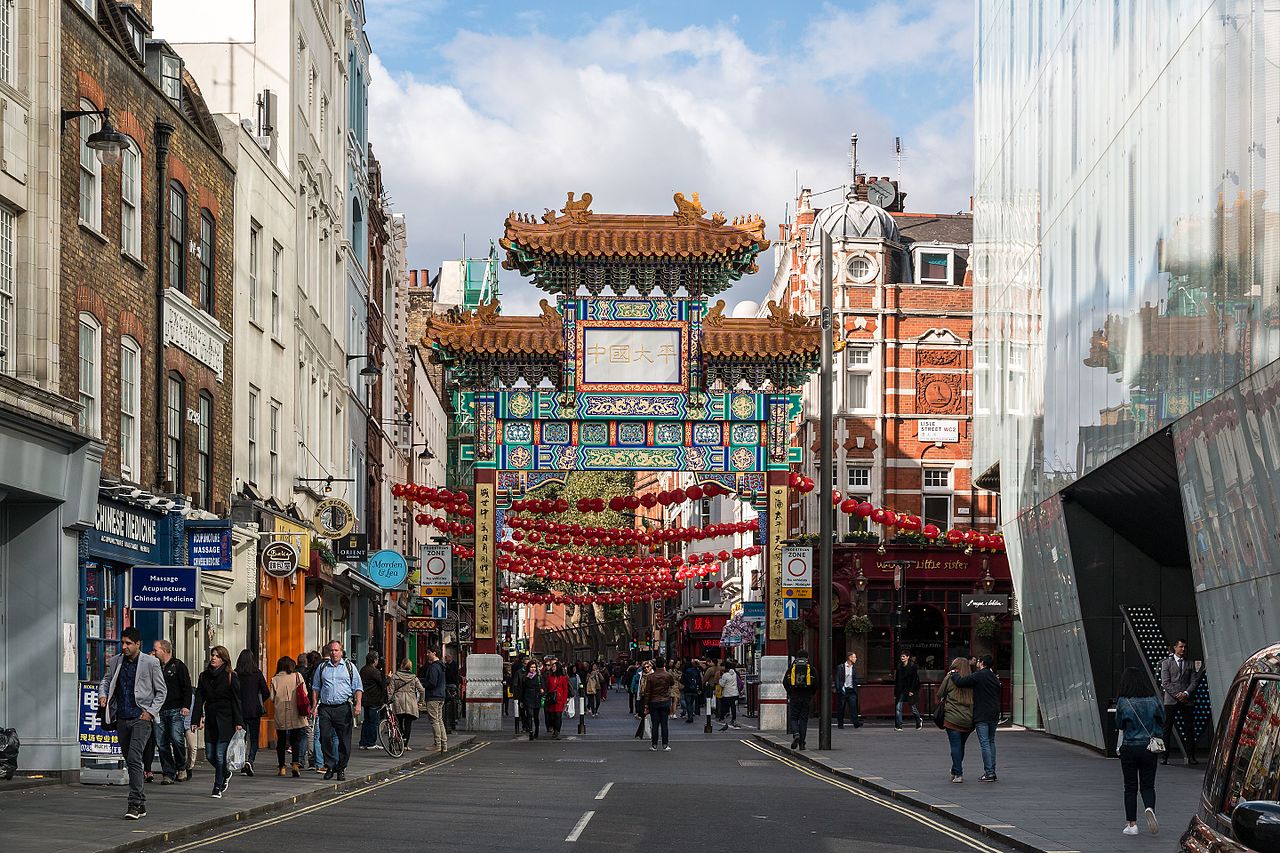
London, China Town 2016 4868


Geographical Anchoring and Urban Integration
London's Chinatown is strategically situated within the City of Westminster, a central and highly desirable urban area. Its geographical position is defined by its adjacency to prominent districts such as Soho to the north and west, and Theatreland to the south and east. This prime location places it at the nexus of London's cultural and entertainment landscape, facilitating high foot traffic and visibility.
The enclave primarily occupies the area in and around Gerrard Street, which has become its de facto heart. This concentration of Chinese-run businesses creates a distinct visual and sensory identity within the broader urban environment, acting as a recognizable cultural marker in a global metropolis.
Historical Trajectory
The narrative of London's Chinatown is one of evolution and adaptation, reflecting broader patterns of Chinese migration and settlement. The genesis of London's Chinese community was not in its current location, but rather in Limehouse, an area in the East End historically associated with maritime trade and immigrant populations. This initial settlement, established in the early 20th century, served as a vital hub for early Chinese immigrants.
Over time, due to various socio-economic factors and urban development, the community gradually shifted westward. The establishment of Chinatown in its current West End location marked a significant transition, consolidating Chinese businesses and residents into a more prominent and accessible urban space, thereby fostering a more visible and cohesive cultural presence.
Cultural Manifestations and Community Dynamics
Chinatown serves as a vibrant repository of Chinese culture within London. It is characterized by a dense concentration of businesses catering to the Chinese diaspora and the wider public, including numerous restaurants, bakeries, supermarkets stocking authentic ingredients, and shops selling a variety of goods. These establishments are often family-owned and operated, perpetuating traditional culinary practices, linguistic heritage, and social customs.
The area becomes a focal point for cultural celebrations, such as Chinese New Year, drawing significant crowds and reinforcing its identity. The presence of multiple Chinese languages spoken alongside English underscores the enclave's multicultural character and its role as a space for cultural continuity and exchange.
Economic Engine and Urban Significance
Economically, Chinatown functions as a vital commercial district within central London. Its primary industries revolve around the food service sector, with a high density of Chinese restaurants and eateries that are popular destinations for both locals and tourists. Complementing this are the supermarkets and retail outlets that provide essential goods and services to the community and attract shoppers seeking authentic products.
These businesses contribute significantly to London's economy through employment generation and by attracting considerable consumer spending. Chinatown's economic vitality is intrinsically linked to its cultural appeal, creating a symbiotic relationship that enhances its overall urban significance as a unique commercial and cultural destination.
Governance and Civic Presence
As an ethnic enclave within the City of Westminster, Chinatown operates under the broader governance structures of London and the United Kingdom. While there isn't a separate political entity governing Chinatown itself, its residents and businesses are represented through local councilors and various community organizations. These groups often advocate for the interests of the Chinese community, addressing issues related to business development, cultural preservation, and civic engagement.
The enclave's presence influences local planning and policy decisions, ensuring that the unique character and needs of this vibrant community are considered within the larger municipal framework.
See also
Frequently Asked Questions
Where is London's Chinatown located?+
What can you find in Chinatown?+
Why is Chinatown important to London?+
How did Chinatown move to its current location?+
When do people celebrate Chinese New Year in Chinatown?+
Based on content from Wikipedia · Licensed under CC BY-SA 4.0