

China Central Television
Images

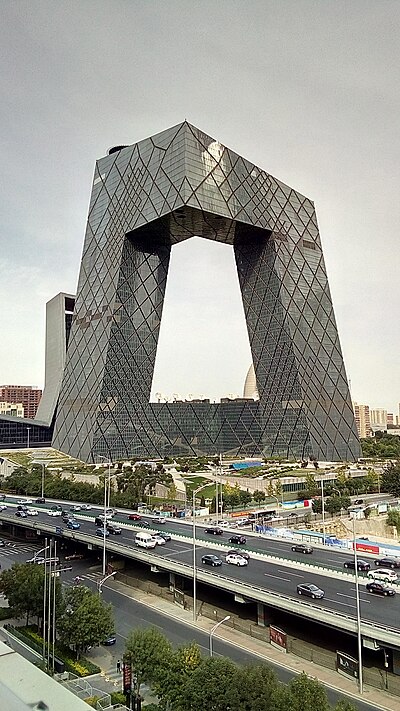
China Central Television HQ, From China World Trade Centre (Cropped)




The Genesis and Structure of a State Media Powerhouse
China Central Television (CCTV) was established in 1958, marking a pivotal moment in the development of mass media within the People's Republic of China. As the national television broadcaster, its operations are overseen by the National Radio and Television Administration, a governmental body that itself reports to the Publicity Department of the Chinese Communist Party (CCP). This hierarchical structure underscores CCTV's fundamental role not merely as a media outlet, but as an integral component of the state's communication apparatus.
Its inception was driven by the need to disseminate information and ideological messaging across a vast and diverse nation, consolidating a unified national identity and ensuring adherence to the Party's directives. The sheer scale of its operations and its direct link to the highest levels of government position it as a unique entity in the global media landscape.
Multifaceted Mandate
CCTV's operational scope extends far beyond the conventional functions of news reporting and entertainment programming. Its mandate encompasses critical areas such as news communication, social education, and the dissemination of cultural and entertainment information services. This broad remit allows CCTV to influence public discourse on a wide array of topics, from current events and policy announcements to cultural trends and lifestyle advice.
The station's programming is strategically designed to align with national development goals and to foster a particular understanding of China's place in the world. By controlling the narrative across such diverse content areas, CCTV plays a crucial role in shaping public opinion and reinforcing societal norms and values as defined by the CCP.
The Art of Narrative Control
A significant aspect of CCTV's function is its role within the Chinese government's propaganda network. While it provides essential news and entertainment, its reporting is often characterized by a deliberate framing that supports the objectives of the Chinese Communist Party. International observers and organizations, such as Freedom House, and publications like The Guardian, have frequently commented on how CCTV's coverage of topics sensitive to the government can be distorted or selectively presented.
This approach is sometimes described as a strategic tool used to counter perceived opposition or criticism, both domestically and internationally. The station's ability to control the flow of information and shape narratives is a key element of its power and influence, impacting how both Chinese citizens and the global community perceive China and its policies.
Technological Prowess and Expanding Reach
Over the decades, CCTV has evolved from a nascent broadcasting service into a sophisticated media conglomerate with a vast technological infrastructure. It operates numerous channels, each catering to specific demographics and interests, and has expanded its reach through digital platforms and international broadcasting services. This expansion is not merely about increasing viewership; it's also a strategic effort to project China's image and influence globally.
By producing content in multiple languages and establishing overseas bureaus, CCTV aims to compete with international news organizations and present an alternative perspective on global affairs. This global ambition, coupled with its domestic dominance, solidifies CCTV's position as a formidable force in contemporary media.
CCTV's Impact on National Cohesion and Global Dialogue
The pervasive presence of CCTV across China contributes significantly to national cohesion by providing a shared information space and reinforcing a common set of narratives. For citizens in remote areas, CCTV often serves as their primary window to the outside world and the central government. However, this centralized control also raises questions about media freedom and the diversity of viewpoints available to the public.
As China's global influence grows, CCTV's role in international communication becomes increasingly important. Its ability to frame stories and influence perceptions means it is a key player in the ongoing global dialogue about China's political, economic, and social trajectory, making its operations a subject of continuous analysis and debate.
See also
Frequently Asked Questions
What is China Central Television (CCTV)?+
When did CCTV start?+
Who decides what CCTV shows?+
Why does CCTV show different kinds of programs?+
Does CCTV talk about other countries?+
Based on content from Wikipedia · Licensed under CC BY-SA 4.0