

Chechen Language
Images

Кеферпатан Къавкъаздин чӀалар лез




Noxçiyn
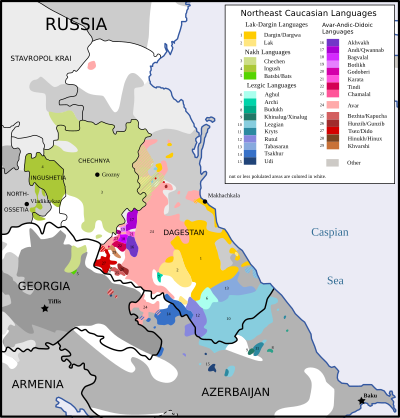
The Chechen language, or 'Noxçiyn' in its native form, is a prominent member of the Northeast Caucasian language family, a group renowned for its linguistic complexity and ancient origins. Spoken primarily by the Chechen people, it is the official language of the Chechen Republic within the Russian Federation and is also spoken in neighboring republics and by a significant diaspora worldwide, totaling approximately 1.8 million speakers. Its classification within the Nakh branch of the Northeast Caucasian languages places it in close relation to Ingush and Bats.
The language is characterized by a rich phonological system, featuring a wide array of consonants, including ejectives and uvulars, which contribute to its distinctive sound. The grammatical structure is agglutinative, with a complex system of noun cases and verb conjugations that allow for nuanced expression. Understanding Chechen offers a window into a unique linguistic world, distinct from Indo-European or Turkic languages prevalent in the region.
Chronicles in Sound
The history of the Chechen language is deeply intertwined with the ancient peoples of the Caucasus Mountains. As part of the Northeast Caucasian language family, its roots extend back to a proto-language spoken thousands of years ago, making it one of the oldest linguistic lineages in Europe. Unlike many languages that have undergone significant simplification over time, Chechen has retained many archaic features, preserving a linguistic heritage that offers valuable insights into historical linguistics.
The development of its writing system has also been a journey, with various scripts employed throughout history, including Latin-based alphabets and, most recently, a modified Cyrillic script since the mid-20th century. This long and continuous linguistic tradition underscores the resilience of the Chechen culture and its ability to adapt while preserving its core identity.
The Enduring Power of Noxçiyn
The Chechen language is far more than a tool for communication; it is the bedrock of Chechen identity and cultural continuity. It serves as the primary vehicle for transmitting Chechen folklore, epic poetry (like the 'Nart sagas'), historical accounts, and traditional values across generations. In the face of historical pressures, including periods of suppression and forced migration, the language has acted as a crucial unifying force, fostering a sense of shared heritage and collective memory.
The vitality of Noxçiyn is a testament to the Chechen people's commitment to preserving their unique cultural patrimony. Its continued use in daily life, literature, and media is essential for maintaining the distinctiveness of Chechen culture in a globalized world.
Unpacking the Grammar
The grammatical structure of the Chechen language presents a fascinating study for linguists. It is characterized by an ergative-absolutive alignment, meaning that the subject of a transitive verb is marked differently from the subject of an intransitive verb and the object of a transitive verb. This is a significant departure from the nominative-accusative system found in many European languages.
Chechen also features a complex system of noun classes, which affect agreement on verbs and adjectives. Furthermore, its rich verbal morphology allows for the expression of a wide range of tenses, aspects, moods, and evidentiality. The extensive use of postpositions and a sophisticated case system further contribute to the language's expressive capabilities, making it a rich and intricate linguistic system.
Chechen in the Modern World
Today, the Chechen language navigates the complexities of the modern world. While it remains a vibrant language within Chechnya, the global diaspora plays an increasingly important role in its preservation and dissemination. Educational initiatives, cultural organizations, and online resources are vital in ensuring that younger generations, particularly those living outside of Chechnya, maintain fluency and connection to their linguistic heritage.
The language faces challenges common to many minority languages, including the influence of dominant languages like Russian. However, the strong sense of cultural pride among the Chechen people fuels ongoing efforts to promote and protect Noxçiyn, demonstrating its enduring relevance and the determination of its speakers to keep their unique voice alive.
See also
Frequently Asked Questions
What is the Chechen language and where is it spoken?+
Why is Chechen considered special compared to other languages?+
How does Chechen grammar work?+
Where did the Chechen language come from?+
Why do people keep speaking Chechen?+
Based on content from Wikipedia · Licensed under CC BY-SA 4.0