

ChatGPT
Images

Now We Know Where ChatGPT Learned to Speak


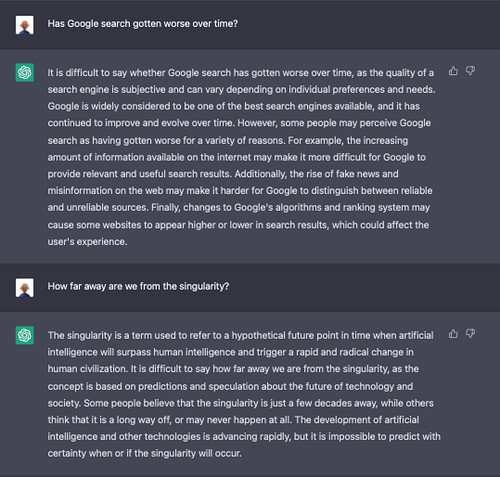


The Genesis and Rapid Proliferation of a Generative AI
Launched by OpenAI in November 2022, ChatGPT represents a significant leap in generative artificial intelligence, specifically in the realm of conversational AI. It leverages the power of GPT (Generative Pre-trained Transformer) models, currently utilizing GPT-5, to produce text, speech, and even images in response to user prompts. Its release was not merely an incremental update; it acted as a powerful catalyst, accelerating the ongoing AI boom characterized by unprecedented investment and public fascination.
The freemium model of operation, allowing broad access, contributed to its explosive growth. Users can interact through text, audio, and image inputs, demonstrating a versatile interface. The sheer speed of its adoption is unprecedented: by January 2023, ChatGPT had amassed over 100 million users, making it the fastest-growing consumer software application in history.
This rapid integration into daily life underscores its perceived utility and the public's readiness for advanced AI tools. By 2025, its website is projected to be among the top 5 globally visited, with an estimated 800 million active weekly users, signaling its deep entrenchment in the digital landscape.
Unpacking the Transformer
At its core, ChatGPT operates on a Generative Pre-trained Transformer (GPT) architecture. This sophisticated neural network design is particularly adept at processing sequential data, such as language. The 'pre-trained' aspect signifies that the model has been exposed to a colossal dataset of text and code from the internet, enabling it to learn patterns, grammar, facts, and reasoning styles.
When a user provides a 'prompt' (an input query or instruction), the GPT model analyzes it and, based on its training, predicts the most probable sequence of words to form a coherent and contextually relevant output. This predictive capability allows it to generate human-like text, answer questions, write different kinds of creative content, and translate languages. The ability to generate novel content, rather than just retrieving existing information, is what defines it as 'generative' AI.
The ongoing development, such as the transition to GPT-5, signifies continuous improvements in its understanding, reasoning, and generative capabilities.
Transformative Potential and Societal Ripples
ChatGPT is widely lauded as a revolutionary tool with the potential to transform numerous professional fields. Its capacity to automate tasks, assist in creative processes, and provide instant information retrieval has led to widespread discussion about its impact on knowledge work, education, and various industries. For instance, it can draft emails, write code snippets, summarize lengthy documents, and even help brainstorm complex ideas, significantly boosting productivity.
However, this transformative power is accompanied by significant societal challenges and debates. The ease with which it can generate plausible-sounding but incorrect information, known as 'hallucinations,' raises concerns about misinformation. Biases present in its vast training data can be reflected in its responses, perpetuating societal inequalities.
Furthermore, its potential for facilitating academic dishonesty, generating malicious code, and spreading disinformation has prompted calls for regulation and ethical guidelines. The very nature of creativity and the future of human labor are being re-examined in light of its capabilities.
Navigating the Ethical Labyrinth
Despite its acclaim, ChatGPT is embroiled in significant ethical controversies. One primary concern is its potential for misuse, including academic dishonesty, the generation of misinformation, and the creation of malicious code. The 'hallucination' problem, where the AI confidently presents incorrect information as fact, poses a serious threat to reliable knowledge dissemination.
Moreover, the training data itself has drawn criticism. The use of copyrighted material without explicit permission for training AI models has led to legal challenges and intense debate about intellectual property rights. The reflection of societal biases within the training data means ChatGPT can inadvertently perpetuate stereotypes or discriminatory viewpoints.
These ethical quandaries have led to practical consequences, such as restrictions on its use in some workplaces and educational institutions. The ongoing public discourse and calls for regulation highlight the urgent need to establish frameworks for the responsible development and deployment of advanced AI technologies like ChatGPT.
See also
Based on content from Wikipedia · Licensed under CC BY-SA 4.0