

Chairman of the Joint Chiefs of Staff
Images

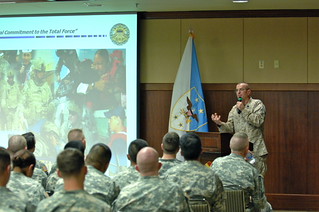
Sgt. Maj. Bryan Battaglia, senior enlisted advisor to the chairman of the Joint Chiefs of Staff, visits Camp Humphreys - U.S. Army Garrison Humphreys, South Korea - 4 May 2012


The Strategic Nexus
The Chairman of the Joint Chiefs of Staff (CJCS) occupies a unique and pivotal position within the United States military and national security apparatus. As the highest-ranking officer, the Chairman serves as the principal military advisor to the President, the National Security Council, the Homeland Security Council, and the Secretary of Defense. This advisory capacity is paramount, requiring the Chairman to synthesize complex intelligence, strategic assessments, and operational realities from all branches of the armed forces into actionable recommendations.
While the Chairman does not possess direct operational command authority over combatant forces, a restriction codified by law, their influence is profound. They convene and coordinate the efforts of the Joint Chiefs of Staff, a body comprising the service chiefs, ensuring a unified military perspective is presented to civilian leadership. This role demands exceptional strategic acumen, diplomatic skill, and the ability to articulate military capabilities and limitations clearly to non-military decision-makers, thereby shaping national defense policy and global posture.
Evolution of the Chair
The establishment of a statutory and permanent Chairman of the Joint Chiefs of Staff in 1949, following amendments to the National Security Act of 1947, marked a significant step towards formalizing joint military advice. Initially, the Chairman's role was often described as 'first among equals,' emphasizing a collegial leadership style among the service chiefs. However, the landscape of military operations and national security challenges necessitated a more centralized advisory structure.
The Goldwater-Nichols Department of Defense Reorganization Act of 1986 was a watershed moment, fundamentally elevating the Chairman's status and responsibilities. This legislation transformed the Chairman from a primus inter pares into the undisputed principal military advisor, enhancing their authority to direct the Joint Staff and coordinate military advice. This reform aimed to improve jointness and operational effectiveness, ensuring that military advice was presented cohesively rather than as competing service interests.
The Mechanics of Jointness
The Chairman's effectiveness is significantly supported by the Joint Staff, a dedicated organization managed by the Director of the Joint Staff. This staff comprises military personnel drawn from all branches, acting as a crucial conduit for information flow between the Chairman, the Joint Chiefs, and the combatant commanders. The National Military Command Center (NMCC) is an integral part of the Joint Staff's operations directorate, serving as a critical hub for monitoring and directing military actions.
It is essential to understand that the Goldwater-Nichols Act clearly delineates the chain of command, flowing directly from the President, through the Secretary of Defense, to the commanders of unified combatant commands. The Chairman, while influential, operates outside this direct operational chain. However, they facilitate communication, transmit directives, and can recommend the allocation of additional resources, bridging the gap between strategic policy and tactical execution.
Strategic Imperatives and Contemporary Relevance
The role of the Chairman of the Joint Chiefs of Staff is more critical than ever in an era of complex geopolitical challenges, rapid technological advancements, and evolving threats. The Chairman must navigate the intricacies of interagency coordination, advise on the integration of diverse military capabilities, and provide foresight on emerging security paradigms, such as cyber warfare and space operations. The ability to foster consensus among the service chiefs, each representing distinct institutional priorities, is a testament to the Chairman's leadership.
Furthermore, the Chairman's counsel is vital in advising on the deployment of forces, the development of military strategy, and the management of resources to meet global responsibilities. The prestige and importance of the office underscore its indispensable function in safeguarding national interests and maintaining global stability through informed and unified military counsel.
The Chairman's Sphere of Influence
While the Chairman of the Joint Chiefs of Staff does not hold direct operational command over combatant forces, their influence is far-reaching and multifaceted. The Chairman acts as the primary interface between the military services and the highest levels of civilian leadership, ensuring that the President and Secretary of Defense receive comprehensive and unified military advice. This advisory role extends to the National Security Council and the Homeland Security Council, where military perspectives are crucial for informed decision-making.
The Chairman also plays a key role in communicating directives from the President and Secretary of Defense to combatant commanders, ensuring that strategic intent is translated into operational plans. Moreover, the Chairman can recommend the allocation of additional funding to support combatant commands, demonstrating a significant financial and strategic leverage. The service chiefs, while having authority over their respective service personnel and resources, are guided by the Chairman's overarching strategic direction, fostering a cohesive and integrated approach to national defense.
See also
Frequently Asked Questions
What does the Chairman of the Joint Chiefs of Staff do?+
Does the Chairman command troops in battle?+
How did the Chairman’s role change in 1986?+
Who helps the Chairman with information and planning?+
Why is the Chairman important today?+
Based on content from Wikipedia · Licensed under CC BY-SA 4.0