

Celtiberian Script: Secret Codes of the Past!
Images
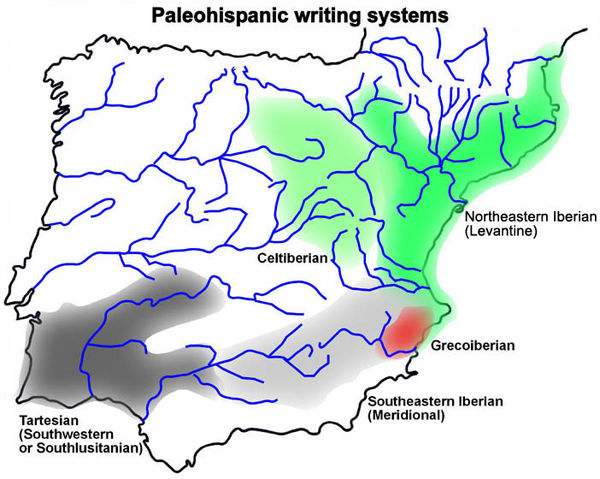
Celtiberian script
The Genesis and Nature of the Celtiberian Script
The Celtiberian script stands as a significant artifact of linguistic and cultural history, representing the primary writing system for the Celtiberian language, an extinct branch of the Continental Celtic family. This script is classified as a Paleohispanic script, a term used for indigenous writing systems that flourished in the Iberian Peninsula prior to widespread Romanization. Its direct lineage traces back to the northeastern Iberian script, one of the most prevalent Iberian writing systems.
This adaptation wasn't merely a superficial change; it involved modifying the existing symbols and structure to accommodate the phonological and grammatical features of the Celtiberian language. The script's nature as a syllabary, where symbols typically represent syllables rather than individual phonemes, is a key characteristic that distinguishes it from alphabetic systems like the Latin script. Understanding this adaptation is crucial for appreciating the cultural exchange and independent development of writing traditions in ancient Iberia.
Evolution and Adaptation
The development of the Celtiberian script exemplifies the dynamic process of cultural diffusion and adaptation in the ancient world. By directly adapting the northeastern Iberian script, the Celtiberians demonstrated a sophisticated engagement with existing writing technologies. The northeastern Iberian script itself is believed to have origins in the Phoenician alphabet, highlighting a broader Mediterranean network of communication and innovation.
The Celtiberians took this established system and tailored it to their own linguistic needs. This involved not only symbol modification but also potentially changes in how the script was used and interpreted. The fact that the Celtiberian language was also occasionally written using the Latin alphabet, particularly in later periods, underscores the complex linguistic landscape of the region and the eventual dominance of Roman culture and its writing system.
This dual usage provides valuable comparative data for linguists studying the evolution of the Celtiberian language.
The Scholarly Significance of Celtiberian Inscriptions
The importance of the Celtiberian script extends far beyond its historical curiosity; it is an indispensable tool for modern scholarship. The inscriptions written in this script are primary source materials that allow linguists and historians to reconstruct aspects of the Celtiberian language, which would otherwise be lost to time. By analyzing the patterns, vocabulary, and grammatical structures found in these texts, researchers can gain insights into the social organization, religious practices, economic activities, and even the personal lives of the Celtiberian people.
These inscriptions offer a direct window into their worldview, providing a counterpoint to external accounts, such as those from Roman historians. The decipherment and ongoing study of Celtiberian script inscriptions are vital for a comprehensive understanding of the pre-Roman history and cultural diversity of the Iberian Peninsula.
Mechanics of the Script
The Celtiberian script operated primarily as a syllabary, a system where each symbol represents a syllable. This is a fundamental difference from alphabetic scripts, where symbols represent individual sounds. For instance, a single Celtiberian symbol might stand for 'ka', 'ke', or 'ki', rather than separate 'k' and vowel symbols.
This syllabic structure influences how the language is represented and how texts are read. Another notable feature is its typical writing direction, which was predominantly from right to left, mirroring some other ancient scripts of the region. However, the phenomenon of Celtiberian texts also appearing in the Latin alphabet presents a fascinating duality.
This suggests a period of linguistic transition or bilingualism, where the familiar Latin script was adopted, perhaps for ease of communication with Roman authorities or for specific purposes. This dual usage offers a unique opportunity for comparative linguistic analysis and for understanding the impact of Romanization.
Legacy and Connections
While the Celtiberian script and language are long gone, their study connects us to a broader narrative of human communication and cultural evolution. The adaptation of scripts from one culture to another is a recurring theme throughout history, from the Phoenician alphabet influencing Greek and Latin, to the spread of Arabic script across vast regions. The Celtiberian script is a local manifestation of this global phenomenon.
Its existence highlights the ingenuity of ancient peoples in developing and adapting tools for recording their thoughts and histories. Furthermore, understanding extinct languages and their scripts, like Celtiberian, enriches our appreciation for the diversity of human expression and the deep roots of modern languages. It reminds us that the languages and writing systems we use today are the culmination of millennia of linguistic development and cultural interaction.
See also
Based on content from Wikipedia · Licensed under CC BY-SA 4.0