

Celestial Eyes
Images

Hickson Compact Group 31
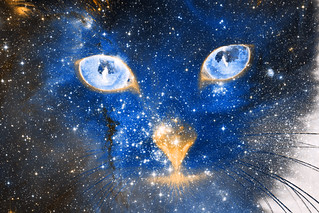


The Genesis and Aesthetic of 'Celestial Eyes'
Created in 1924 by the Spanish painter Francis Cugat, 'Celestial Eyes' stands as a quintessential example of the Art Deco movement. This style, which flourished between the World Wars, is characterized by its sleek lines, geometric patterns, and a sense of modern luxury. Cugat's work embodies these principles through its stylized depiction of a fragmented female face.
The painting is not a literal portrait but an evocation, focusing solely on the eyes and mouth suspended against a nocturnal cityscape. This deliberate abstraction, with its poorly delineated contours, immediately sets it apart from more representational art of the era. The setting, suggestive of the vibrant Coney Island amusement park, adds a layer of ephemeral glamour and perhaps a touch of melancholy to the scene.
The very essence of Art Deco is captured in its bold yet simplified forms, aiming to evoke emotion and atmosphere rather than precise detail. The painting’s preservation at the Graphic Arts Collection at Princeton University Library underscores its academic and cultural value, allowing future generations to study its unique artistic contributions.
From Canvas to Cover
The true cultural resonance of 'Celestial Eyes' was cemented when it was selected as the iconic cover art for F. Scott Fitzgerald's seminal novel, 'The Great Gatsby.' Published in 1925, the novel is a profound exploration of the American Dream, wealth, class, and disillusionment during the Roaring Twenties, also known as the Jazz Age. The choice of Cugat's painting was inspired.
Its abstract and somewhat haunting quality perfectly mirrors the novel's themes of illusion, unattainable desires, and the superficiality that often masked deeper societal issues. The painting’s placement on the cover transformed it from a singular artwork into a powerful symbol, intrinsically linked to one of the most important works of American literature. This symbiotic relationship has ensured that both the painting and the novel continue to be discussed and analyzed, each enhancing the other's legacy and contributing to a richer understanding of the 1920s.
Unraveling the Symbolism
The visual elements within 'Celestial Eyes' are rich with potential symbolism, inviting deep interpretation. The most striking feature is the presence of female nude figures depicted within the irises of the eyes. This surreal detail introduces a layer of introspection and perhaps a commentary on the objectification or the inner world of the subject.
The green tint in the right eye, resembling a tear, is another potent symbol. Green can represent envy, wealth, hope, or even decay, depending on the context. In relation to 'The Great Gatsby,' it could allude to Gatsby's longing for Daisy, his immense wealth, or the hollowness of his dreams.
The overall effect of these elements is to create an artwork that is both visually arresting and intellectually stimulating, prompting viewers to question the artist's intent and the deeper meanings embedded within the composition. The ambiguity is not a flaw but a deliberate artistic choice that fosters ongoing engagement.
The Enduring Debate
The enigmatic nature of the woman in 'Celestial Eyes' has fueled considerable debate among literary critics and art historians. The ill-defined characteristics of the face have led to numerous hypotheses regarding its inspiration. The most prominent theory connects the painting to the colossal billboard of Dr.
T.J. Eckleburg, a characterless advertisement that looms over the desolate Valley of Ashes in 'The Great Gatsby.' This billboard, with its disembodied eyes, serves as a silent, judgmental observer of the characters' moral failings. Alternatively, some scholars suggest the painting might be an artistic interpretation of the character of Daisy Buchanan, the object of Jay Gatsby's obsessive love.
Her allure and elusiveness are central to the novel's tragedy. The conflicting opinions surrounding the painting's inspiration highlight its power to provoke thought and its adaptability as a symbol, demonstrating how art can transcend its original context to become a multifaceted icon of cultural discourse.
See also
Frequently Asked Questions
What is "Celestial Eyes"?+
Who painted "Celestial Eyes" and when?+
Why is "Celestial Eyes" on the cover of The Great Gatsby?+
What does the green tint in the right eye mean?+
Where can I see the original painting?+
Based on content from Wikipedia · Licensed under CC BY-SA 4.0