

Cathode Ray: The Speedy Electron Stream!
Images

Cathode ray glow



Observing the Unseen
The phenomenon of cathode rays first emerged from experiments with electrical discharge in evacuated glass tubes during the mid-19th century. In 1859, German physicists Julius Plücker and Johann Wilhelm Hittorf observed a faint luminescence on the glass wall of a discharge tube, opposite the negative electrode (cathode). This glow, which appeared to emanate from the cathode, was initially a scientific curiosity.
Eugen Goldstein, in 1876, coined the term 'Kathodenstrahlen' (cathode rays) to describe these emissions. These early observations, while lacking a complete theoretical framework, marked the first empirical evidence of phenomena that would fundamentally alter our understanding of matter and electricity. The nature of these rays remained a subject of intense debate, with theories ranging from light waves to streams of charged particles.
J.J. Thomson and the Electron
The definitive understanding of cathode rays arrived in 1897 with the groundbreaking work of J.J. Thomson at the Cavendish Laboratory. Through a series of ingenious experiments using cathode ray tubes subjected to electric and magnetic fields, Thomson demonstrated that cathode rays were not electromagnetic waves but rather streams of particles.
He meticulously measured their deflection, calculating their charge-to-mass ratio. This ratio was found to be constant, regardless of the cathode material or the gas within the tube, indicating the universal nature of these particles. Thomson concluded that these particles were much smaller than atoms and carried a negative charge.
He proposed the 'plum pudding' model of the atom, with these newly discovered particles, which he initially called 'corpuscles,' embedded within a positively charged sphere. This discovery of the electron was a pivotal moment, revealing the subatomic world and laying the groundwork for quantum mechanics and modern physics.
Cathode Ray Tubes (CRTs)
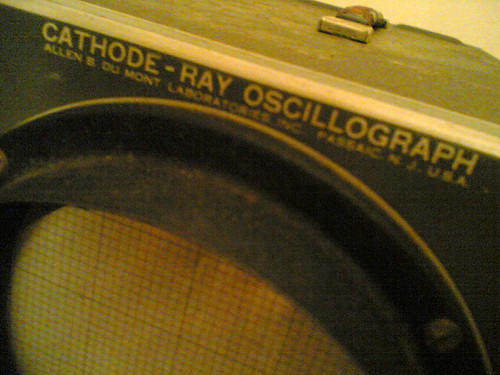
The scientific understanding of cathode rays quickly translated into revolutionary technology: the Cathode Ray Tube (CRT). CRTs became the dominant display technology for televisions, computer monitors, oscilloscopes, and radar systems for much of the 20th century. In a CRT, an electron gun generates a focused beam of electrons.
This beam is then precisely deflected by either electrostatic or electromagnetic fields, allowing it to scan across the inner surface of the screen in a raster pattern. The screen itself is coated with phosphors, materials that emit light when struck by electrons. By modulating the intensity of the electron beam as it scans, millions of pixels can be illuminated, creating dynamic images.
This technology enabled the widespread dissemination of visual information and entertainment, profoundly shaping society.
Legacy and Modern Relevance of Cathode Ray Principles
Although CRTs have largely been superseded by flat-panel display technologies like LCD and OLED, the principles behind cathode rays remain profoundly relevant. The discovery of the electron was foundational to the entire field of electronics, leading to transistors, integrated circuits, and the digital age. Beyond display technology, electron beams are still critical in numerous scientific and industrial applications.
Electron microscopes, for instance, utilize focused electron beams to achieve magnifications far beyond what is possible with light microscopes, enabling unprecedented insights into material science, biology, and nanotechnology. Particle accelerators, used in fundamental physics research and medical treatments, also rely on manipulating high-energy charged particles, a direct descendant of early cathode ray experiments. The legacy of cathode rays is thus not confined to historical displays but extends to cutting-edge scientific inquiry and advanced technological applications.
See also
Frequently Asked Questions
What is a cathode ray?+
Who first saw cathode rays and when?+
How did J.J. Thomson prove cathode rays are particles?+
What is a cathode ray tube (CRT) and how does it make pictures?+
Why are cathode rays still important today?+
Based on content from Wikipedia · Licensed under CC BY-SA 4.0