

Camp Nou: The Giant Football Playground!
Images
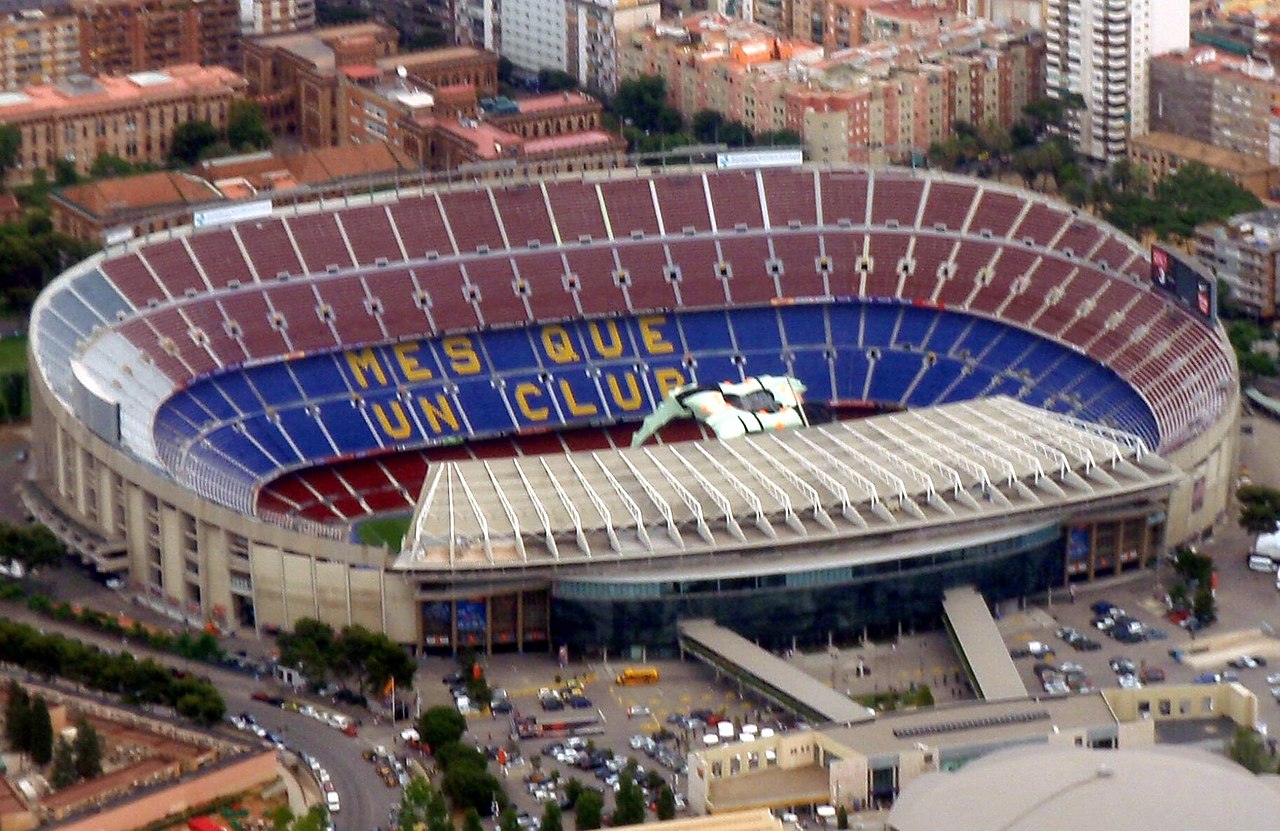
Camp Nou aerial (cropped)




From Foundation to Future
Camp Nou, a name that resonates deeply within the global football fraternity, stands as the illustrious home of FC Barcelona. Its inception in 1957 marked the beginning of an era, providing a state-of-the-art venue for one of the world's most beloved football clubs. The stadium's very name, 'New Field,' signifies a forward-looking ambition that has consistently driven its development.
Currently, Camp Nou is in the midst of a monumental renovation project, a testament to its enduring relevance and the club's commitment to excellence. Upon completion, it is slated to become the largest stadium in Spain and Europe by seating capacity, accommodating an astounding 105,000 spectators. This expansion will not only elevate its status but also position it as the second-largest association football stadium globally, underscoring its immense scale and significance in the sport's landscape.
The project reflects a strategic vision to maintain Camp Nou as a premier destination for football and other major events.
A Pantheon of Footballing Legends and Landmark Events
The hallowed turf of Camp Nou has been the stage for countless legendary performances and pivotal moments in football history. Its significance extends far beyond domestic league matches, having hosted the zenith of European club football. The stadium has twice been the venue for the European Cup/Champions League final, most notably in 1989 and 1999, where the continent's elite clubs vied for ultimate supremacy.
Furthermore, it has served as a crucial backdrop for other prestigious competitions, including multiple European Cup Winners' Cup finals, Inter-Cities Fairs Cup finals, UEFA Super Cup games, and numerous domestic cup finals like the Copa del Rey. On the international stage, Camp Nou played a vital role in the 1982 FIFA World Cup, hosting five matches, including the tournament's opening ceremony and game. Its legacy was further cemented by hosting half of the matches at the 1964 European Nations' Cup and the final of the football tournament at the 1992 Summer Olympics, solidifying its status as a globally recognized sporting arena.
The Socio-Cultural Fabric Woven into Camp Nou
Camp Nou transcends its identity as a mere sporting venue; it is a profound symbol of Catalan identity and a powerful unifier for millions of fans worldwide. The stadium embodies the passion, resilience, and sporting philosophy of FC Barcelona, often referred to as 'Més que un club' (More than a club). It serves as a communal gathering space where diverse populations converge, united by a shared fervor for the beautiful game.
The current renovation, while necessitating a temporary relocation to venues like Estadi Olímpic Lluís Companys and Johan Cruyff Stadium, highlights the club's adaptability and unwavering dedication to its fanbase. The anticipation surrounding the stadium's return, enhanced and modernized, speaks volumes about its deep-rooted emotional and cultural significance. This ongoing evolution ensures that Camp Nou will continue to be a beacon of sporting excellence and cultural pride for generations to come.
Architectural Ambition and Future-Proofing
The ongoing renovation of Camp Nou represents a significant investment in the future of FC Barcelona and its iconic home. Commencing after the 2022-2023 season, the project is meticulously planned, with full completion anticipated by June 2026. The club aims to return to its home ground in late 2025, albeit at a reduced capacity during the final stages.
This ambitious undertaking involves not only an increase in seating capacity to 105,000 but also a comprehensive upgrade of facilities, incorporating cutting-edge technology and enhanced fan experiences. The design aims to optimize acoustics, improve sightlines, and integrate sustainable practices, ensuring Camp Nou remains a world-class venue capable of hosting major international events. The temporary displacement of matches underscores the scale of the construction and the club's commitment to delivering a revitalized Camp Nou that will set new standards in stadium design and functionality.
See also
Frequently Asked Questions
What is Camp Nou?+
Why is Camp Nou being renovated?+
Where did Camp Nou host the 1982 FIFA World Cup?+
How many people can sit in Camp Nou after the renovation?+
What does Camp Nou mean?+
Based on content from Wikipedia · Licensed under CC BY-SA 4.0