

Calama, Chile
Images

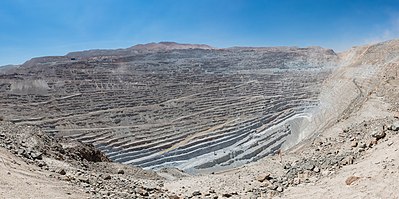
Campamento de Chuquicamata, Calama, Chile, 2016-02-01, DD 93



Navigating Extreme Aridity
Calama's existence is a testament to human resilience in one of the planet's most challenging environments. Situated in the heart of the Atacama Desert, it ranks among the driest cities globally, with an average annual precipitation of a mere 5 millimeters. This extreme aridity is due to a combination of geographical factors, including its inland location, high altitude, and the rain shadow effect from the Andes Mountains.
The Humboldt Current offshore also contributes to the lack of moisture. Despite this, the Loa River, Chile's longest, carves a vital corridor through the desert. Its consistent flow, sustained by distant sources, is the city's primary water source and a critical element for any form of life or agriculture.
The stark contrast between the barren, hyper-arid landscape and the life-giving river is a defining feature of Calama's geography, influencing everything from its settlement patterns to its economic activities.
A Legacy Forged in Copper
The economic and social fabric of Calama is inextricably linked to copper mining. For much of the 20th century, the nearby town of Chuquicamata housed the world's largest open-pit copper mine. This colossal operation, a marvel of engineering, eventually led to the town's dismantling due to environmental degradation and the mine's relentless expansion.
The relocation of Chuquicamata's residents to Calama in 2003 was a pivotal moment, significantly increasing the city's population and transforming its urban landscape. While Chuquicamata is no longer a residential center, the vast mineral wealth beneath the Atacama continues to drive Calama's economy. The city serves as a crucial hub for the mining industry, supporting numerous jobs and contributing substantially to Chile's status as a leading global copper producer.
This reliance on mining presents both opportunities and challenges, including environmental considerations and economic diversification.
Cultural Mosaic
Calama's population is a dynamic blend of long-standing indigenous communities and more recent migrants drawn by economic opportunities. The region is the ancestral home to several indigenous groups, including the Quechua communities of Estación San Pedro, Toconce, and Cupo, and the Lickan-antay communities such as Taira, Conchi Viejo, Lasana, San Francisco de Chiu Chiu, Aiquina-Turi, and Caspana. These communities preserve unique cultural traditions, languages, and social structures that reflect centuries of adaptation to the desert environment.
The influx of people from Chuquicamata and other areas has created a diverse urban society. This cultural fusion enriches Calama, presenting a complex social dynamic where ancient heritage coexists with modern urban life, contributing to the city's unique identity.
Governance and Daily Life in a Desert Metropolis
As the capital of El Loa Province within the Antofagasta Region, Calama is governed by a municipal council and a mayor, operating within Chile's national political framework. The city's administration focuses on providing essential services to its growing population, managing infrastructure, and addressing the unique challenges posed by its desert environment, such as water management and urban planning. Daily life in Calama is shaped by its climate and economy.
The extreme dryness necessitates careful water conservation. The dominant mining industry influences employment opportunities and the city's economic rhythm. Despite the harsh climate, Calama functions as a vibrant urban center, offering amenities and services to its residents, and serving as a gateway to the unique landscapes and geological wonders of the Atacama Desert.
Education and Future Prospects
Education in Calama is crucial for equipping its residents, particularly the younger generation, with the skills needed to thrive in a resource-based economy and to potentially diversify beyond it. The city offers a range of educational institutions, from primary and secondary schools to vocational training centers and higher education facilities. These institutions aim to provide quality education, fostering both traditional academic learning and practical skills relevant to the region's industries, especially mining.
The presence of educational opportunities is vital for social mobility and for cultivating a skilled workforce capable of innovation. As Calama continues to evolve, its educational system plays a key role in shaping its future, encouraging critical thinking, and preparing citizens to tackle the ongoing challenges and opportunities presented by its unique desert environment and its rich mineral heritage.
See also
Frequently Asked Questions
What is Calama like?+
Why is there almost no rain in Calama?+
How does the Loa River help people in Calama?+
What do most people in Calama do for a living?+
Who lives in Calama?+
Based on content from Wikipedia · Licensed under CC BY-SA 4.0