Bóveda

An in-depth exploration of the bóveda, its historical evolution, structural mechanics, and enduring significance in architecture.

Images

Situacion Bóveda

Situacion Bóveda

openverse
Bóveda infinita saharahui
File:Escudo de Bóveda de rio Almar.svg
Iglesia de San Juan Bautista, La Bóveda de Toro
Flag of Bóveda
Iglesia de San Martín, en Bóveda (Lugo, España)
Plaza en la calle Salas Pombo en Bóveda del Río Almar
Escudo de Bóveda
Casa Concello Bóveda
<div class='fn'> <div style='font-weight:bold;display:inline-block;'><div style='display:inline-block' dir='ltr' lang='en'><i>the apotheosis of St. Ignactius</i></div></div><div style='display: none;'>label QS:Len,'the apotheosis of St. Ignactius'</div> <div style='display: none;'>label QS:Les,'Bóveda de la iglesia de San Ignacio'</div></div>
Escudo de Aldehuela de la Bóveda
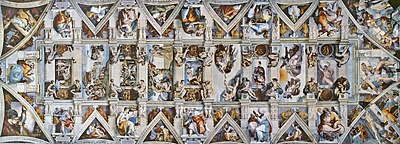
<div class='fn'> <div style='font-weight:bold;display:inline-block;'><div style='display:inline-block' dir='ltr' lang='en'><i>Sistine Chapel ceiling</i></div></div><div style='display: none;'>label QS:Les,'bóveda de la Capilla Sixtina'</div> <div style='display: none;'>label QS:Lhu,'a Sixtus-kápolna mennyezetfreskója'</div> <div style='display: none;'>label QS:Leu,'Kapera Sixtinoaren sabaia'</div> <div style='display: none;'>label QS:Lru,'Потолок Сикстинской капеллы'</div> <div style='display: none;'>label QS:Lcy,'nenfwd y Cappella Sistina'</div> <div style='display: none;'>label QS:Lga,'síleáil an tSéipéil Sistine'</div> <div style='display: none;'>label QS:Lhy,'Սիքստինյան կապելլայի առաստաղ'</div> <div style='display: none;'>label QS:Lzh,'创世纪'</div> <div style='display: none;'>label QS:Ltr,'Sistine Şapeli tavanı'</div> <div style='display: none;'>label QS:Lzh-hk,'創世紀'</div> <div style='display: none;'>label QS:Lsv,'Sixtinska kapellets takfresker'</div> <div style='display: none;'>label QS:Lhe,'תקרת הקפלה הסיסטינית'</div> <div style='display: none;'>label QS:Lzh-hant,'創世紀'</div> <div style='display: none;'>label QS:Lwuu,'创世纪'</div> <div style='display: none;'>label QS:Lko,'시스티나 성당 천정'</div> <div style='display: none;'>label QS:Lhyw,'Սիսթինա գմբէթին առաստաղը'</div> <div style='display: none;'>label QS:Leo,'plafono de la Siksta Kapelo'</div> <div style='display: none;'>label QS:Lta,'சிசுடைன் திருமனை உட்கூரை'</div> <div style='display: none;'>label QS:Lit,'Volta della Cappella Sistina'</div> <div style='display: none;'>label QS:Lfr,'plafond de la chapelle Sixtine'</div> <div style='display: none;'>label QS:Lfa,'سقف کلیسای سیستین'</div> <div style='display: none;'>label QS:Lpt,'Teto da Capela Sistina'</div> <div style='display: none;'>label QS:Lmt,'saqaf tal-Kappella Sistina'</div> <div style='display: none;'>label QS:Lel,'Οροφή της Καπέλα Σιστίνα'</div> <div style='display: none;'>label QS:Laf,'Plafon van die Sixtynse kapel'</div> <div style='display: none;'>label QS:Llt,'Siksto koplyčios lubų freskos'</div> <div style='display: none;'>label QS:Lsl,'strop Sikstinske kapele'</div> <div style='display: none;'>label QS:Lvi,'Trần nhà nguyện Sistina'</div> <div style='display: none;'>label QS:Lgl,'Bóveda da Capela Sistina'</div> <div style='display: none;'>label QS:Laz,'Sikstin kapellasının tavanı'</div> <div style='display: none;'>label QS:Lid,'Langit-langit Kapel Sistina'</div> <div style='display: none;'>label QS:Lpl,'Sklepienie Kaplicy Sykstyńskiej'</div> <div style='display: none;'>label QS:Lnb,'taket i det sixtinske kapell'</div> <div style='display: none;'>label QS:Lnl,'plafond van de Sixtijnse Kapel'</div> <div style='display: none;'>label QS:Lca,'Volta de la Capella Sixtina'</div> <div style='display: none;'>label QS:Lth,'เพดานโบสถ์น้อยซิสทีน'</div> <div style='display: none;'>label QS:Lde,'Decke der Sixtinischen Kapelle'</div> <div style='display: none;'>label QS:Lja,'システィーナ礼拝堂天井画'</div> <div style='display: none;'>label QS:Len,'Sistine Chapel ceiling'</div> <div style='display: none;'>label QS:Lar,'سقف كنيسة سيستينا'</div> <div style='display: none;'>label QS:Lzh-hans,'创世纪'</div> <div style='display: none;'>label QS:Luk,'Стеля Сикстинської капели'</div></div>

The Geometry and Mechanics of the Bóveda

A bóveda, in its essence, is a form of architectural vault characterized by its curved profile, typically resembling a segment of a sphere or a parabolic surface. This geometric form is not merely aesthetic; it is fundamental to its structural performance. The primary advantage of a bóveda lies in its ability to resolve forces primarily through compression.

Unlike a flat beam, which experiences bending stresses (tension and compression), a well-designed bóveda channels the load downwards and outwards along its curved surface, minimizing tensile stresses that are problematic for materials like stone and unreinforced concrete. The Romans were pioneers in exploiting this principle, using concrete to create massive, monolithic bóvedas. Later developments, such as Gothic ribbed vaults, introduced a framework of arches and ribs to support thinner infill panels, allowing for even greater heights and lighter structures while still relying on compressive forces within the ribs and supports.

Evolution of Bóveda Construction Through the Ages

The history of the bóveda is a testament to human ingenuity in construction. Early forms, such as the barrel vault, were essentially extended arches. The Romans perfected the use of concrete, enabling the construction of large-scale domes and complex vaulting systems that defined their public buildings and infrastructure.

Following the Roman era, the development of the groin vault, formed by the intersection of two barrel vaults, allowed for more flexible spatial arrangements and the creation of openings in the walls for windows. The Gothic period saw the rise of the ribbed vault, a sophisticated system where stone ribs form a skeletal framework, supporting lighter masonry panels. This innovation facilitated the construction of soaring cathedrals with vast, light-filled naves.

In subsequent centuries, architects continued to experiment with bóveda forms, adapting them to new materials and styles, from Renaissance domes to modern concrete shells.

Structural Significance and Architectural Impact

The significance of the bóveda extends beyond its structural capabilities; it has profoundly shaped architectural aesthetics and spatial design. By enabling the creation of large, column-free interior spaces, bóvedas have facilitated the design of grand halls, auditoriums, and places of worship that inspire awe and accommodate large congregations or audiences. The visual impact of a curved ceiling can dramatically alter the perception of a space, creating a sense of openness, grandeur, or intimacy depending on its scale and form.

Furthermore, the acoustic properties of bóvedas have been a crucial consideration in the design of performance spaces and religious buildings. The enduring appeal of the bóveda is evident in its continued use in contemporary architecture, where it is employed not only for its structural efficiency but also as a powerful design element that connects modern structures to a rich architectural heritage.

Contemporary Applications and Innovations

While the bóveda is an ancient concept, its principles remain highly relevant in modern architecture. Advances in materials science and structural engineering have led to sophisticated applications of bóveda principles. Thin-shell concrete bóvedas, for example, can span enormous distances with minimal material, creating dramatic and efficient structures for stadiums, airports, and exhibition halls.

Parametric design and computational tools allow architects to explore complex bóveda geometries that were previously impossible to conceive or construct. These modern bóvedas often push the boundaries of form and function, demonstrating that this time-tested architectural element continues to inspire innovation. The integration of lightweight materials and advanced construction techniques ensures that the bóveda remains a vital tool for architects seeking to create both beautiful and structurally sound spaces.

See also

Frequently Asked Questions

What is a bóveda?+
A bóveda is a curved ceiling that looks like an upside‑down bowl, made from a slice of a sphere or a parabola. It helps buildings stay strong by pushing weight down and out.
Why did the Romans use bóvedas?+
The Romans made big, solid bóvedas with concrete so their public buildings could be very tall and wide without needing many columns.
How does a ribbed vault work?+
A ribbed vault has strong stone ribs that form a skeleton, and lighter walls fit between them. The ribs carry the weight, letting the vault be taller and lighter.
Where can we see bóvedas today?+
Modern stadiums, airports, and museums sometimes use thin‑shell concrete bóvedas that look dramatic and use very little material.
What special sound effect do bóvedas have?+
The curved shape of a bóveda can make sounds echo and spread nicely, which is why many churches and concert halls use them.
Was this helpful?
W

Based on content from Wikipedia · Licensed under CC BY-SA 4.0