

Bryde's whale
Images
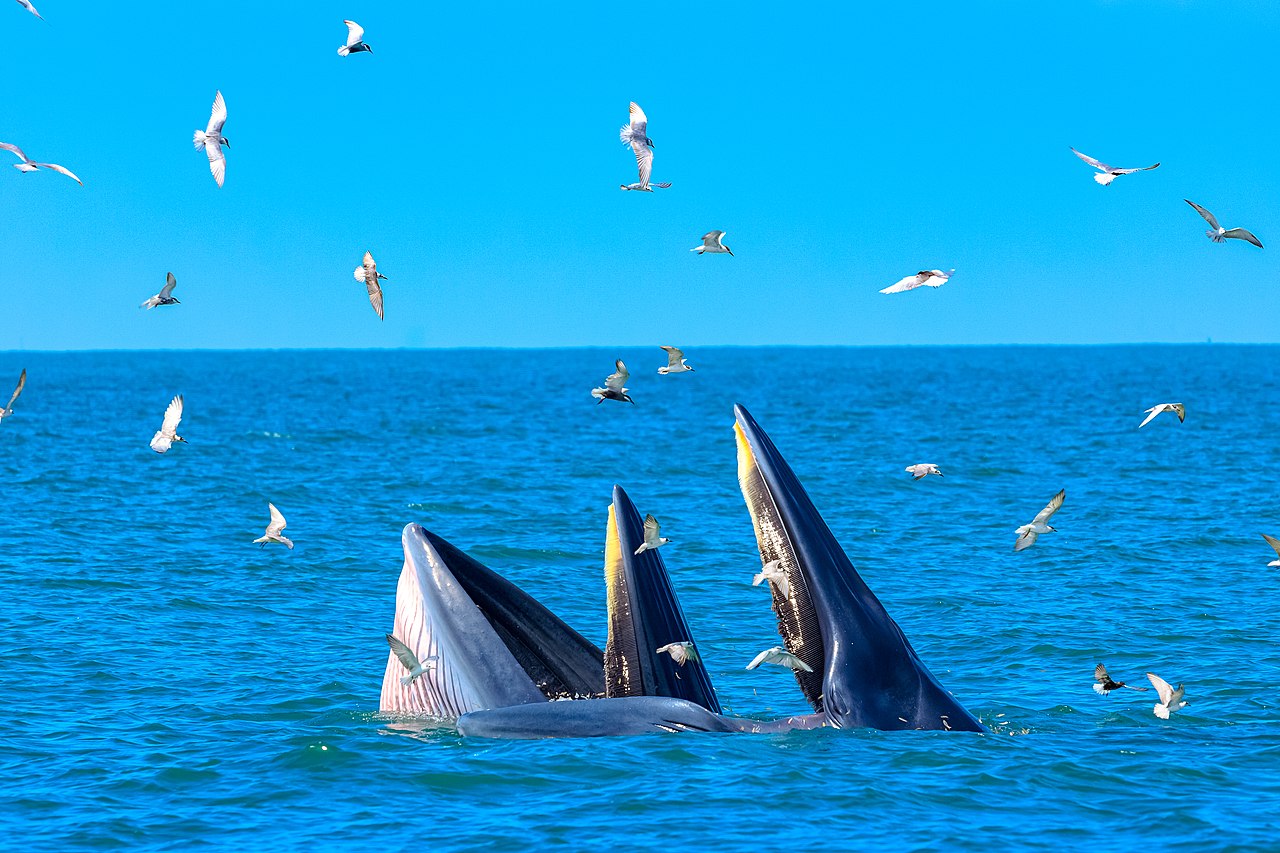
Bryde's whale 1


Navigating the Taxonomic Labyrinth of Balaenoptera brydei
The classification of Bryde's whales, formally known as the Bryde's whale complex, represents a significant challenge in marine mammalogy. Putatively comprising three to four species, the exact delineation remains a subject of active research and debate due to limited definitive genetic and morphological data across their vast ranges. The nominate species, Balaenoptera brydei, is a large rorqual found globally in warm temperate and tropical waters.
However, the status of Balaenoptera edeni, often referred to as Eden's whale or the Sittang whale, is particularly complex. While initially described from the Indo-Pacific, its relationship to B. brydei is debated, with some suggesting it's a distinct species, while others consider it a smaller form or even a synonym. Further complicating matters are the recognition of a smaller, coastal form of B. brydei off southern Africa and a potentially distinct Indo-Pacific form exhibiting unique cranial morphology.
The recent elevation of Omura's whale (B. omurai) from a pygmy Bryde's whale form to a distinct species, and the 2021 description of Rice's whale (B. ricei) as a separate species endemic to the Gulf of Mexico, further underscore the dynamic nature of this taxonomic group. These ongoing revisions highlight the limitations of historical classifications and the critical need for comprehensive molecular and morphological studies to resolve the phylogenetic relationships within this complex.
Etymological Roots and Historical Context
The nomenclature of the Bryde's whale complex is rooted in historical interactions and scientific exploration. The common name and species epithet 'brydei' are derived from Johan Bryde, a Norwegian consul stationed in South Africa during the late 19th and early 20th centuries. Bryde was instrumental in the establishment of the first modern whaling station in Durban, South Africa, in 1908.
His involvement in the nascent industrial whaling industry, though now viewed critically, led to the scientific community recognizing his role by naming this whale species after him. The specific epithet 'edeni' for Eden's whale honors Sir Ashley Eden, a former High Commissioner of Burma (modern-day Myanmar), reflecting the geographical origin of the type specimen used for its description. The name 'Sittang whale' refers to the Sittang River estuary in Burma, the type locality for B. edeni.
Understanding these etymological origins provides insight into the historical context of marine biology research and the individuals who influenced early taxonomic descriptions, often tied to periods of significant human impact on whale populations.
Ecological Niches and Feeding Adaptations
Bryde's whales occupy a significant ecological niche as mid-level predators in warm-water marine ecosystems. A defining morphological characteristic, setting them apart from most other rorquals, is the presence of three distinct parallel ridges on their rostrum (snout). This unique feature is believed to play a role in their feeding mechanics, although its precise function is still debated among researchers.
As baleen whales, they are filter feeders, employing a lunge-feeding strategy to capture prey. Their diet is diverse, primarily consisting of small schooling fish such as sardines, anchovies, and herring, as well as krill and squid. They are often observed feeding in coastal and offshore waters, demonstrating adaptability to various marine environments.
Their feeding behavior can involve cooperative herding of fish schools, showcasing a degree of social interaction. The energetic demands of their diet are substantial, requiring efficient foraging techniques to sustain their large body mass. Their presence and feeding activities can influence prey population dynamics and contribute to the overall health and structure of pelagic and coastal food webs in tropical and subtropical regions.
Conservation Status and Emerging Threats
The conservation status of Bryde's whales, particularly the distinct species like Rice's whale, is a growing concern. While the broader Bryde's whale complex is listed as 'Least Concern' by the IUCN, this broad categorization masks significant regional variations and threats to specific populations. Rice's whale, with its extremely limited range in the Gulf of Mexico, is particularly vulnerable and has been proposed for Endangered status.
Threats to Bryde's whales are multifaceted and include bycatch in fishing gear, ship strikes, habitat degradation, pollution, and noise disturbance, which can interfere with communication and foraging. The ongoing taxonomic uncertainty also complicates conservation efforts, as effective management requires accurate identification of distinct populations and species. Understanding the specific ecological requirements and threats faced by each recognized or proposed species within the complex is crucial for developing targeted conservation strategies.
Continued research into their population structure, migratory patterns, and the impacts of anthropogenic activities is essential for ensuring the long-term survival of these remarkable marine mammals.
See also
Frequently Asked Questions
What is a Bryde's whale and where does it live?+
Why are scientists still trying to figure out how many species of Bryde's whales there are?+
How do Bryde's whales eat their food?+
What makes a Bryde's whale's snout different from other whales?+
Who was Bryde's whale named after?+
Based on content from Wikipedia · Licensed under CC BY-SA 4.0