

Bronisław Malinowski: The Explorer Who Lived with Villagers!
Images
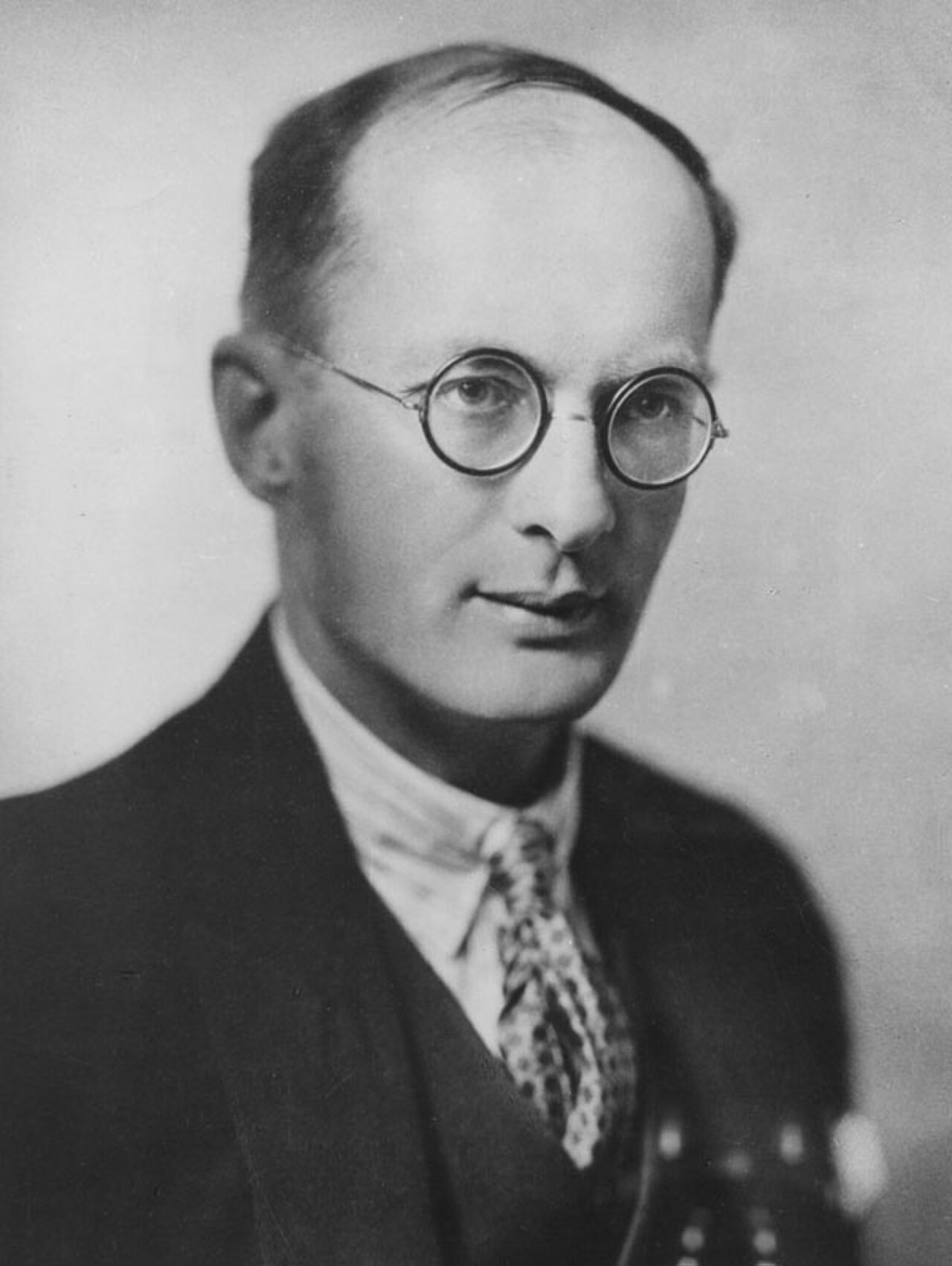
Bronisław Malinowski
Intellectual Genesis
Bronisław Malinowski, born April 7, 1884, in Kraków, Poland, began his academic journey with a strong foundation in the physical sciences, earning doctorates in physics and mathematics from Jagiellonian University. However, his intellectual curiosity soon gravitated towards the human sciences, particularly anthropology. Influenced by the works of anthropologists like James Frazer and W.
H. R. Rivers, Malinowski became convinced that the prevailing methods of studying non-Western cultures were fundamentally flawed.
He rejected armchair anthropology, advocating instead for direct, prolonged engagement with the people being studied. This conviction, coupled with his rigorous scientific training, laid the groundwork for his revolutionary approach to ethnographic research, setting him apart from his contemporaries and propelling him towards the Trobriand Islands for his seminal studies.
The Trobriand Immersion
Malinowski's extended stays in the Trobriand Islands (roughly 1914-1918 and 1920) were not mere visits but profound acts of cultural immersion. He mastered the local language, Kiriwina, enabling him to engage in nuanced conversations and understand the subtleties of social interaction. He lived in native villages, ate local food, and participated in everyday life, from agricultural practices to complex ceremonial exchanges like the kula ring.
This deep, firsthand experience allowed him to move beyond superficial descriptions and delve into the functional relationships between different aspects of Trobriand society-kinship, economics, magic, and religion. His detailed observations, meticulously recorded, challenged prevailing evolutionary theories of culture and presented the Trobriand Islanders as rational actors within a sophisticated social system.
Participant Observation and Functionalism
The cornerstone of Malinowski's methodological contribution is 'participant observation.' This approach demands that the ethnographer live among the people, actively participate in their lives, and observe their behavior in its natural context, while simultaneously reflecting critically on their own role and biases. This method allowed Malinowski to develop a functionalist perspective, arguing that all aspects of a culture serve a purpose in meeting the needs of individuals and maintaining social order.
He famously articulated the 'three fundamental needs' of human beings: biological needs, social order, and spiritual or magical needs. His seminal work, 'Argonauts of the Western Pacific' (1922), is a testament to this methodology, offering an unparalleled account of the kula exchange and its significance in Trobriand society.
Enduring Influence and Critical Reappraisal
Bronisław Malinowski's legacy is immense. He is widely credited with transforming anthropology into a field grounded in empirical fieldwork and cross-cultural understanding. His emphasis on cultural relativism-the idea that cultures should be understood on their own terms-laid the groundwork for much of modern social science.
His writings continue to be studied for their vivid descriptions and methodological rigor. However, his work has also faced critical reappraisal, with scholars examining his positionality as an outsider, the ethical implications of his research, and the extent to which his functionalist framework might oversimplify cultural dynamics. Despite these critiques, Malinowski remains a pivotal figure, whose dedication to understanding humanity through direct experience fundamentally reshaped how we study and perceive the world's diverse cultures.
He died on May 16, 1942, leaving behind a rich and complex intellectual inheritance.
See also
Frequently Asked Questions
What did Bronisław Malinowski study?+
Where did he live with the villagers?+
How did he learn the local language?+
Why is participant observation important?+
What are the three fundamental needs that Malinowski talked about?+
Based on content from Wikipedia · Licensed under CC BY-SA 4.0