

Brightest Cluster Galaxies: Cosmic Kings!
Images

Brightest cluster galaxy




Defining the Luminosity Apex
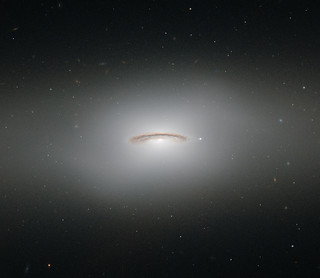
Brightest cluster galaxies (BCGs) represent the pinnacle of galaxy evolution within the most massive cosmic structures, galaxy clusters. These elliptical or lenticular galaxies are characterized by their exceptional luminosity and size, typically residing at the gravitational potential minimum of their host cluster. Their sheer scale is staggering; a BCG can possess a stellar mass orders of magnitude greater than that of the Milky Way, often spanning millions of light-years across.
They are the dominant members, outshining all other galaxies in the cluster by a significant margin. Their formation and evolution are intrinsically tied to the dynamics and growth of the clusters themselves, making them crucial laboratories for studying the processes that shape the universe's largest structures.
A Chronicle of Cosmic Consumption
The evolutionary pathway of BCGs is predominantly one of accretion and merging. In the early universe, smaller proto-galaxies and dwarf galaxies were drawn into the gravitational wells of forming clusters. Through a process of hierarchical merging, these smaller entities were progressively absorbed by the central galaxy.
This cannibalistic behavior, driven by gravitational attraction and dynamical friction, has sculpted BCGs into their current colossal forms over billions of years. The mergers not only add stellar mass but also fuel the central supermassive black hole, influencing the galaxy's subsequent evolution. The rarity of young, star-forming regions in BCGs is a testament to this long history of mergers and the subsequent suppression of gas accretion.
The Central Engine
A defining characteristic of most BCGs is the presence of a supermassive black hole at their core, often with masses ranging from millions to tens of billions of solar masses. These black holes are not passive inhabitants; they actively influence their host galaxy through a process known as AGN feedback. When matter accretes onto the black hole, it can launch powerful relativistic jets and winds that heat and expel the surrounding intracluster medium (ICM).
This feedback mechanism plays a critical role in regulating star formation within the BCG and the cluster as a whole, preventing the continuous cooling and collapse of gas that would otherwise lead to excessive star formation. This feedback is thought to be responsible for the quiescent nature and red, old stellar populations typically observed in BCGs.
Cosmic Significance and Observational Insights
BCGs are indispensable for cosmological studies. Their extreme luminosity makes them detectable across vast cosmic distances, allowing astronomers to map the distribution of galaxy clusters and probe the large-scale structure of the universe. By studying the properties of BCGs at different redshifts, scientists can trace the growth of structure over cosmic time and test cosmological models.
Furthermore, the properties of the ICM surrounding BCGs, such as its temperature and density, provide insights into the gravitational potential of the cluster and the influence of AGN feedback. They also serve as benchmarks for galaxy formation simulations, pushing the boundaries of our understanding of how the most massive galaxies assemble and evolve.
Interconnections within the Cosmic Web
The study of BCGs is deeply intertwined with several key areas of astrophysics. They are the central nodes in the cosmic web, the filamentary network of dark matter and galaxies that spans the universe. Their evolution is influenced by the accretion of matter along these filaments.
BCGs are also intimately connected to the intracluster medium (ICM), the hot, X-ray emitting gas that fills galaxy clusters, which is heated by AGN feedback and gravitational collapse. Understanding BCGs also sheds light on the co-evolution of galaxies and their central supermassive black holes, a fundamental question in modern astrophysics. Related topics include the study of dark matter halos, galaxy cluster dynamics, and the epoch of reionization.
See also
Frequently Asked Questions
What is a brightest cluster galaxy?+
Why are brightest cluster galaxies called "cosmic kings"?+
How do brightest cluster galaxies grow so big?+
What role does the supermassive black hole play in a brightest cluster galaxy?+
How do scientists use brightest cluster galaxies to learn about the universe?+
Based on content from Wikipedia · Licensed under CC BY-SA 4.0