

Brian Eno: The Music Maker!
Images
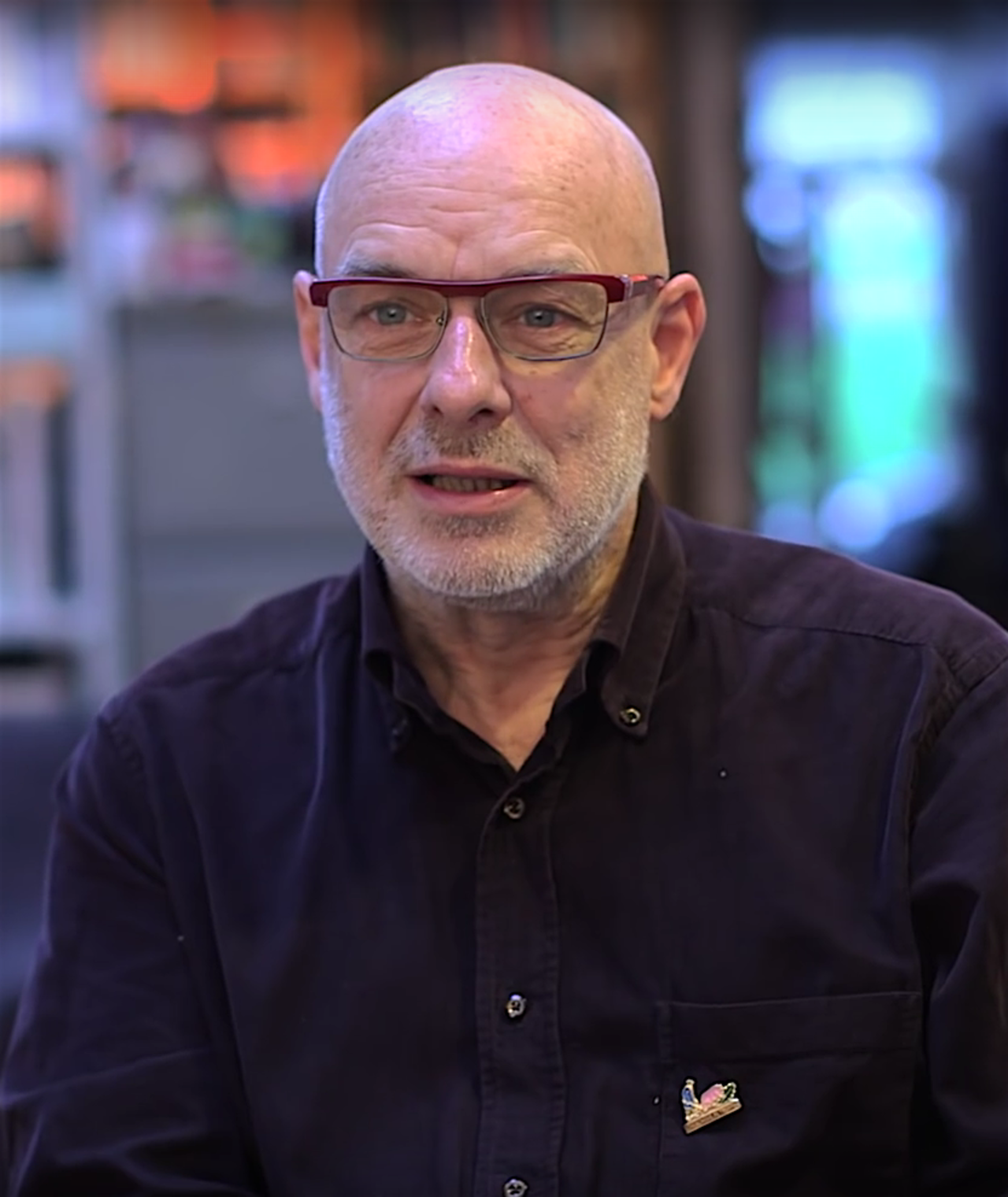
Brian Eno
Genesis of an Innovator
Brian Peter George St. John le Baptiste de la Baptiste de la Salle Eno was born on May 15, 1948, in Woodbridge, Suffolk, England. His early musical trajectory was marked by a distinctive flair for the experimental.
As a founding member and keyboardist for Roxy Music, Eno was instrumental in crafting the band's art-glam aesthetic and pioneering electronic soundscapes. His contributions to albums like 'Roxy Music' and 'For Your Pleasure' were characterized by his innovative use of synthesizers and tape manipulation, creating textures that were both alien and captivating. However, Eno's restless artistic spirit soon led him to diverge from the band's more conventional rock format.
His departure in 1973 allowed him to embark on a solo career that would fundamentally alter the landscape of popular music. Early solo works like 'Here Come the Warm Jets' showcased his eclectic songwriting and experimental production, but it was his subsequent conceptual explorations that would cement his legacy.
Conceptualizing Ambient Music
Brian Eno is widely credited with coining the term 'ambient music' and developing its core principles. His seminal 1978 album, 'Ambient 1: Music for Airports,' is considered a landmark in the genre. Eno's definition of ambient music as 'as ignorable as it is interesting' challenged the traditional paradigm of music as a focal point.
Instead, he envisioned sound as an environmental element, capable of shaping perception and mood without demanding active attention. This concept was revolutionary, suggesting that music could function as a form of atmospheric architecture. Subsequent works like 'Ambient 4: On Land' further explored these ideas, using field recordings and intricate sonic layering to create immersive, evocative sound worlds.
Eno's ambient music wasn't merely background noise; it was a deliberate artistic statement about the relationship between sound, space, and human experience, influencing everything from film scores to therapeutic sound design.
The Alchemist of Production
Eno's genius extends profoundly into his role as a music producer. His production philosophy is characterized by a collaborative spirit, a willingness to experiment, and an uncanny ability to draw out the most innovative aspects of an artist's work. He famously worked with U2, transforming their sound and helping them achieve global superstardom with albums such as 'The Unforgettable Fire,' 'The Joshua Tree,' and 'Achtung Baby.' Eno's production on these records introduced atmospheric textures, unconventional song structures, and a sense of sonic grandeur that became synonymous with the band.
His collaborations with David Bowie on the 'Berlin Trilogy' ('Low,' 'Heroes,' 'Lodger') were equally transformative, pushing the boundaries of art-rock and electronic music. Eno's touch has also graced recordings by Talking Heads, Devo, Coldplay, and many others, consistently imbuing them with a unique blend of intellectual depth and sonic innovation.
A Broader Canvas
Beyond his direct musical output, Brian Eno is a significant cultural figure whose influence permeates various artistic and intellectual spheres. He is a prolific writer, a visual artist, and a vocal advocate for environmental and political causes. His theoretical writings on music, technology, and culture offer profound insights into the nature of creativity and perception.
Eno's work often blurs the lines between disciplines, demonstrating a holistic approach to art-making. He has explored generative music systems, where algorithms create evolving soundscapes, and has been involved in numerous art installations. His enduring legacy lies not only in the sounds he has created but also in his intellectual contributions and his persistent questioning of artistic conventions, making him a true polymath of the modern era.
Go deeper
Frequently Asked Questions
Who is Brian Eno?+
What is ambient music?+
Which band did he start with?+
What famous albums did he help make for other bands?+
Did he do anything besides making music?+
Based on content from Wikipedia · Licensed under CC BY-SA 4.0