

Bowling (cricket)
Images

Bowling (cricket)




The Biomechanical Imperative
The fundamental distinction in cricket between 'bowling' and 'throwing' lies in a strictly defined biomechanical parameter: the extension of the elbow. According to the Laws of Cricket, a bowler's arm must remain relatively straight during the delivery stride, with a maximum allowable extension of 15 degrees. Exceeding this limit transforms the action into a 'throw,' which is illegal.
This rule is paramount because it dictates the unique trajectory and pace achievable through a bowling action, differentiating it from a simple overhead throw. Achieving consistent pace and accuracy while adhering to this constraint requires years of dedicated practice, focusing on shoulder rotation, wrist snap, and the kinetic chain from the feet upwards. Fast bowlers, in particular, push the limits of this biomechanical definition, generating immense force through precise technique.
The legality of a bowler's action is constantly monitored by umpires, and any perceived infringement can lead to warnings and, if persistent, disqualification from bowling in that match. This rule ensures a level playing field and preserves the distinct skill set required for cricket bowling.
The Bowler's Strategic Spectrum
Modern cricket bowling is a sophisticated art form, employing a diverse arsenal of techniques designed to outwit the batter. Fast bowlers, the speed demons of the game, primarily rely on velocity, aiming to breach the batter's defenses before they can react. Their deliveries can range from 85 to over 95 miles per hour, often accompanied by subtle variations in line and length to keep the batter guessing.
Swing bowling introduces an aerial dimension; bowlers manipulate the ball's surface, often by keeping one side polished and the other rough, to create differential air pressure. This causes the ball to curve significantly in flight, a phenomenon known as swing. Seam bowling exploits the raised stitching on the ball.
By delivering the ball with the seam upright, bowlers can induce unpredictable deviations off the pitch, making the ball 'jag' unpredictably. Spin bowling, typically delivered at slower paces, relies on imparting significant rotation to the ball. Off-spinners, for example, spin the ball from leg to off (for a right-handed batter), causing it to turn inwards after bouncing. Leg-spinners impart spin in the opposite direction, making the ball turn away from the batter.
These variations in pace, flight, and spin create a complex tactical battle, demanding immense concentration and skill from both bowler and batter.
The Architecture of an Over and Umpiring's Crucial Role
The structure of bowling is built around the 'over,' a set of six legal deliveries bowled by a single bowler from one end of the pitch. After completing an over, the bowler retreats, and a teammate takes over from the opposite end. This change of ends is not merely for variety; it allows bowlers to adapt to different pitch conditions and angles of attack, and it prevents the batting team from settling into a rhythm against a single bowler.
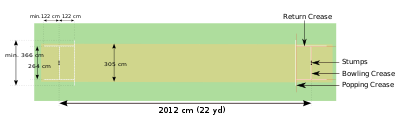
The entire process is meticulously governed by the Laws of Cricket, with umpires acting as the ultimate arbiters. Their decisions on 'no-balls' (illegal deliveries, often due to a bent elbow or overstepping the crease) and 'wides' (deliveries deemed too far from the batter to be played) are final. A no-ball typically results in a penalty run and an extra delivery, while a wide also grants a penalty run and an extra ball.
These calls are critical, as they can disrupt a bowler's momentum, provide the batting side with advantageous scoring opportunities, and significantly influence the game's outcome. The umpire's keen eye and consistent application of the laws are vital for maintaining the integrity of the contest.
Strategic Decision-Making
The coin toss at the start of a cricket match is a pivotal moment, and the decision to 'elect to bowl' is a significant strategic gambit. Teams often choose to bowl first when they believe pitch conditions are most favorable for their bowlers, such as when the pitch is damp or has excessive grass, which aids swing and seam movement. This allows them to immediately apply pressure, potentially taking early wickets and restricting the opposition's scoring.
It can also be a psychological tactic, aiming to unsettle the opposition from the outset. Furthermore, in certain formats of the game, bowling first allows a team to gauge the pitch's behavior and the opposition's batting strengths before they themselves have to bat, providing valuable information for their own innings. Conversely, electing to bat first is often chosen when a team wants to set a substantial target, believing their batters can post a high score, or when they anticipate the pitch will deteriorate, making batting harder later on.
This strategic choice highlights the multifaceted nature of cricket, where tactical acumen is as important as athletic prowess.
The Bowler's Ultimate Objective
The paramount objective for any bowler is to dismiss the batter. This is achieved through various modes of dismissal, including 'bowled' (ball hitting the stumps), 'caught' (batter hits the ball and it's caught by a fielder before bouncing), 'leg before wicket' (LBW, where the ball would have hit the stumps but struck the batter's leg first), and 'stumped' (batter is out of their crease and the wicketkeeper dislodges the bails). Beyond outright dismissal, bowlers are tasked with controlling the scoring rate, preventing the batting side from accumulating runs too quickly.
This involves strategic variations in pace, line, length, and the use of different deliveries to create pressure and induce errors. A bowler who can consistently restrict scoring and create wicket-taking opportunities is invaluable to their team. The psychological aspect is also significant; a bowler can demoralize batters through sustained pressure, accurate bowling, and the sheer threat of taking a wicket, thereby influencing the overall flow and outcome of the match.
See also
Based on content from Wikipedia · Licensed under CC BY-SA 4.0