

Bourgogne-Franche-Comté
Images

BesançOn, La CathéDrale Saint Jean ; Portail Nord

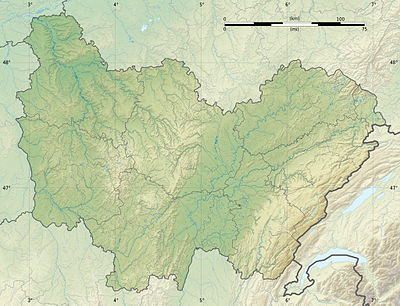


Geographical Canvas
Bourgogne-Franche-Comté occupies a significant portion of eastern France, characterized by a diverse topography that ranges from the rolling hills and renowned vineyards of Burgundy to the more mountainous and forested terrain of the Jura in Franche-Comté. The region is crisscrossed by major rivers like the Saône and the Doubs, which have historically shaped settlement patterns and trade routes. Its area of 47,783 square kilometers makes it one of France's largest regions.
The climate is continental, with distinct seasons; summers can be warm and conducive to viticulture, while winters are often cold, with snowfall common in higher elevations, particularly in the Jura Mountains. This geographical diversity influences everything from agriculture to tourism, offering varied experiences across its eight departments.
Historical Tapestry
The modern region of Bourgogne-Franche-Comté is a product of the 2014 territorial reform, officially established on January 1, 2016, by merging the former regions of Burgundy and Franche-Comté. This union brought together territories with distinct and often intertwined histories. Burgundy was once a powerful medieval duchy, a center of art, culture, and political influence in Europe.
Franche-Comté, historically a county, was often a buffer state or a contested territory between France and the Holy Roman Empire, leading to a rich military and architectural heritage. The legacy of these past entities is evident in the region's numerous historical sites, including abbeys, castles, and fortified towns, each telling a story of centuries of political shifts, economic development, and cultural exchange. The region's population of approximately 2.8 million people is spread across these historically significant landscapes.
Cultural Identity
The cultural heart of Bourgogne-Franche-Comté beats strongly with its world-famous gastronomy. Burgundy is synonymous with its prestigious wines, including Pinot Noir and Chardonnay, and its rich culinary traditions like Boeuf Bourguignon. Franche-Comté contributes its own distinct flavors, most notably the celebrated Comté cheese, a hard, nutty cheese produced using traditional methods.
The region also has a strong tradition of watchmaking, particularly in Besançon, which was once a major European center for the industry. While French is the official language, the Arpitan language (also known as Franco-Provençal) is still spoken by some communities, particularly in the southern parts of the region, adding another layer to its linguistic diversity. This blend of culinary excellence, artisanal craftsmanship, and linguistic heritage forms a unique cultural identity.
Economic Drivers
Bourgogne-Franche-Comté boasts a diversified economy. Agriculture remains a cornerstone, with viticulture and dairy farming being particularly significant. The region is a global leader in wine production and a major producer of high-quality cheeses.
Beyond agriculture, the industrial sector is robust, with strengths in mechanical engineering, automotive components, and the historically important watch and jewelry industries, especially around Besançon. The region's administrative structure is unique: Dijon serves as the prefecture, the seat of the state representative, while the Regional Council, the elected body responsible for regional policy, is based in Besançon. This dual-centered governance is a legacy of the merger and reflects the distinct identities of the two former regions, presenting both administrative challenges and opportunities for balanced regional development.
The population of nearly 3 million contributes to a dynamic workforce across these varied sectors.
Governance and Education
The governance of Bourgogne-Franche-Comté is managed by a Regional Council composed of 100 elected members, responsible for areas such as economic development, transportation, and education. The prefecture, located in Dijon, represents the national government and oversees public services. This dual administrative setup, with the prefecture in Dijon and the council in Besançon, is a distinctive feature that requires careful coordination.
Educationally, the region is well-served by universities and vocational training centers. Key institutions include the University of Bourgogne in Dijon and the University of Franche-Comté in Besançon, offering a wide range of programs. These educational hubs are vital for fostering innovation, research, and developing the skilled workforce needed to support the region's diverse economy, from its renowned wine estates to its high-tech manufacturing industries.
See also
Frequently Asked Questions
What is Bourgogne-Franche-Comté?+
Where can I find famous wines in Bourgogne-Franche-Comté?+
What tasty foods can I try in this region?+
What languages are spoken there?+
What is the climate like in Bourgogne-Franche-Comté?+
Based on content from Wikipedia · Licensed under CC BY-SA 4.0