

Bore (wind instruments)
Images
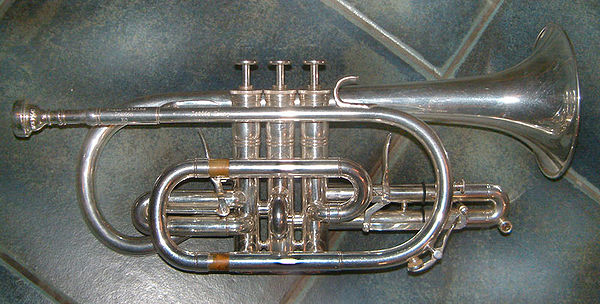
Bore (wind instruments)
The Bore
The bore of a wind instrument refers to its internal cylindrical or conical cavity, serving as the primary conduit for airflow that generates sound. This seemingly simple hollow space is, in fact, the most critical determinant of an instrument's acoustic properties, profoundly influencing its timbre, pitch range, and dynamic capabilities. The bore's geometry dictates the modes of vibration of the air column contained within it.
Whether cylindrical, conical, or a complex combination, its specific dimensions and taper determine the harmonic series produced, which is the fundamental basis of an instrument's characteristic sound color. Understanding the bore is key to understanding why a flute sounds so different from a bassoon, or why a trumpet has a brighter tone than a French horn, even though both are brass instruments. The bore is, in essence, the acoustic engine that drives the instrument's musical expression.
Evolution of the Bore
The history of wind instruments is intrinsically linked to the evolution of their bores. Early instruments, crafted from natural materials like hollow reeds, animal horns, or bones, possessed simple, often irregular bores. The discovery that shaping these tubes could alter pitch and tone quality was a pivotal moment.
The development of woodworking techniques allowed for more consistent cylindrical and conical bores, leading to instruments like the recorder and early clarinets. The advent of metalworking revolutionized brass instruments, enabling the creation of precisely engineered, often conical bores that could produce powerful, sustained tones. Over centuries, instrument makers refined bore designs through meticulous experimentation, often guided by acoustical theory and empirical observation.
This continuous refinement, from the simple hollow tube to the complex, mathematically calculated bores of modern instruments, reflects a deep understanding of how internal geometry shapes sound.
The Bore's Dominance
The bore's shape is paramount in defining an instrument's timbre, which is the unique sonic signature that allows us to distinguish between different instruments. This is largely due to how the bore influences the harmonic spectrum of the sound produced. Cylindrical bores, common in instruments like the clarinet and flute, tend to favor odd-numbered harmonics (in the case of a clarinet with a closed end) or a more balanced spectrum (in the case of an open cylinder like a flute).
This results in a purer, more focused, or sometimes a more piercing tone. Conical bores, found in instruments like the oboe, saxophone, and most brass instruments, excite a richer mix of both even and odd harmonics. This broader harmonic content contributes to a fuller, more complex, and often warmer or more brilliant sound.
The precise taper of the cone, or the specific curves and flares of the bore, are meticulously designed to achieve the desired tonal palette for each instrument.
Acoustic Principles
The production of sound in a wind instrument is a fascinating interplay of airflow and the resonant properties of the air column within the bore. When air is blown into the instrument, it sets the air column into vibration. The bore acts as a resonant cavity, amplifying specific frequencies.
For instruments with open ends, like flutes, the air column vibrates to form standing waves, where the length of the bore determines the fundamental frequency and its overtones. For instruments with a vibrating element like a reed or buzzing lips (in brass instruments), the bore's impedance (resistance to airflow) influences how effectively the vibrating source couples with the air column, thereby shaping the resulting sound. The bore's geometry dictates the acoustic impedance profile, which in turn governs the frequencies at which the air column resonates most strongly, thus defining the pitches and the relative strengths of the harmonics.
Modern Innovations and the Future of Bore Design
While the fundamental principles of bore design have been established for centuries, modern instrument makers continue to innovate. Advances in computer-aided design (CAD) and acoustical modeling allow for unprecedented precision in shaping bores. This enables makers to fine-tune instruments for specific performance characteristics, such as improved intonation, a more consistent tone across registers, or enhanced projection.
For example, the bore of a modern orchestral flute might be subtly different from that of a baroque flute to accommodate contemporary playing styles and tuning standards. Similarly, brass instrument manufacturers experiment with bore profiles to achieve specific tonal qualities desired by contemporary musicians. The ongoing exploration of bore geometry, often in conjunction with new materials and manufacturing techniques, ensures that the wind instrument continues to evolve as a sophisticated tool for musical expression.
See also
Based on content from Wikipedia · Licensed under CC BY-SA 4.0