

Bond Albedo: Earth's Shiny Coat!
Images

Cloudlessgasgiant


The Spheric Albedo
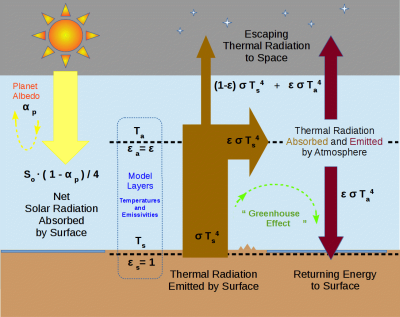
The Bond albedo, also known as the spheric or planetary albedo, represents the total fraction of incident electromagnetic radiation across all wavelengths that an astronomical body reflects back into space. Unlike monochromatic or directional albedos, the Bond albedo accounts for the entire spectrum of radiation and all possible phase angles at which the body might be observed. This comprehensive approach makes it an indispensable tool for calculating the net energy absorbed by a celestial body.
For instance, a planet with extensive ice sheets and high-altitude clouds will exhibit a significantly higher Bond albedo than a planet dominated by dark oceans or exposed rock. Understanding this reflectivity is the first step in deciphering a planet's thermal balance and predicting its surface conditions.
Energy Balance and Equilibrium Temperature
The primary importance of the Bond albedo lies in its direct correlation with a planet's energy budget and, consequently, its equilibrium temperature. The amount of solar radiation a planet receives is balanced by the amount it radiates back into space. The Bond albedo quantifies the portion of incoming radiation that is lost, thereby determining the amount of energy available for absorption.
This absorbed energy dictates the planet's temperature. A higher Bond albedo means less energy is absorbed, leading to a cooler equilibrium temperature, while a lower albedo results in greater absorption and a warmer temperature. This principle is fundamental to climate modeling, allowing scientists to estimate surface temperatures and assess the potential for atmospheric retention and habitability, especially when studying exoplanets.
Historical Context
The concept of planetary reflectivity, formalized as the Bond albedo, owes much to the pioneering work of George Phillips Bond, an American astronomer active in the mid-19th century. Bond's investigations into the nature of celestial bodies led him to propose this method of quantifying their overall reflectivity. His contribution was crucial in moving beyond simple visual observations to a more quantitative understanding of how planets interact with stellar radiation.
This theoretical framework, established over a century ago, remains a cornerstone of planetary science and astrobiology, underscoring the enduring impact of his research on our exploration of the cosmos.
Observational Challenges and the Role of Space Exploration
Accurately measuring the Bond albedo presents significant observational challenges, particularly for bodies in the outer solar system. From Earth, we are limited to observing these distant objects at very low phase angles, meaning the Sun, the object, and the observer are nearly aligned. This geometry can skew reflectivity measurements.
Consequently, direct in-situ measurements or close-up observations by spacecraft are indispensable for obtaining reliable Bond albedo data for these remote worlds. Missions equipped with sophisticated instruments can capture a wider range of phase angles and spectral data, providing the comprehensive information needed for accurate calculations, thereby enhancing our understanding of their atmospheric and surface properties.
See also
Frequently Asked Questions
What is Bond albedo?+
Why does a planet with ice or clouds have a higher Bond albedo?+
How does Bond albedo affect a planet's temperature?+
Who invented the idea of Bond albedo?+
How do scientists measure Bond albedo for faraway planets?+
Based on content from Wikipedia · Licensed under CC BY-SA 4.0